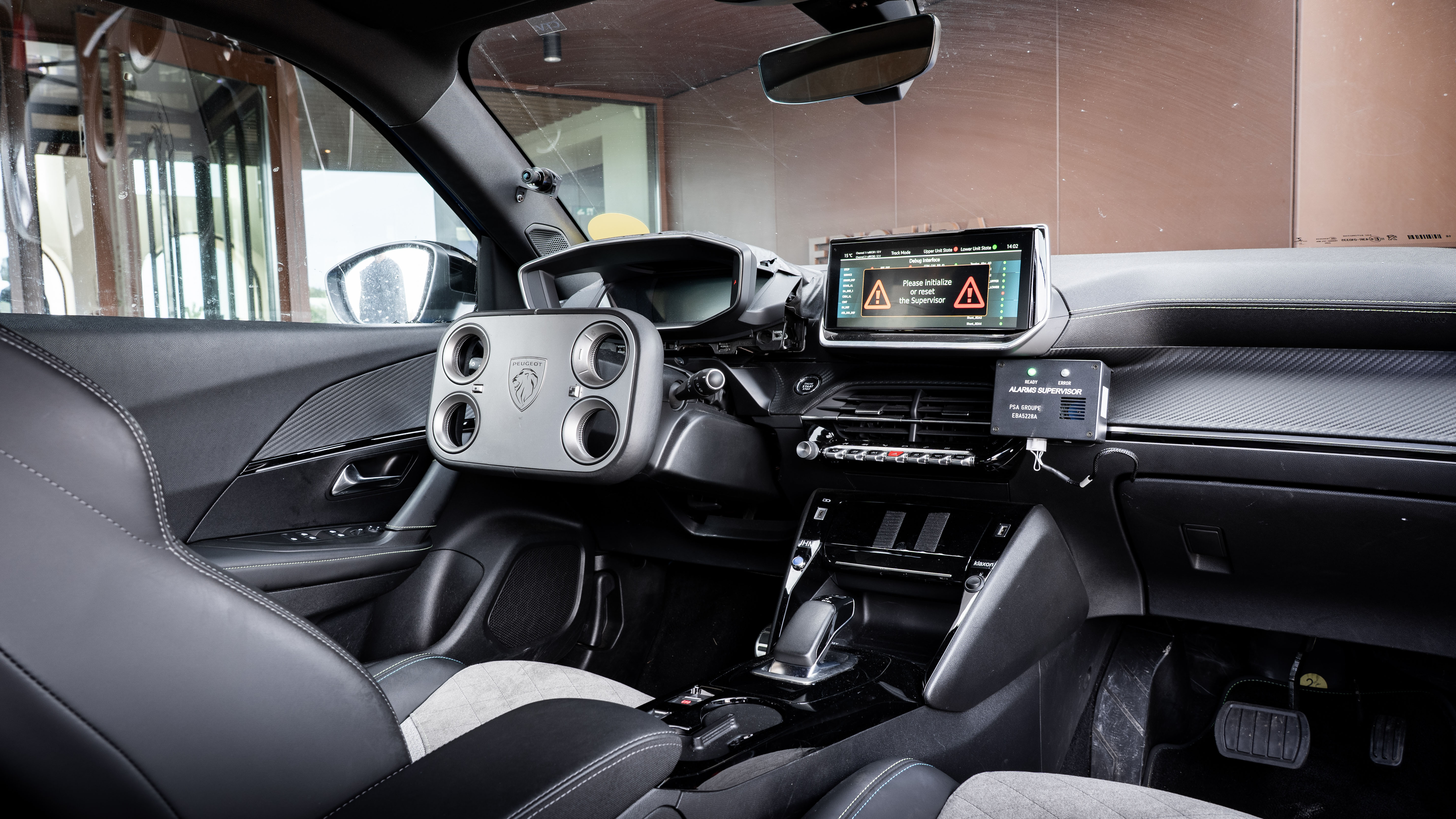
Peugeot has never been a marque content to blend into the traffic. From the i-Cockpit's diminutive instrument cluster to the rally-bred theatrics of its recent E-T16 Concept and the double-bubble romance of the reborn RCZ Vision, the French firm builds cabins as statements rather than concessions. Yet no single flourish divides opinion quite like the square steering wheel — a compact, flat-bottomed, flat-topped tiller that has become the defining gesture of the brand's interior design language. In an industry where the circle has reigned supreme since the tiller replaced the reins, Peugeot's decision to abandon it is either visionary or heretical, depending on which side of the showroom you stand.
The logic behind the shape is inseparable from the i-Cockpit philosophy itself. Peugeot asks drivers to look *over* the wheel rather than through it, placing the instrument binnacle high and the rim deliberately low. A smaller, squarish wheel reduces the arc of hand travel, keeps the elbows tucked, and — in theory — sharpens the sense of connection between driver and road. It is a packaging solution disguised as a provocation, and Peugeot has committed to it with the conviction of a company that would rather be argued about than ignored. Where Tesla's yoke arrived as a Silicon Valley affectation bolted to a car that otherwise drives itself, Peugeot's square rim is a driver-first artefact: it exists because the hands are meant to be busy.
A Driver-First Artefact, Not a Gimmick
That distinction matters. The HotCars verdict that Peugeot's arrangement makes the Tesla yoke look "half-baked" captures something real about intent. The square wheel is not a gimmick appended to a touchscreen-dominated cabin; it is the anchor of one. Every control surface, every sightline, every material choice in a modern 208 or 3008 is choreographed around that unconventional rim. It is, in the truest sense, a design bet — and Peugeot has doubled down across generations rather than quietly rounding the corners when the criticism mounted.
The Criticism, and the Signature It Forged
And the criticism did mount. Early adopters complained of obscured dials, of a learning curve that felt less like ergonomics and more like obedience training. Traditionalists lamented the loss of the perfect circle's honest geometry. Yet Peugeot's persistence has aged the concept into something approaching signature. In a market saturated with near-identical cabins — the same flat-bottomed wheels, the same floating screens, the same haptic sliders — the square rim is instantly identifiable. You know you are in a Peugeot before you have touched the indicator stalk. That is brand equity earned the hard way, through argument rather than advertisement.
Boldness as the House Style
There is a pleasing symmetry in the timing. As Peugeot stuns Paris with the RCZ Vision coupe concept and the electrified E-T16 rally homage, and as rumours swirl around a tri-motor hyper-hatch and a solid-state revival of the RCZ, the marque is clearly in a mood to take risks. Recalls over coolant specification on the 208 and air guides on the 3008 remind us that engineering missteps carry a cost — but they do not diminish the ambition. Peugeot's willingness to gamble on the square wheel is of a piece with a company prepared to build an 805bhp hyper-hatch and resurrect a cult coupe. Boldness, not caution, is the house style.
Whether the square wheel ultimately proves a masterstroke or a footnote will be settled by the next generation of drivers, not by pundits. But the gamble has already achieved what great design so often must: it has made the ordinary act of gripping a steering wheel feel like a declaration. In a segment where conformity is the safest commercial route, Peugeot looked at a century of circular thinking and asked a simpler, braver question. Why?