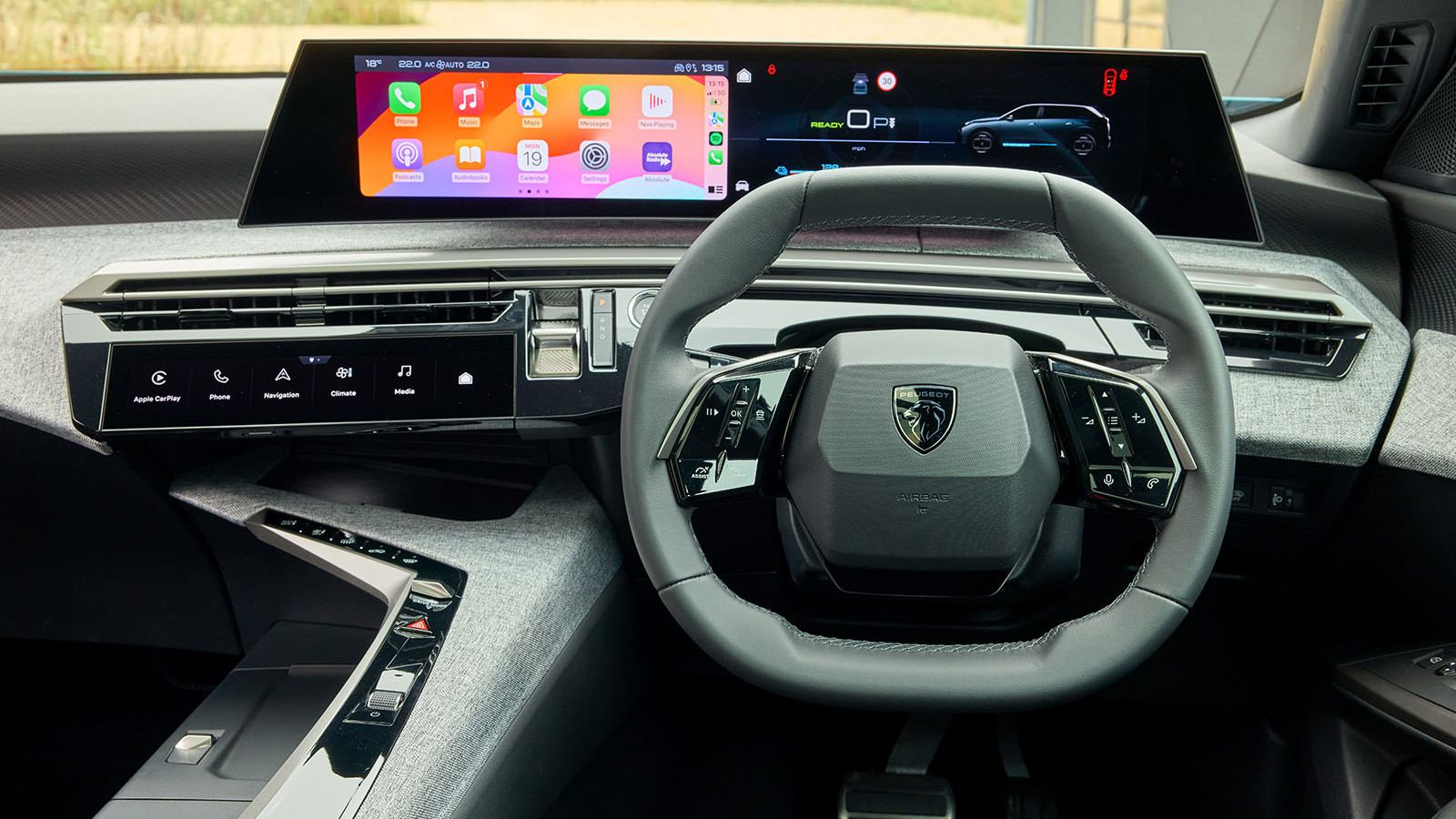
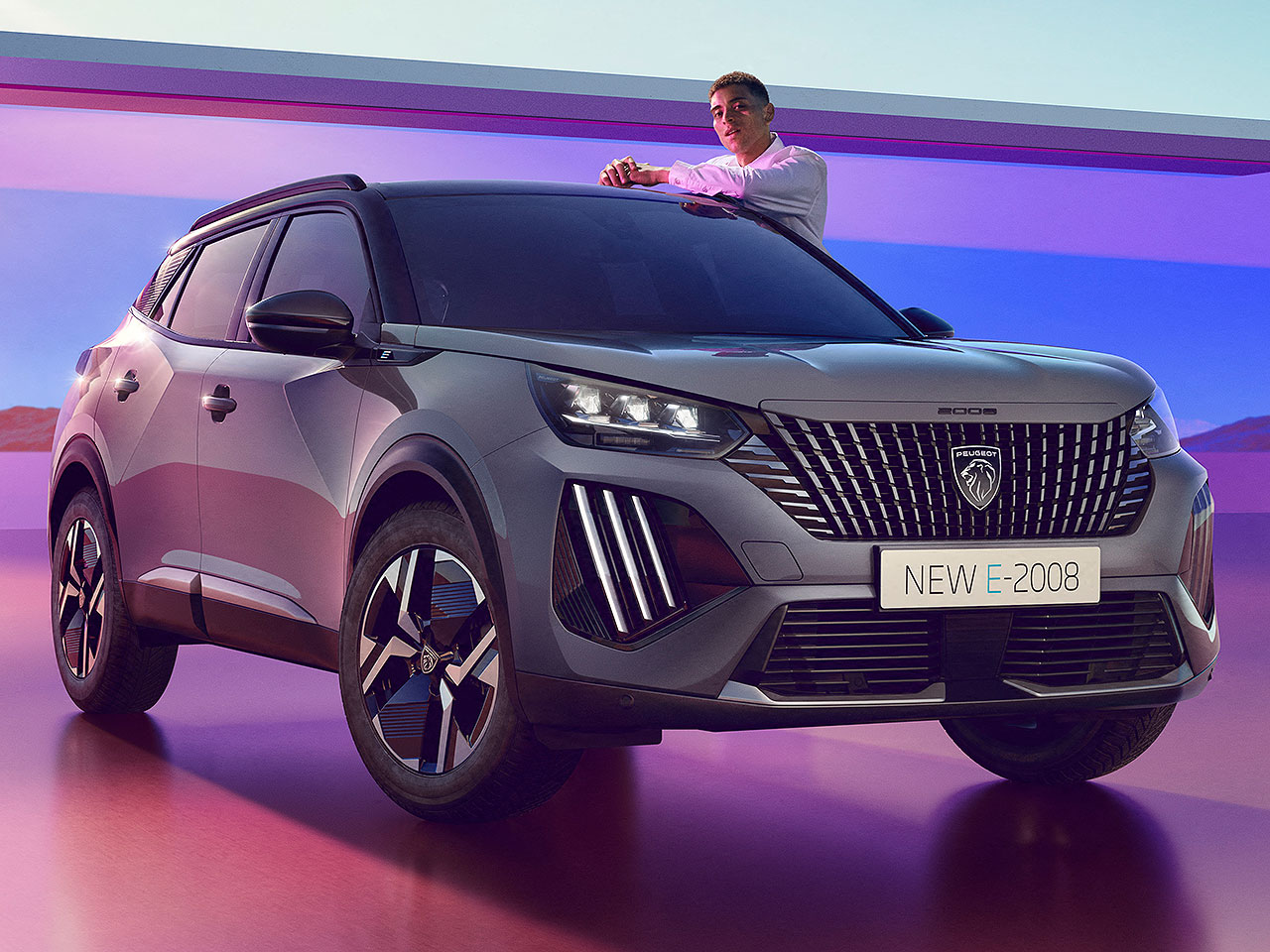
The 2026 Paris Motor Show will give Peugeot a redesigned stand, two new concept cars, and a fresh chance to remind the world what French styling looks like at full volume. None of it will matter as much as a homologation file quietly taking shape in Wuhan.
According to reporting from Reuters, CnEVPost and Gasgoo, Momenta has signed with Dongfeng Stellantis Automotive Technology — the joint venture between Stellantis and Dongfeng — to co-develop intelligent driving systems for Peugeot and Jeep models. The first cars to run them will be sold in China. Only later, if at all, does the technology head west.
The Pipeline Runs Backwards
For most of its modern history, Peugeot's technical prestige flowed outward from Sochaux. Chassis tuning honed on French back roads. Diesel engines that set the benchmark for refinement. Latterly, the STLA platforms underpinning everything from the 3008 to the 5008. Advanced driver assistance, by contrast, was sourced from European tier-one suppliers and calibrated to European roads and European regulators.
The Momenta arrangement inverts that. The learning happens first on Chinese roads, in Chinese traffic, under Chinese consumer expectations — and Europe inherits the result. It's a striking reversal for a marque that has spent decades exporting its engineering authority rather than importing it.
Autonomy Is Being Solved in China
That the deal exists at all is a candid admission about where the problem is actually getting cracked. Momenta's advantage isn't exotic hardware. It's data: an enormous fleet of production vehicles feeding real-world edge cases into a training loop that European suppliers, restricted by smaller deployment volumes and more cautious regulators, cannot match at the same velocity.
For Stellantis, still absorbing the cost of temporary halts at several French plants over battery shortages, buying that capability rather than building it is the rational call. The joint venture structure keeps the work inside a Chinese legal and commercial framework — which is precisely where the volume lives.
A Ticket to the Table
Peugeot's Chinese lineup is the natural host. The sedans sold there — the 408 and its siblings — compete in a segment where a credible urban navigation assistant is no longer a premium flourish but a baseline expectation. Chinese buyers have been trained by domestic brands to regard highway and city pilot functions as ordinary equipment. A Peugeot sedan without them isn't merely behind. It's irrelevant.
So the Momenta system is best understood not as a differentiator but as a ticket to the table — the price of entry in the one market where Peugeot's sedan business still has volume to defend.
The Awkward European Question
The hard part is what this means for Europe. The 308, 3008, 408 and 5008 have already been recalled in Australia for unrelated defects, and the brand's European story is currently dominated by the 3008's striking climb to third place in Italy — a genuine commercial success built on design and electrification, not on software. Peugeot is winning in Europe on the strength of its styling and its hybrid and electric powertrains.
Adding Chinese-developed autonomy to that mix would require the company to argue that technology proven in Shanghai is appropriate for the Autobahn and the M25 — at a moment when European policymakers are actively suspicious of exactly that proposition. It's a debate Peugeot has shown no appetite for leading.
So expect the sequence to run like this: Momenta-equipped Peugeot sedans arrive in China first, accumulate mileage, and generate the safety case. Jeep, sharing the same joint venture, provides scale. If the system performs, Stellantis gains a validated, cost-effective autonomy stack it can adapt for Western markets on its own timetable — one that conveniently sidesteps the years of European development its competitors are still funding. Peugeot gets the technology early without having to lead the argument for it.
It is an unglamorous strategy, and it will not feature on the Paris stand. But it may prove more important than either of the concepts Peugeot is preparing to unveil there. Because Peugeot's philosophy has always been about making sophisticated engineering feel effortless — the compliant chassis, the hushed diesel, the cabin that flatters a long drive. Autonomy developed in China and inherited by Europe is simply the next expression of that same instinct: let someone else sweat the hard part, and make the result feel like it was always there.