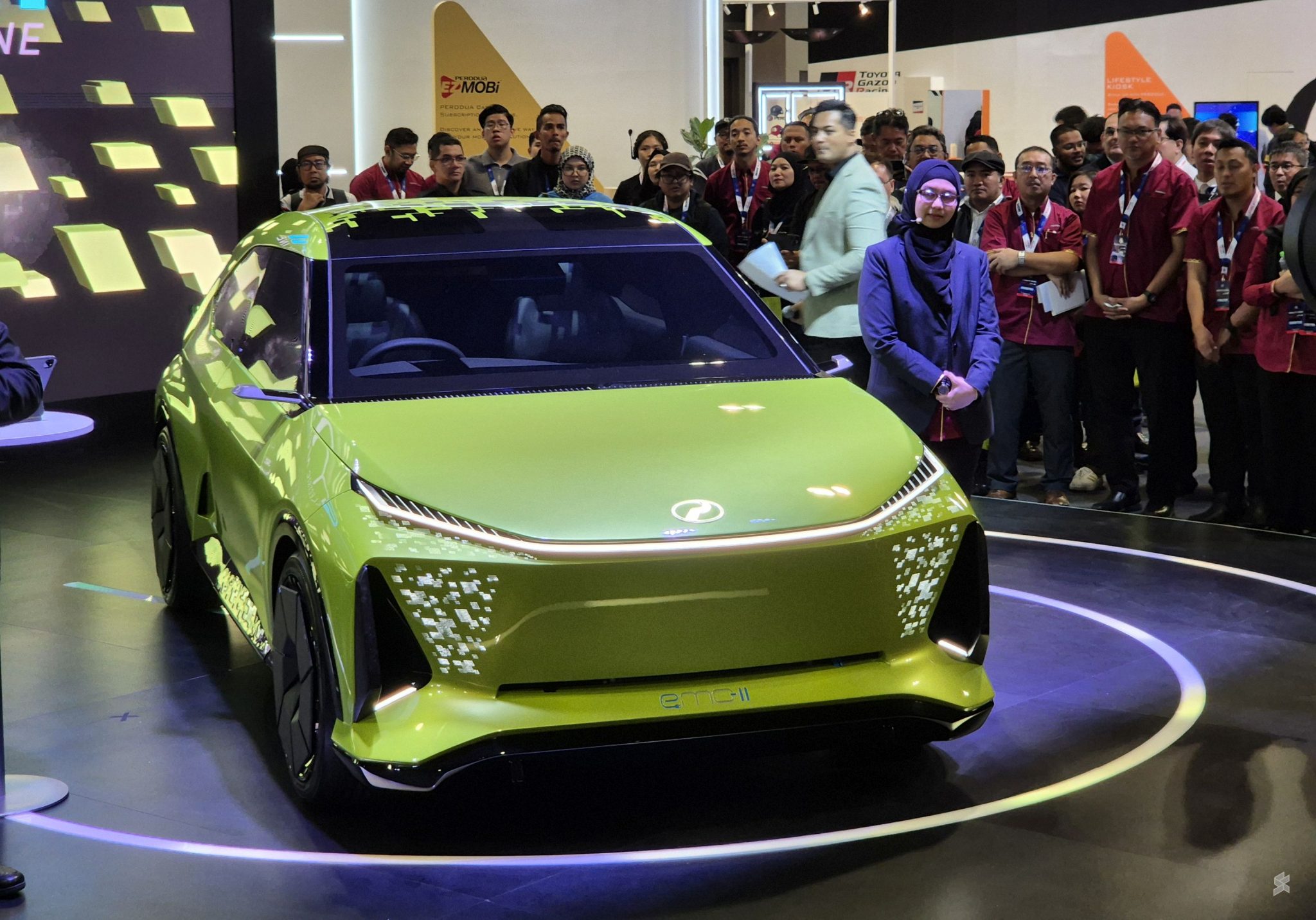
Perodua has spent the past year rewriting its own story. The QV-E, the national marque's first battery-electric vehicle, arrived with a genuinely novel proposition: a Battery as a Service model that decouples the costly pack from the sticker price—an approach Bloomberg memorably framed as a $19,000 EV, battery not included. The rebates followed, RM10,000 extended through the end of October, and so did the strategic endorsements, with opinion writers from Free Malaysia Today to Global Sources asking whether Toyota and Daihatsu can lend Perodua the engineering heft to fend off China's EV incumbents. MIDA has even stepped in to future-proof local component vendors on ESG readiness. By any measure, this is a brand in purposeful motion.
And yet, amid the electric clamour, something is conspicuously absent from the roadmap. Perodua has never built a sedan. Not a proper one, not a mainstream four-door for the Malaysian family that wants a boot, a rear bench with genuine legroom, and the dignified silhouette a hatchback cannot quite deliver.
The Omission That Made Sense
For most of its history, that gap was a rational division of labour: Proton held the sedan fort, and Perodua happily owned the compact hatch and the compact MPV. The Myvi, the Axia, the Bezza, the Ativa—each a masterclass in packaging value at a price point the market could not ignore. The sedan was simply someone else's war, and Perodua fought its own with discipline and no small amount of flair.
Why the QV-E Changes the Calculus
The QV-E rewrites that arithmetic. When a manufacturer commits to a dedicated electric architecture, the marginal cost of spinning a second body style from that platform is far lower than it would be on a bespoke combustion chassis. The QV-E's Battery as a Service proposition—arguably its single greatest competitive weapon against the Chinese imports—is a business model, not a bodyshell. It would transfer to a sedan with no loss of logic.
Indeed, the sedan is precisely where the economics of BaaS shine brightest. Fleet buyers, ride-hailing operators, and the corporate segment that has long regarded a four-door as the minimum acceptable form factor are exactly the customers for whom a decoupled battery removes the biggest barrier to adoption. Perodua is courting these buyers with a hatchback and asking them to meet it halfway.
The Completeness Problem
There is a deeper strategic point. The Chinese EV onslaught in Malaysia is not being fought solely on price; it is being fought on perceived completeness. The rivals arrive with full line-ups—sedan, SUV, hatch—and a shopper who wants a four-door electric vehicle at a national-brand price currently has no Perodua to consider. Every such buyer who walks into a showroom and walks out with a competitor's sedan is a customer the QV-E's clever battery economics never got the chance to win.
The rebate extension and the Axia price cuts—up to RM4,700 nationwide—demonstrate that Perodua understands price sensitivity acutely. But price sensitivity is not the same as product coverage, and the gap between the two is where market share quietly leaks away.
A Platform Worth Taking Seriously
None of this is to diminish the QV-E's ambition. The collaboration with Toyota and Daihatsu gives Perodua a credible path to long-term EV value, and the reported possibility that the QV-E could spawn a Daihatsu-badged sibling underlines how seriously the platform is being taken within the wider group. The ESG work with MIDA, the service-parts price reductions of up to 10 per cent, the careful cultivation of limited-run halo models like the ten pink Ativas—all of it signals a company thinking in decades, not quarters.
But a platform without a sedan is a strategy with a hole in it. Perodua has spent thirty years proving it understands the Malaysian buyer better than anyone. The Malaysian buyer, increasingly, wants four doors and a boot. The QV-E gives Perodua the technical means to answer that want for the first time in its history. The question is whether the company will recognise the opportunity before its Chinese rivals finish recognising it for them.