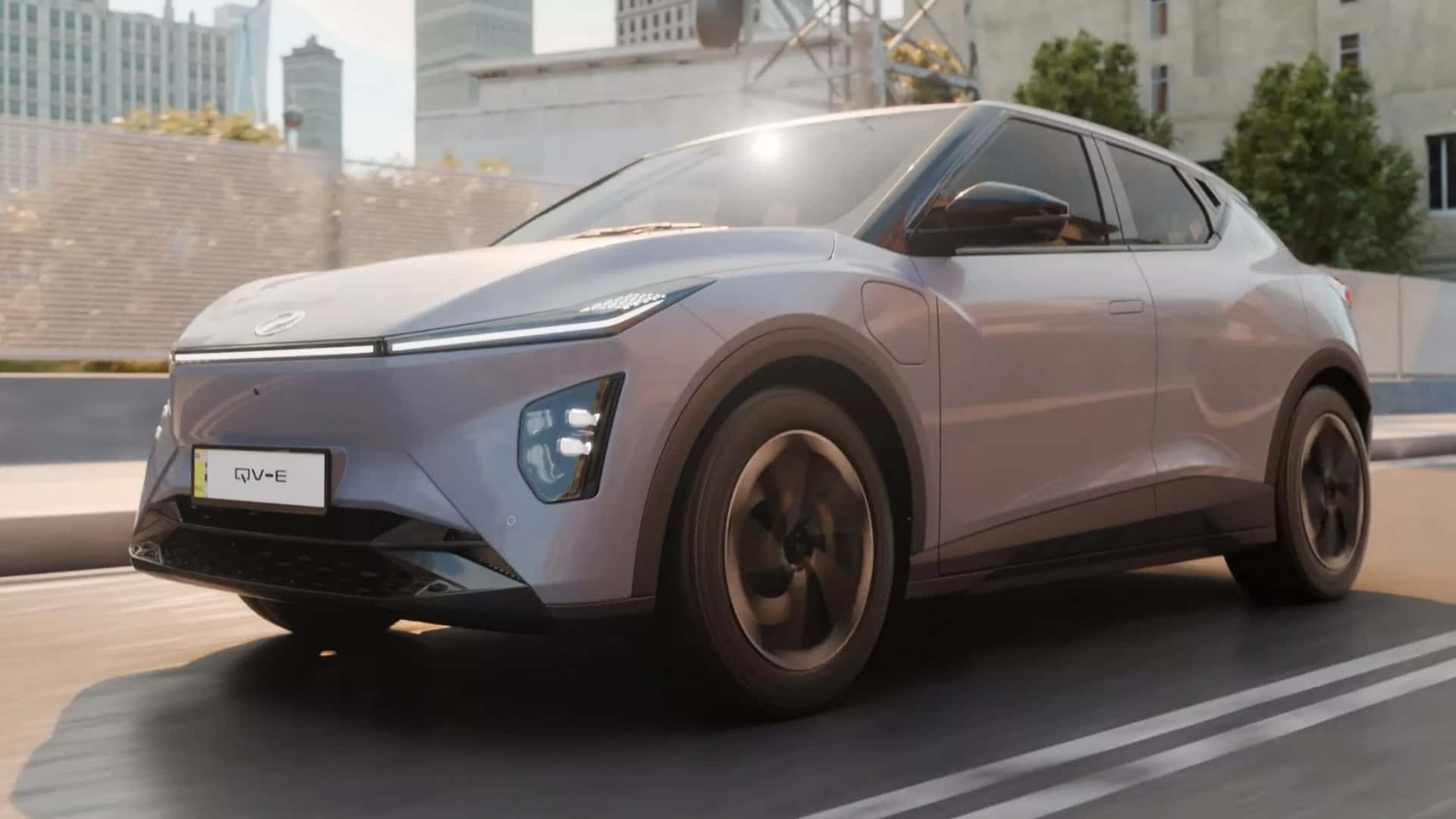
Perodua has spent four decades perfecting a very specific formula: take the essentials of car ownership, strip away the unnecessary, and price the remainder within reach of the Malaysian everyman. The QV-E is that formula applied to electrification, and it has arrived with a flourish — a roughly $19,000 EV, as Bloomberg famously framed it, with the battery sold separately through a leasing arrangement. It is a genuinely clever piece of market engineering, and by most accounts, including Zigwheels' recent review, it is surprisingly fun to drive once you stop fixating on the battery-as-a-service model. What the QV-E is not, however, is a sedan. And in Malaysia, that omission may prove more consequential than any pricing strategy.
Because here is the thing about the QV-E: it solves the hardest problem in EV adoption with a shrug and a spreadsheet. Battery leasing attacks sticker shock directly — the single greatest barrier standing between the Malaysian buyer and an electric driveway — with a directness that larger manufacturers have been too proud to attempt. That it also happens to drive well is almost a bonus. But a clever powertrain model does not change the shape of the thing, and shape, in this market, is destiny.
The News Cycle Never Sleeps
The chatter around Perodua has rarely been busier. Tan Chong Motor Assemblies has inked a battery project agreement with Perodua Sales — a three-year arrangement to support EV production at the Serendah facility — while MCE Holdings has secured RM54 million in contracts for internal combustion models. Read that again: Perodua is hedging its bets across two powertrain futures simultaneously, and doing so without breaking stride.
The company has launched the Traz SUV and the Alza seven-seater MPV, and it continues to lead Malaysia's sales charts, with Proton closing the gap but not yet closing the deal. The brand's dominance, as Carz Automedia and Free Malaysia Today have both observed, is not really about product superiority in any single metric. It is about being the default answer to a question most Malaysians ask only once: what car should I buy?
The Silent Suffix
That question, for a substantial slice of the buying public, comes with a silent suffix: *with a boot*. The sedan remains the aspirational default in Malaysia — the Bezza proved it at the budget end, and the Vios has proved it at the slightly-less-budget end for two decades. Sedans carry families, luggage, durian, and dignity in equal measure. They slot into the narrow lanes of old towns and the tight parking bays of Klang Valley office towers with an ease no SUV can match. Perodua knows this intimately; it has built its empire on it.
The QV-E, then, is a fascinating opening gambit rather than a finished argument. Its battery-leasing model addresses the single greatest barrier to EV adoption in the country. But the vehicle's body style addresses a different market entirely. Early adopters and urban technophiles will find much to admire. The mass-market sedan buyer — the one who has bought a Myvi every seven years like clockwork — will look at the QV-E and see something that does not quite fit the shape of their life.
Building the Scaffolding
The infrastructure, at least, is coming. The battery partnership with Tan Chong suggests Perodua is building the scaffolding for a long EV game, not a one-off novelty. The Serendah project signals serious industrial intent. What remains is the obvious next move: a QV-E sedan, or at least a variant with a conventional boot and a conventional silhouette. A Bezza-sized EV with leased battery access would not merely compete with the QV-E's current form — it would compete with the entire B-segment sedan market that Perodua and Proton have co-owned for a generation.
Until then, the QV-E stands as a bold, slightly incomplete statement. It is the right idea in the wrong shape for the majority of Malaysian buyers. Perodua has never been a company to leave a gap in its lineup for long. The question is not whether a booted QV-E is coming, but how quickly the company can move from proving the concept to perfecting the formula. Given its track record, the answer is probably sooner than anyone expects — and when it arrives, the sedan market will have its first genuinely affordable electric contender.


