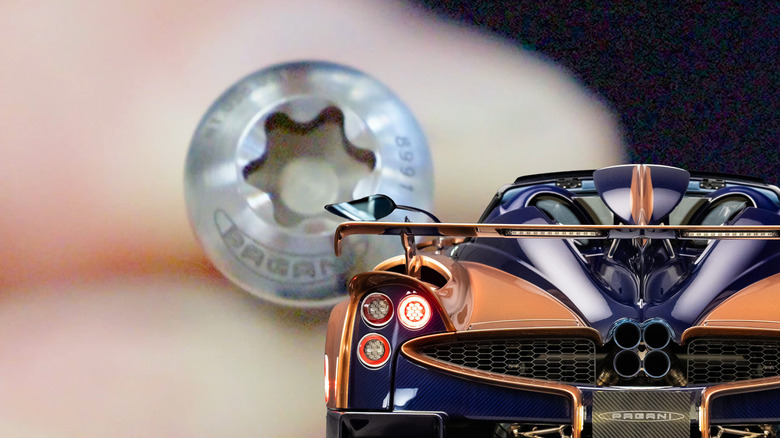
There's a story that gets passed around Modena like a secret — whispered at long dinners, traded in the corridors of rival factories. The titanium bolts that hold a Pagani together, so the tale goes, cost more in total than a brand-new Porsche 911. It sounds like the kind of fiction a marketing department dreams up on a slow Friday. It isn't. In fact, it may be the single most efficient way to explain what Pagani actually is: not a car company in any conventional sense, but a workshop that has weaponised patience — and priced it accordingly.
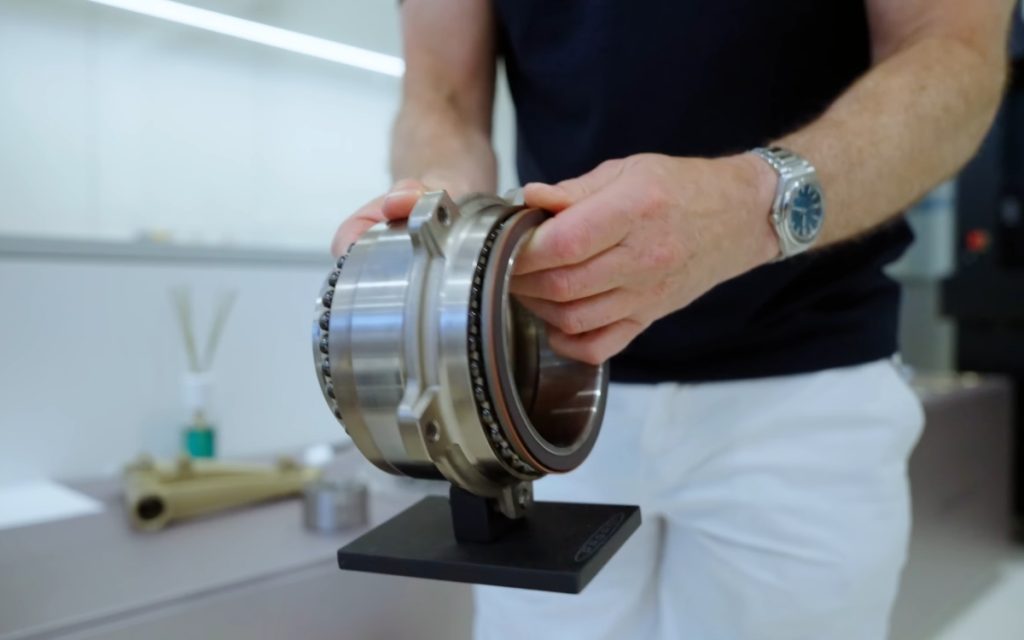
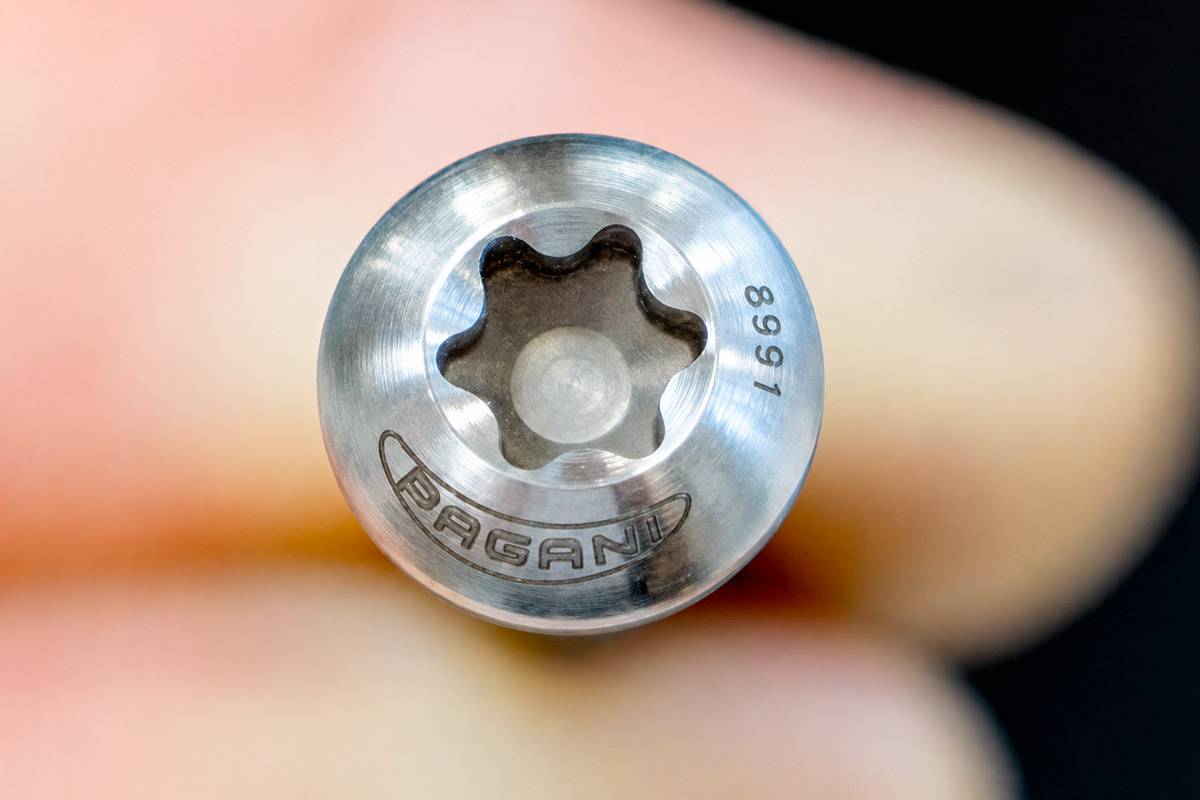
Start with the fasteners, because that's where the philosophy lives. Where every other manufacturer on earth buys catalogue hardware by the crate, Pagani machines its own from titanium and titanium-derived alloys. Each bolt is inscribed with the company's name and logged with a serial number, so the car can be traced and maintained decades down the line. Is it strictly necessary? No. A standard high-tensile bolt would hold a Huayra together perfectly well. But Horacio Pagani's founding obsession — inherited from his years at Lamborghini and his devotion to Leonardo da Vinci's belief that art and science are one discipline — demands that every component justify its existence twice: once functionally, once aesthetically. The bolts are the smallest, purest expression of that creed. At scale, they're also ruinously expensive.
The Real Luxury Is Calendar Time
This is the lens through which every Pagani headline suddenly makes sense. When a Florida collector spent three years and well over $4 million on a paint finish for a one-of-one Utopia — a finish incorporating 24-karat gold shavings and genuine moon dust — the internet reacted with derision. But the owner hadn't commissioned a paint job. He'd commissioned time. Three years of a workshop's calendar, three years of a painter's attention, three years during which the car sat at the centre of a small universe of specialists. At Pagani, calendar time is the scarcest commodity, and therefore the most expensive one. The gold and the moon rock are narrative. The years are the invoice.
Scarcity You Can't Industrialise
The same arithmetic governs the auction results. A Huayra crossing a Barrett-Jackson block at $3.19 million isn't being valued against its performance — prodigious, yes, but not unique. It's being valued against its irreproducibility. Fewer than a hundred and fifty Huayras exist. The Zonda run was smaller still. The Utopia, capped at ninety-nine coupes, is being built at a pace that would embarrass a boutique furniture maker. Scarcity of this order isn't a marketing strategy; it's a structural consequence of refusing to industrialise. You cannot build thousands of cars when every bolt carries a serial number. You cannot rush a machine whose value depends on the fact that it was never rushed.
Which is why the Codalunga commands $14.5 million without anyone seriously arguing it's five times the car a Huayra is. It's five times rarer, five times more labour-intensive, and it carries a story. At this stratum of the market, value has detached almost entirely from engineering and attached itself to provenance, patience, and the guarantee that no neighbour will ever own the same thing.
The Anti-Mercedes
The recent gathering of the Zonda, Huayra and Utopia alongside Mercedes-Benz's 140th anniversary celebrations made the contrast vivid. Mercedes invented the automobile through industrial genius — the radical idea that identical cars could be produced in their thousands. Pagani inverts that inheritance entirely. It takes Mercedes-AMG's V12 as a starting point, then wraps it in a body whose carbon-fibre process the company refuses to license to any other hypercar builder — because the process itself is the product. Where Mercedes democratised the car, Pagani has re-feudalised it: each machine a commission, each owner a patron, each bolt a small monument to the conviction that nothing worth owning should ever be quick to make.
So the next time a Pagani makes headlines for a price that seems divorced from reason, remember the bolts. They aren't a gimmick. They're the thesis statement — a company that has decided the cost of a car should be measured not in what it does, but in how long it took to become inevitable. It's an absurd economics, admittedly. It's also, in its own stubborn way, the most honest automotive philosophy on the planet.