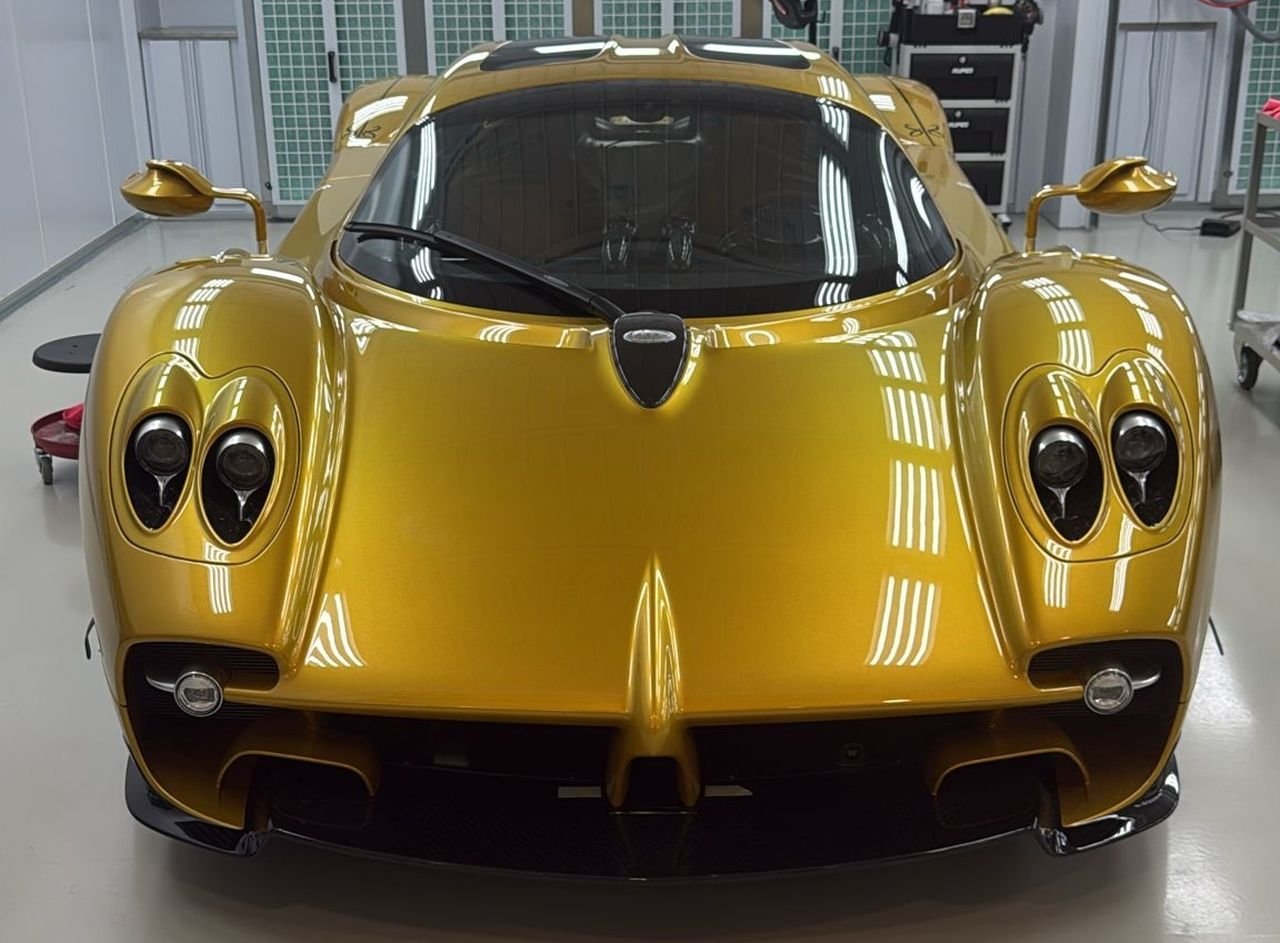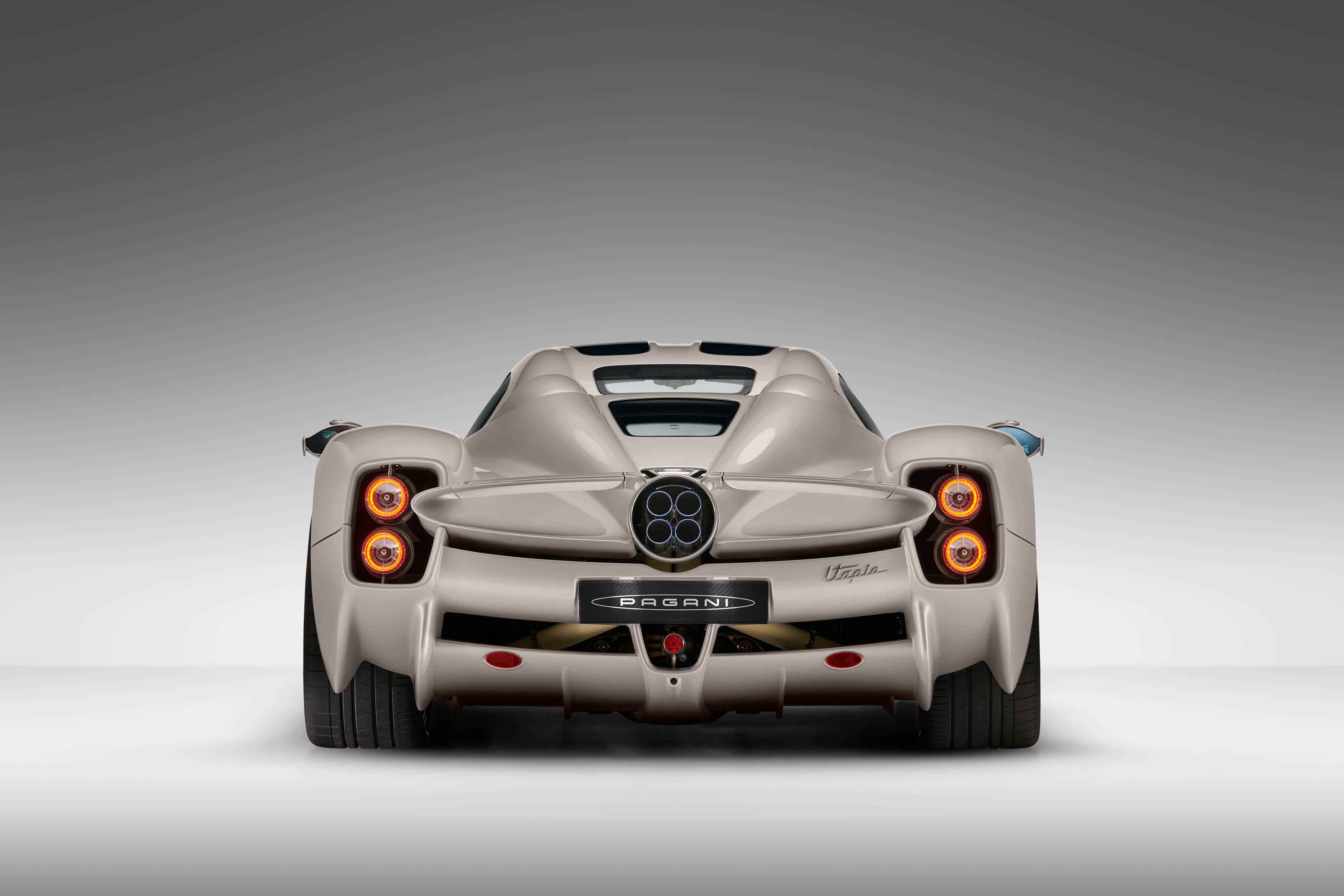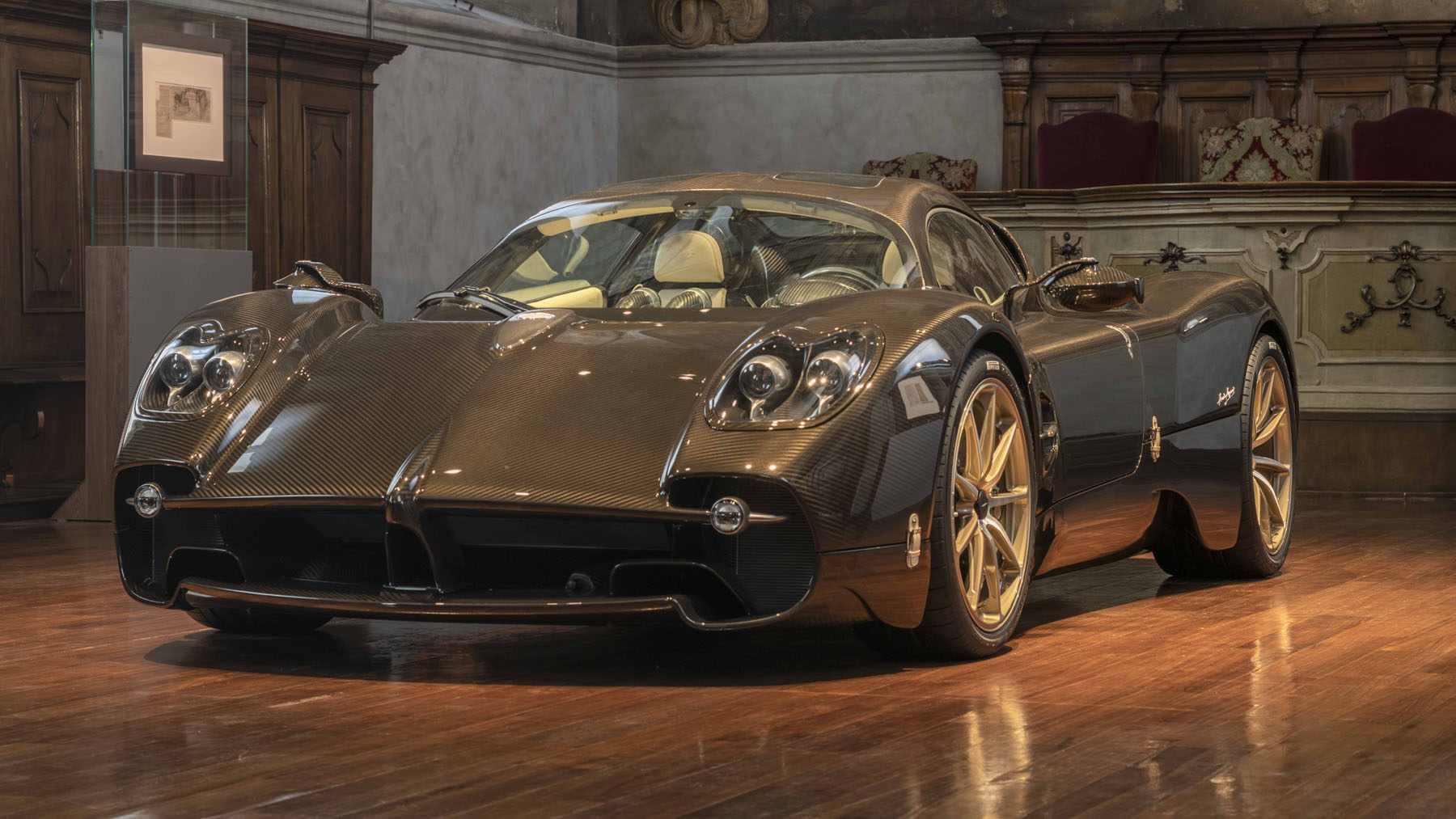
In an era when hypercar manufacturers compete on downforce figures and Nürburgring lap times, Horacio Pagani continues to operate by a different set of physics entirely. The latest evidence arrives in the form of a one-off Pagani Utopia finished with 24K gold and actual moon dust — a commission so audacious it reportedly began as a rejected Aston Martin request. The story alone is telling: a client approached Aston Martin, was turned away, and found in Pagani a house willing to entertain the seemingly impossible. That willingness is the brand's entire thesis, distilled into a single vehicle.
Consider what this commission represents. Pagani builds roughly forty cars a year; the Utopia coupe is capped at 99 examples, and even within that rarefied circle, a genuine one-off occupies a stratum of its own. The moon dust is not a gimmick but a material with provenance — lunar meteorite, ground and incorporated into the finish, sitting alongside gold leaf applied with the same deliberation a Renaissance workshop might have given an altarpiece. This is not decoration for its own sake. It is the automobile as reliquary, an object whose value derives less from what it does than from what it contains.
The Economics of the Unrepeatable
The financial logic is almost beside the point, yet it bears examination. Pagani's Huayra Codalunga, capped at five units and priced around $14.5 million, has already demonstrated that the market will absorb seven-figure sums for scarcity dressed in carbon fibre. A one-off Utopia with meteorite in its paintwork sits comfortably in that conversation. Even the components obey this logic: a single Pagani's titanium bolts are said to cost more than an entire new Porsche 911, a detail that sounds absurd until you understand that the bolts are not fasteners but signatures, each one engraved and traceable to the car it belongs to.
Secrecy as a Design Language
What separates Pagani from its peers, however, is not extravagance but process. The company guards its carbon fibre techniques with a secrecy usually reserved for defence contractors — methods it refuses to license or hand to other hypercar builders. That reticence is instructive. In an industry where suppliers sell the same Brembo calipers and Michelin rubber to anyone with a purchase order, Pagani treats its material science as intellectual property of the highest order. The result is a car that cannot be replicated even by a competitor with unlimited resources, because the knowledge itself never leaves San Cesario sul Panaro. The 4 million stitches in a Codalunga's interior are not a boast about labour; they are proof of a supply chain that begins and ends with the founder's obsession.
The Bottega Model
This is why the Utopia one-off matters beyond its price. Pagani has always positioned itself not as a carmaker but as a *bottega* — a workshop in the truest sense, where the customer's imagination is the brief and Horacio is the artisan who signs the work. The Zonda's refusal to die, still generating special editions years after production ostensibly ended, speaks to the same impulse: at Pagani, the model cycle is dictated by patrons, not product planners. Even the brand's expansion into private jets and a thirty-storey residential tower in North Bay Village extends the same conviction — that the name on the object should guarantee a standard of execution, whether the object is a hypercar or a balcony.
There is a risk in all this, of course. When a marque's identity rests so heavily on scarcity and craft, each new commission raises the bar for the next. But watch the reaction to the moon-dust Utopia and you sense the calculation is sound. In a market saturated with limited editions that differ only in badge and hue, Pagani offers something genuinely unrepeatable: a car that exists because one person asked for the impossible and another said yes. The Utopia may be named for an ideal society, but its truest expression is this — a singular machine, dusted with the moon, built for an audience of one.