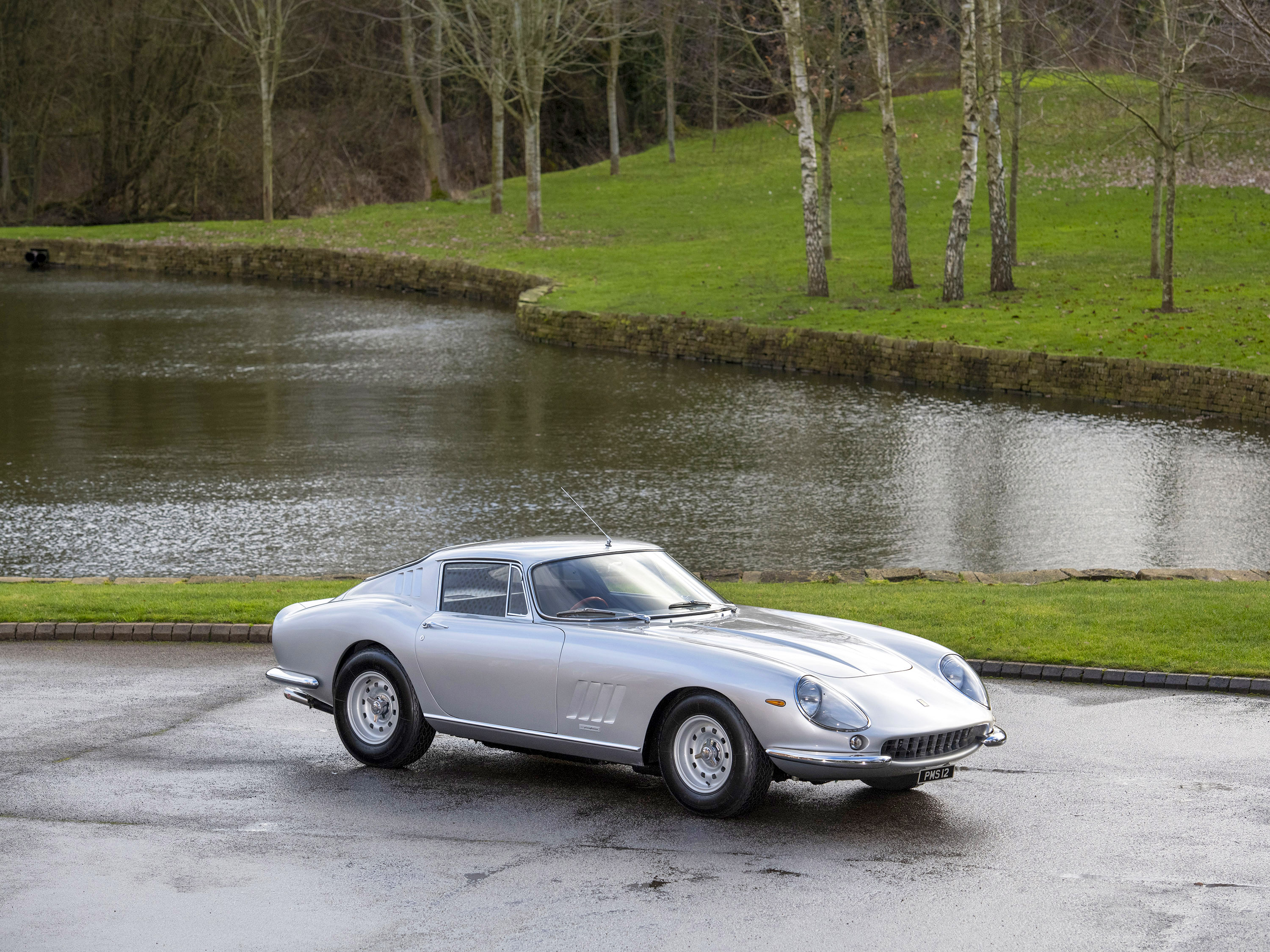
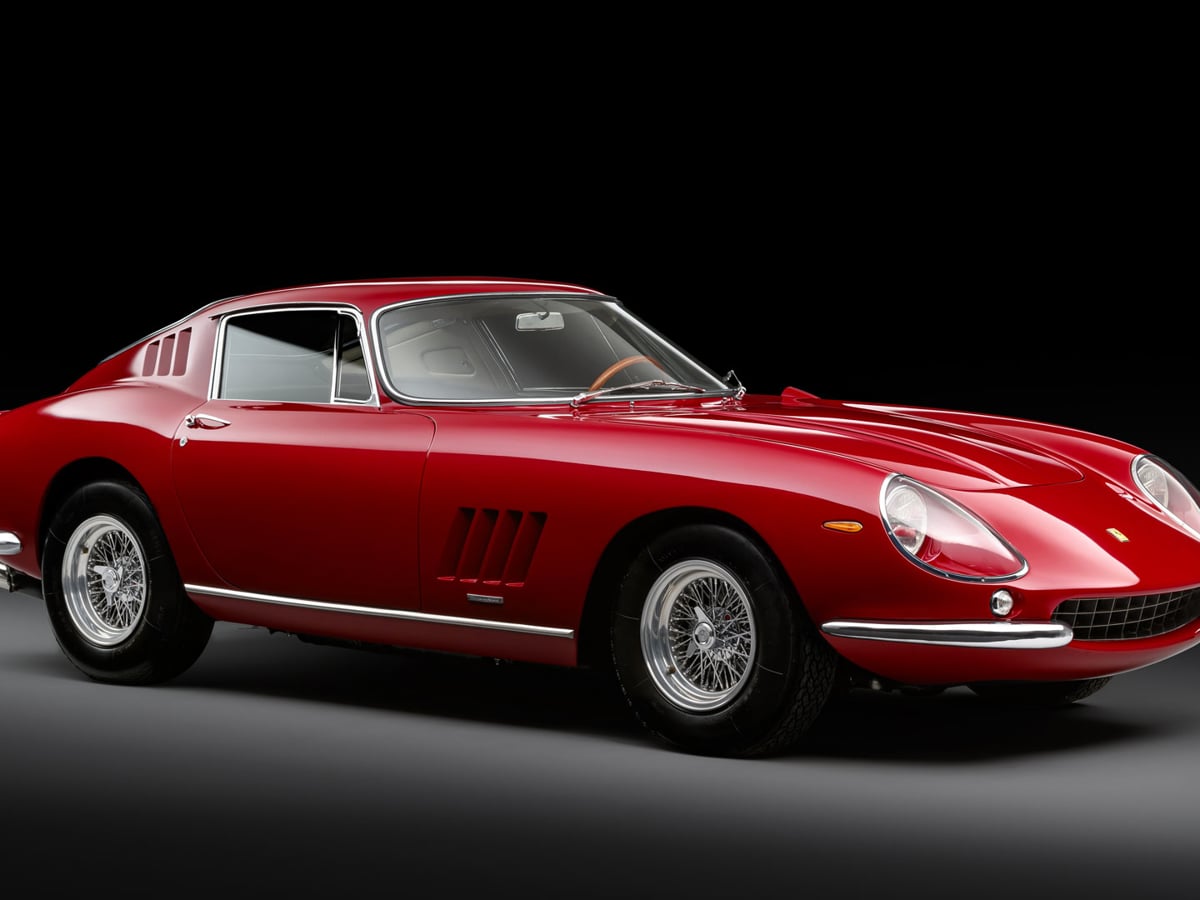
Long before the carbon-fiber cathedrals of San Cesario sul Panaro began producing Zondas and Huayras that defy both physics and fiscal sanity, there was a young Argentine boy staring at a photograph. The image wasn't of a space shuttle or a racing prototype; it was a Ferrari 275 GTB4, and for Horacio Pagani, it was the first time he understood that a machine could possess a soul. The recent revelation from Ferrari’s own archives—detailing Horacio’s lifelong obsession with that specific Berlinetta—is not merely a nostalgic footnote. It is the Rosetta Stone for deciphering every obsessive weld, every polished titanium intake, and every hand-stitched leather panel that has emerged from his atelier over the past three decades.
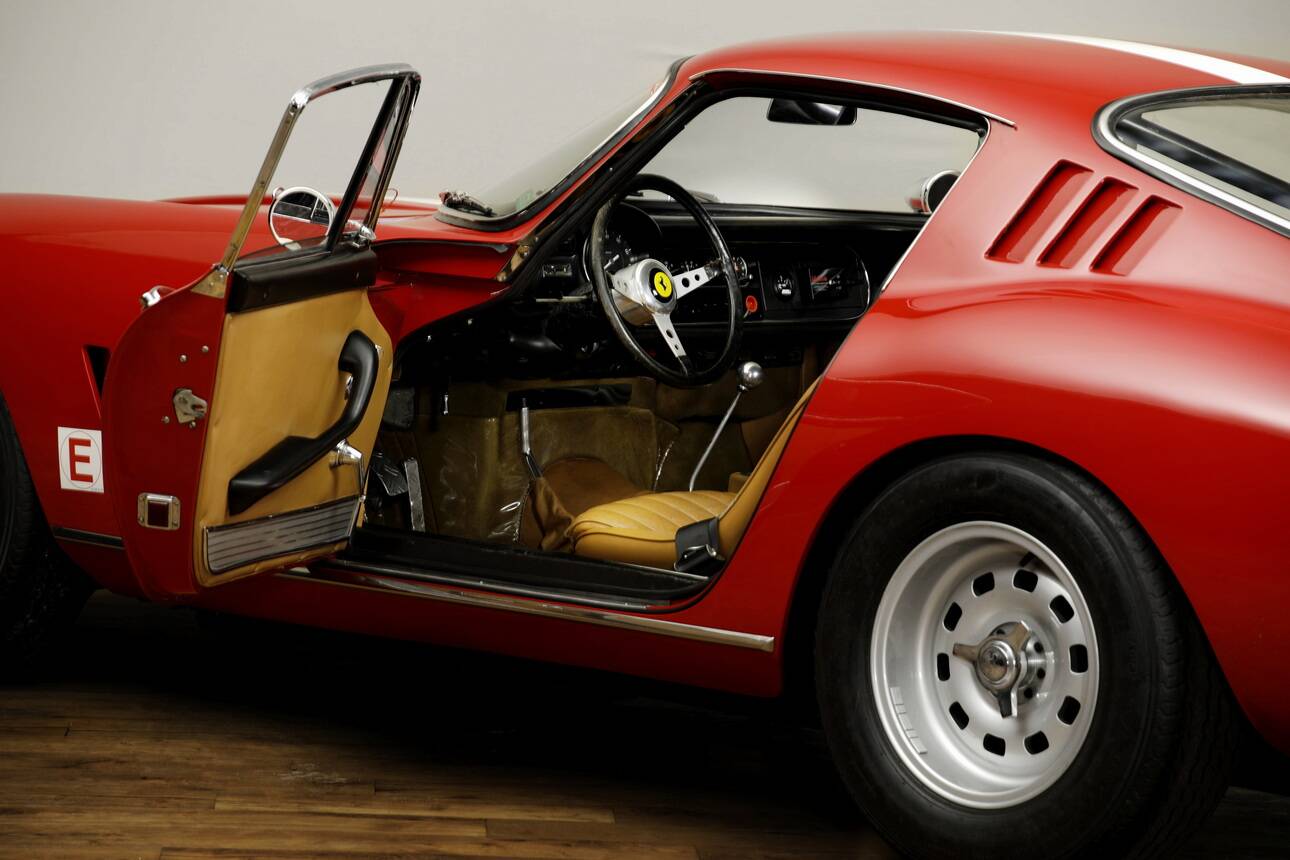
To understand the maestro, you must understand the object of his desire. The 275 GTB4, with its long hood and truncated tail, was not just a pretty face. It was the first Ferrari to employ a four-cam V12, a dry-sump lubrication system borrowed from racing, and a transaxle layout that gifted it near-perfect 50:50 weight distribution. It was a machine of exquisite contradictions—brutal in its performance for 1966, yet delicate in its coachwork, sculpted by Pininfarina’s Leonardo Fioravanti. For a young Horacio, who was sketching cars in his bedroom in Casilda, Argentina, this Ferrari represented the absolute synthesis of art and engineering. It wasn't just fast; it was *beautiful* in a way that made the heart ache. That dichotomy—the ruthless pursuit of mechanical perfection wrapped in a body of profound elegance—is the exact DNA that would later define the Pagani Zonda.
The Mechanical Dialogue
When Horacio finally acquired his dream 275 GTB4 decades later, it was not as a trophy to be locked in a vault. It was an object of study, a benchmark of emotional engineering. He famously dismantled it, not out of curiosity, but out of reverence—to understand how the Italians of the 1960s managed to make a car feel alive. That tactile sensation, the way a throttle responds with mechanical directness rather than electronic filtering, is something Pagani has obsessively chased. It explains why the Utopia, his latest masterpiece, offers a manual gearbox in an era of dual-clutch flappy-paddle tyranny. It is a direct philosophical descendant of that Ferrari’s gated shifter, a nod to a time when driving was a dialogue, not a monologue from a computer.
The connection isn’t merely romantic; it’s technical. The 275 GTB4’s transaxle layout, which moved the gearbox to the rear for balance, was a revelation in its day. Pagani has taken that lesson and evolved it, crafting chassis that prioritize weight distribution with an almost religious fervor. Every Huayra and Utopia that leaves the atelier carries that same commitment to balance—not as a spec sheet talking point, but as a fundamental truth that translates directly to how the car dances through a corner. It’s the difference between a machine that simply goes fast and one that makes you feel like you’re part of the physics, not just a passenger to it.
Sculpting With Carbon
The influence runs deeper than mere ergonomics. Look at the silhouette of a Pagani Huayra R, with its teardrop cabin and pronounced fender haunches, and you see a modern, carbon-fiber ghost of the 275 GTB4’s profile. More importantly, look at the materials. While Ferrari was experimenting with steel and aluminum, Pagani became obsessed with composite materials—not because they were lighter, but because they allowed him to shape forms that were impossible with metal stamping. He wanted to create curves as sensual as those on his beloved Ferrari but executed with the precision of an aerospace-grade laboratory. The result is a brand that produces cars which are not merely transportation, but kinetic sculptures, each one a love letter to the machine that ignited his imagination.
That obsession with form explains why Pagani’s design language has remained so distinctive, even as the automotive world has shifted toward angular aggression and aero-driven excess. Where others bolt on wings and splitters, Pagani sculpts airflow into the body itself, creating surfaces that flow like water over stone. The 275 GTB4’s Kamm tail, a pragmatic solution to aerodynamic drag, becomes in Pagani’s hands a signature flourish—functional, yes, but also visually arresting in a way that pure engineering rarely achieves. It’s the difference between building a car and composing one.
The Integrity of the Invisible
This obsession also explains Pagani’s infamous attention to the invisible. The recent news that a Pagani’s bolts alone cost more than a new Porsche 911 is often cited as evidence of excess. But viewed through the lens of the 275 GTB4, it is simply the logical conclusion of Horacio’s philosophy. He knows that the beauty of a car is not skin deep; it lies in the integrity of every component. A Ferrari 275 GTB4 that is merely polished on the outside but worn on the inside is a tragedy. A Pagani, therefore, must be perfect even in the places no one will ever see, because that is the standard of respect he holds for the artistry of the automobile.
Walk around a Pagani and you’ll notice things you won’t find on any other hypercar: exposed carbon-weave that’s been clear-coated to perfection, titanium fasteners with machined logos, and suspension arms that look like they belong in a Swiss watch rather than under a car. None of this is necessary for performance. All of it is necessary for the soul. It’s the same ethos that drove Ferrari’s craftsmen in Maranello to hand-fit panels and polish components that would never be seen—a dedication to excellence that transcends function and becomes its own form of art.
The Muse Returns
In an industry rushing toward electrification and autonomous driving, the Pagani brand remains a defiant anachronism, a living museum dedicated to the purity of the internal combustion engine and the joy of manual control. But it is not nostalgia that drives Horacio Pagani; it is the completion of an idea. His hypercars are not retro, but they are reverent. They carry the spirit of that 1966 Ferrari forward, proving that the soul of a great car is timeless. When Horacio finally acquired his dream 275 GTB4, he wasn't just buying a car—he was bringing the muse home to the workshop where she could inspire every masterpiece that followed. And in doing so, he ensured that the flame lit by that Berlinetta’s four-cam V12 would never flicker out, only burn brighter with each new creation that bears his name.