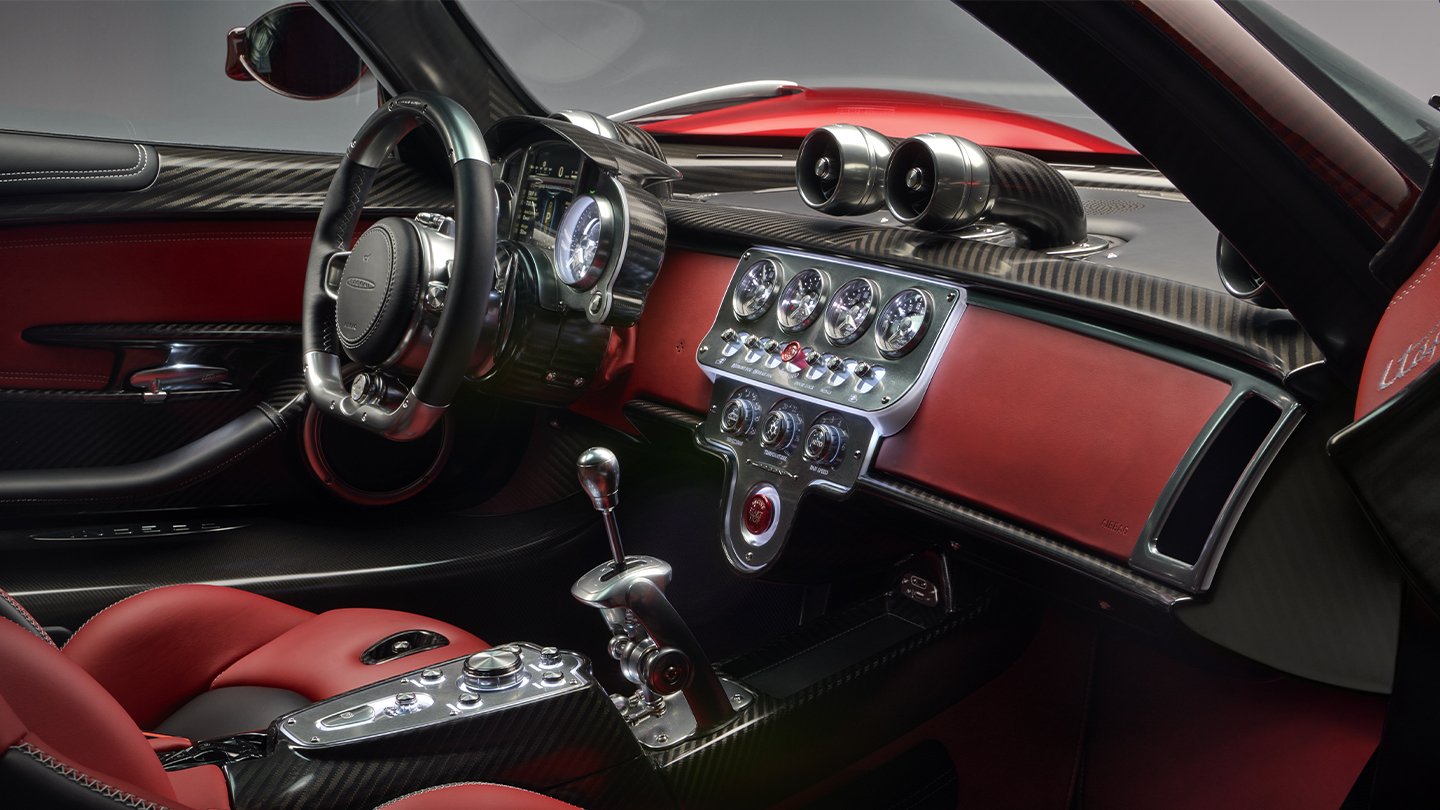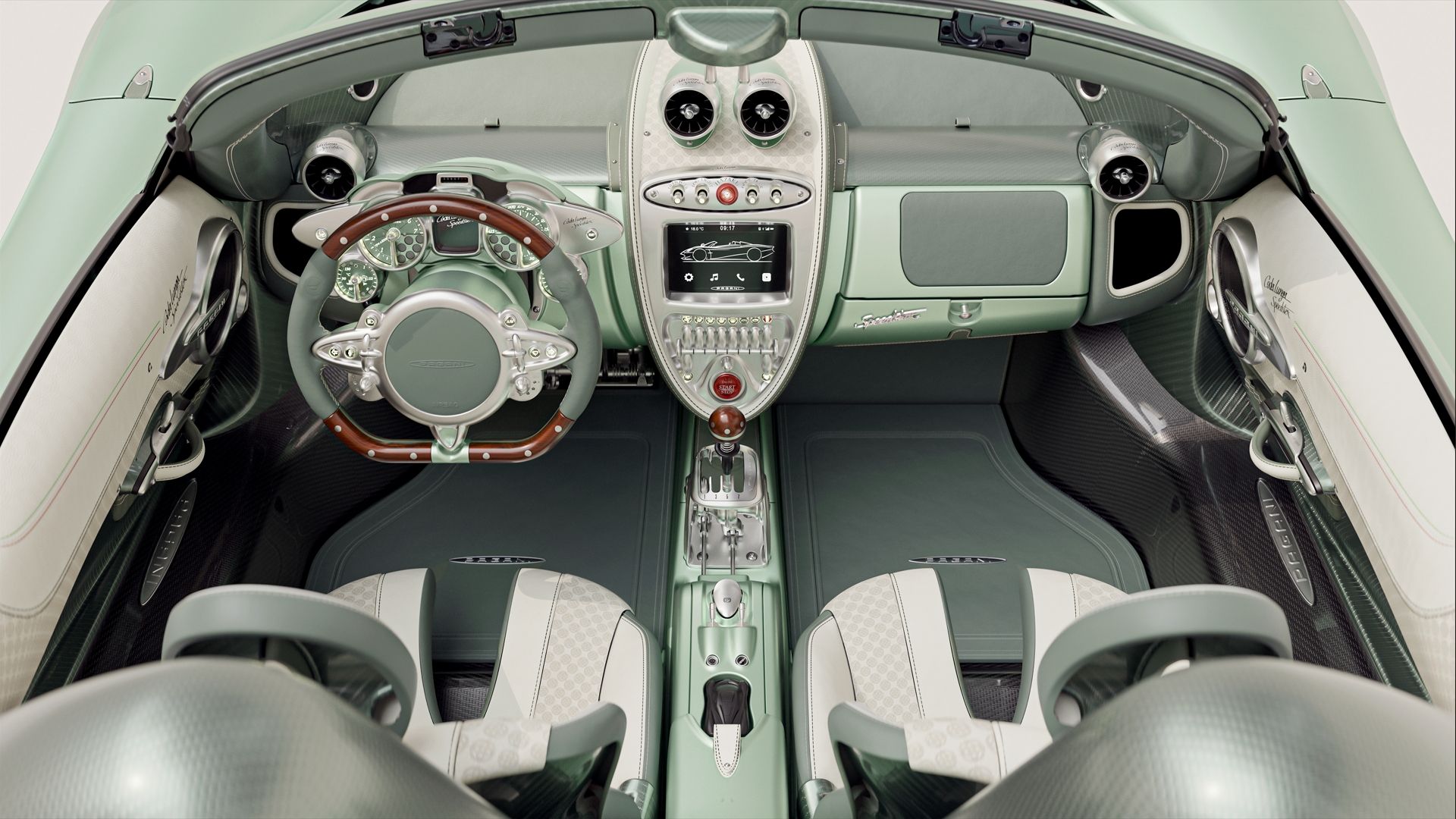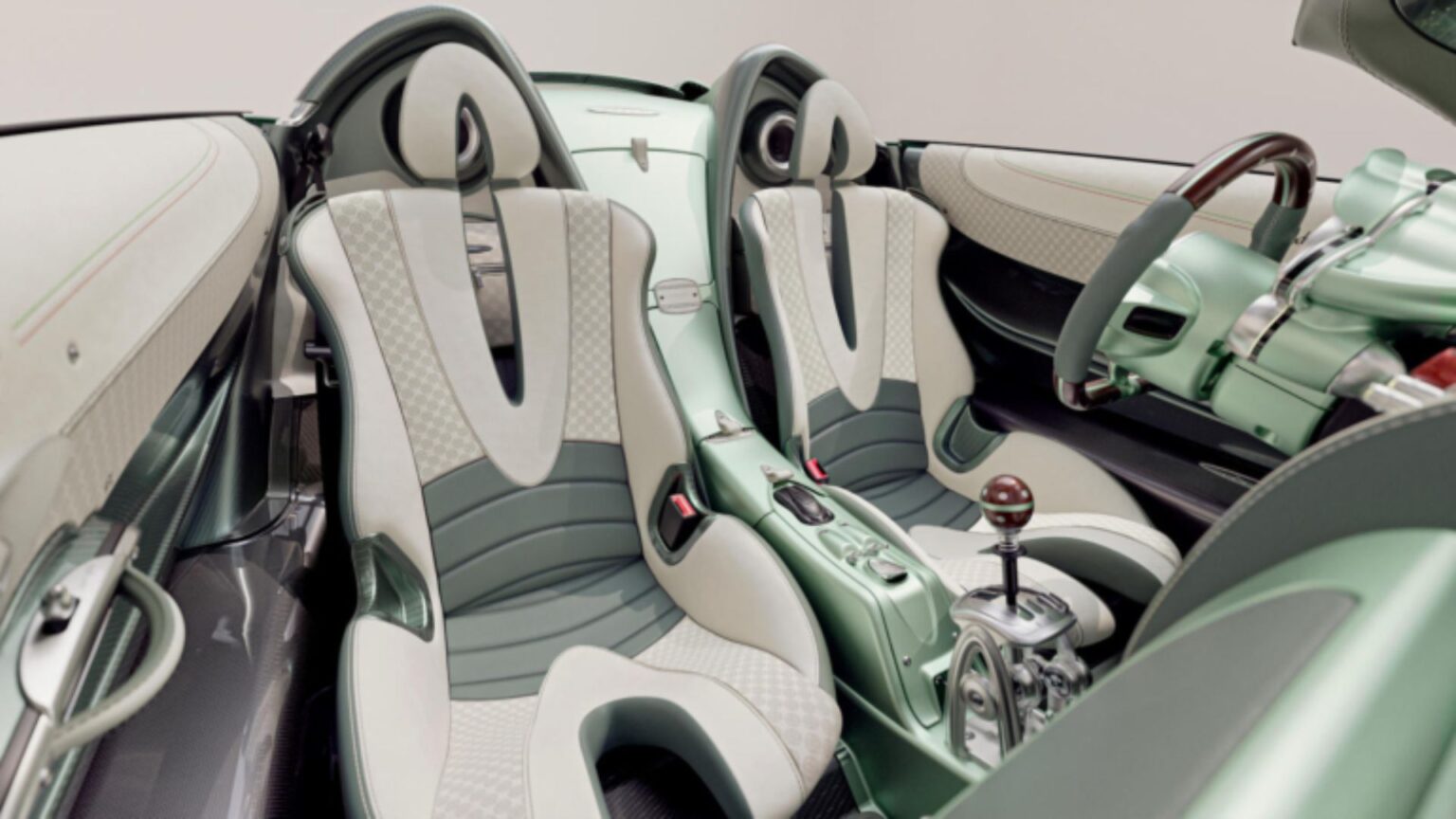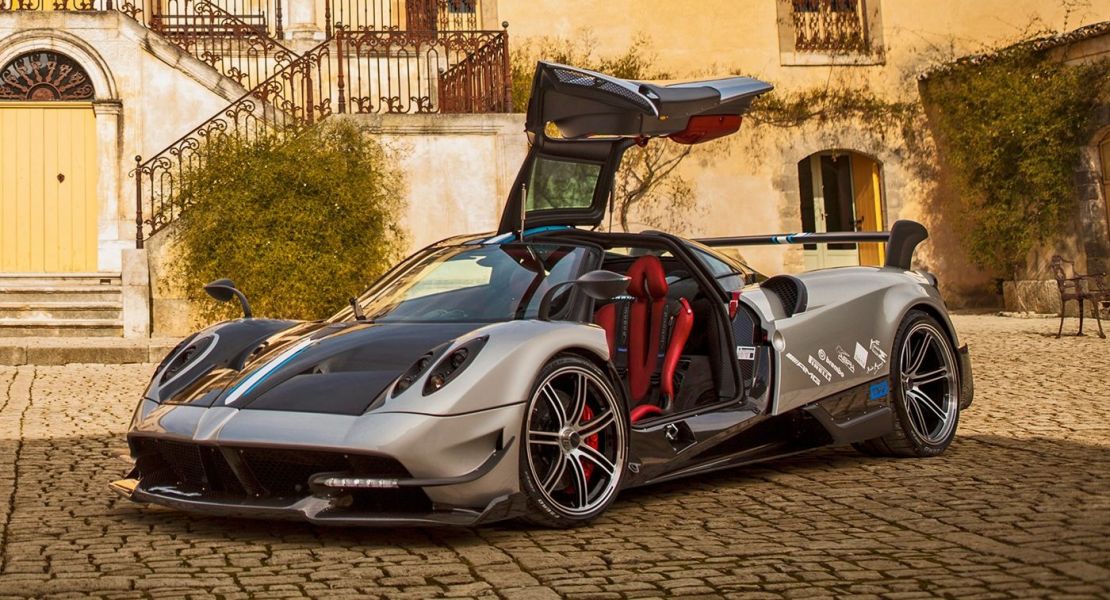
Some hypercars sell speed. The Pagani Huayra Codalunga sells hours — hundreds of them, accumulated by artisans who treat carbon fibre like fabric and leather like sculpture. Limited to just five examples and priced at roughly $14.5 million each, it is the purest expression of Horacio Pagani's philosophy to date. And the detail that best explains the price tag isn't the 840-horsepower V12, or the aerospace-grade composite monocoque. It's the interior, stitched together with approximately four million individual stitches.
To understand why that number matters, you have to understand what Pagani actually builds. Every Codalunga began as a customer commission, refined through the company's Grandi Complicazioni division — a department whose name, borrowed from the vocabulary of haute horlogerie, signals exactly how the marque views its own output.
Not Configured. Commissioned.
These are not cars assembled from an options list. They are bespoke objects negotiated over months, in the way a collector might commission a Patek Philippe or a Stradivarius. The four million stitches are not a marketing flourish; they are the physical residue of hundreds of hours of hand-guided machine work, executed by specialists in San Cesario sul Panaro who have spent careers learning how leather should behave across the complex topography of a hypercar cabin.
Consider the economics from a different angle. At $14.5 million, the Codalunga is among the most expensive new cars ever offered. Yet the five units were reportedly spoken for before the public ever saw them. That is the tell. Pagani isn't competing with Ferrari or Lamborghini on volume, nor with Bugatti on raw speed. It competes with the decorative arts.
The Utopia, its current series-production model — limited to 99 coupes — occupies a similar mental space, and a 2024 example recently surfaced for sale through Prestige Imports, a reminder that even Pagani's "standard" cars trade like blue-chip assets. Meanwhile, the manual-equipped Huayra 70 Derecho is set to debut at the 2026 Goodwood Festival of Speed, proving that Horacio still finds room for romance within an increasingly electrified landscape.
Credentials, And What Outlasts Them
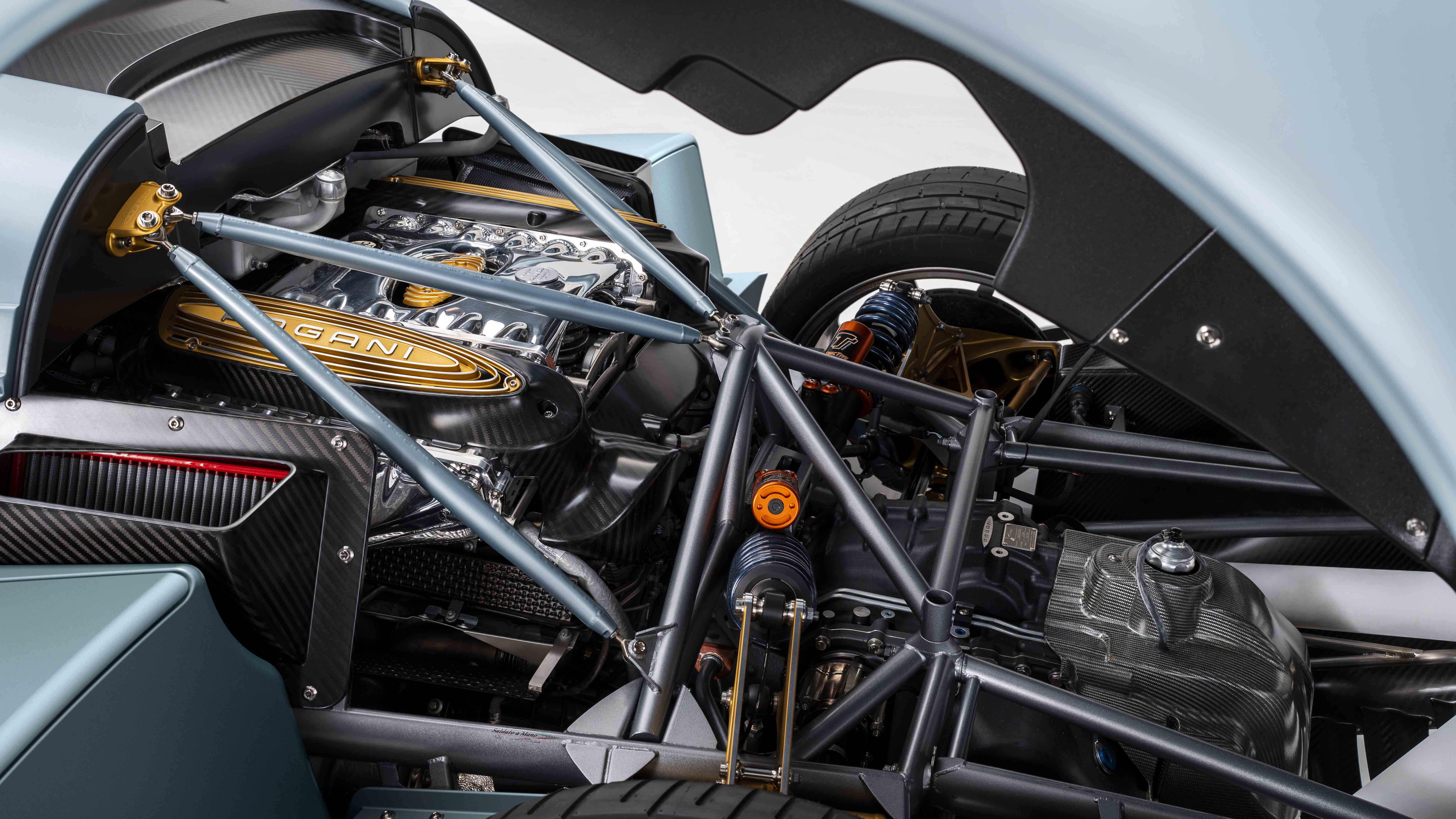
The Codalunga's mechanical credentials are genuine, of course. Its 6.0-litre twin-turbo AMG-sourced V12 delivers thrust that would embarrass most track-focused machinery, and its elongated tail — inspired by the streamlined racing coupes of the 1960s — reduces drag while amplifying presence.
But horsepower figures age quickly. A decade from now, some electric crossover will out-accelerate it. What will not age is the interior, or the exposed carbon weave, or the titanium hardware machined to tolerances that Pagani refuses to share with other hypercar builders. The company's proprietary carbon processes remain a closely guarded trade secret, and that secrecy is itself part of the value proposition.
Above the Mundane
There is a broader cultural point here. In an era when exotic car ownership is increasingly entangled with tax policy — California, for instance, has been tightening the loopholes that once favoured collectors — the Codalunga sits above such concerns. Nobody buys a five-off long-tail Pagani to exploit a registration dodge. They buy it because Horacio Pagani, a man who once dreamed of a Ferrari 275 GTB4 and now fields questions about which of his own creations he prefers depending on the mood he wakes up in, has built a company that functions as the last true atelier in the automotive world.
Four million stitches. Five cars. One price that sounds absurd until you calculate what it actually buys: not speed, not exclusivity alone, but the final flowering of a craft tradition the rest of the industry abandoned decades ago. The Codalunga is expensive because it is irreplaceable — and it is irreplaceable because no one else is willing to spend the time.