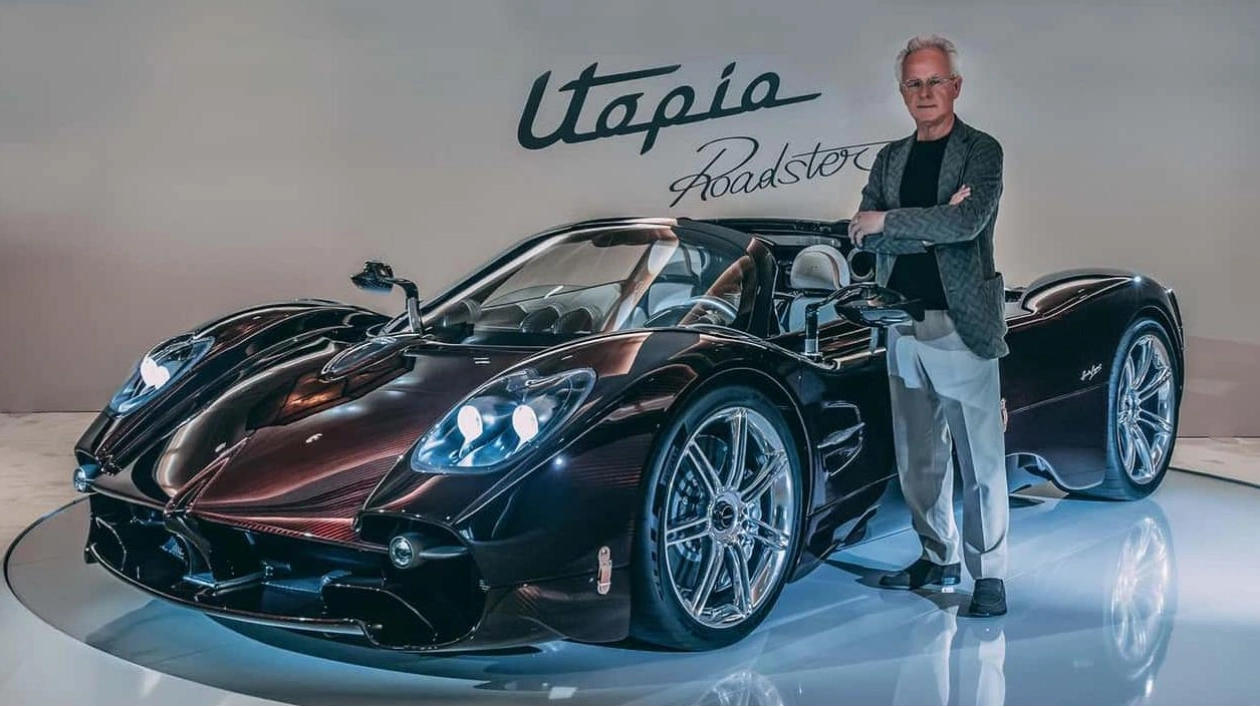
Every hypercar builder claims a secret sauce. McLaren has its carbon monocage, Ferrari has its Maranello wind tunnel, Bugatti has its W16. But one process in the hypercar world remains genuinely, stubbornly exclusive to a single workshop in San Cesario sul Panaro, a small town outside Modena where roughly a hundred people build automobiles that cost more than most houses. That process is Pagani's autoclave-cured, pre-preg carbon-titanium composite — and no rival has managed to copy it.
The story starts with Horacio Pagani's early career at Lamborghini, where he became obsessed with composite materials long before the rest of the industry understood what they could do. He famously petitioned the company to buy an autoclave — the pressurized oven that cures pre-preg carbon fiber — and was refused. He bought one anyway, an act of quiet defiance that would eventually define the entire philosophy of the brand he founded in 1992. That original autoclave, in spirit if not in serial number, still sits at the heart of Pagani's production line. It is not a metaphor. It is the literal center of the business.
The Cure Is the Secret
What makes Pagani's carbon work different is not the raw material, which is supplied by the same handful of aerospace-grade vendors that serve every top-tier manufacturer. It is the curing cycle and the hand-layup technique, both of which Horacio developed through decades of trial and error and has never licensed, never sold, and reportedly never fully documented outside his own head and the heads of a few long-serving technicians.
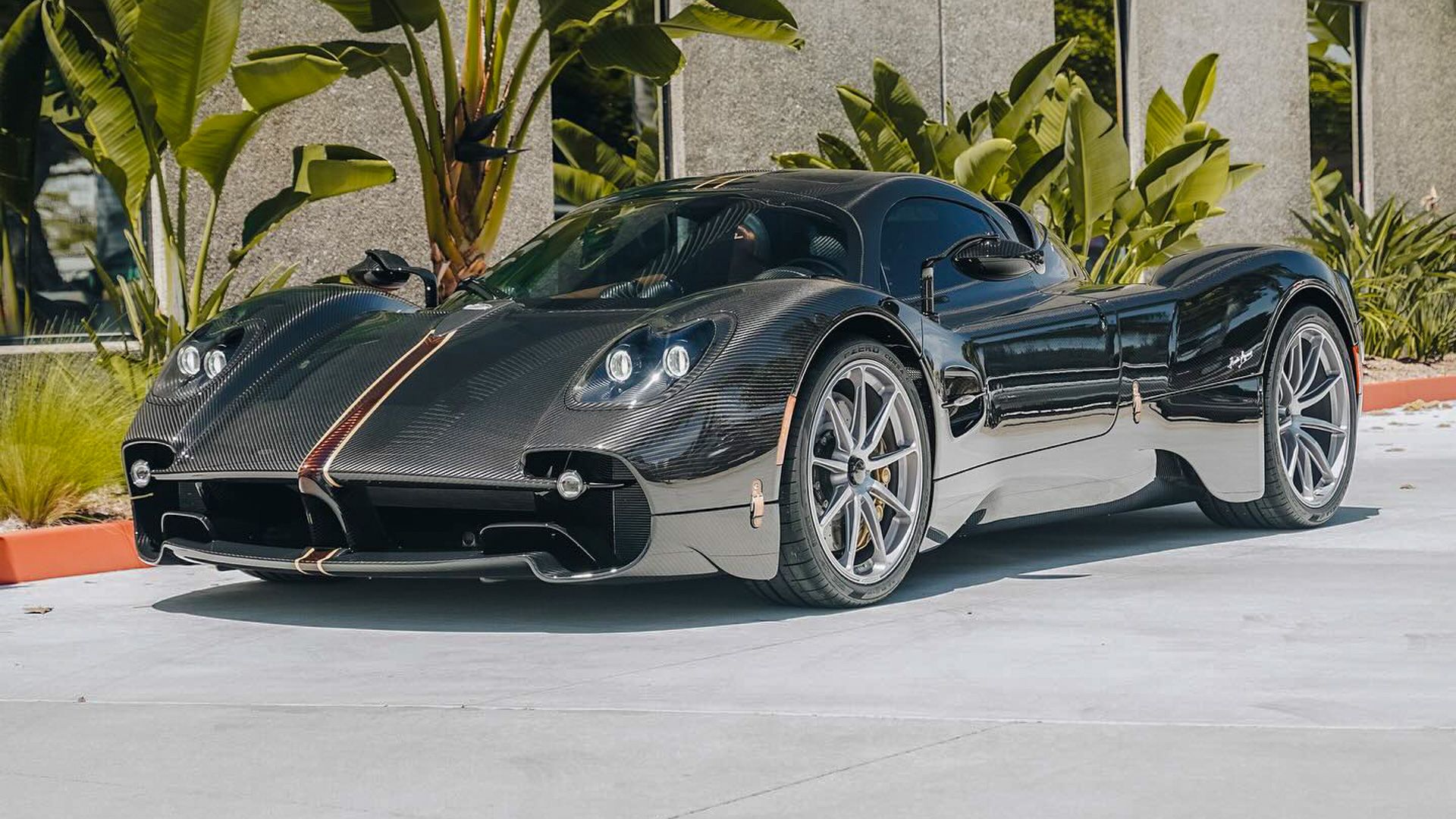
The result is a carbo-titanium monocoque that is roughly 40 percent stiffer and significantly lighter than conventional carbon-fiber tubs of equivalent mass — a claim Pagani has quietly proven through crash testing that other manufacturers have studied with envy. This is not a spec-sheet flourish. It is the difference between a structure that merely meets a target and one that redefines what the target should be.
The Utopia, Weighed and Measured
The Utopia, Pagani's current flagship, is the clearest beneficiary. Its central monocoque weighs barely more than 130 kilograms while meeting global homologation standards that would terrify most low-volume builders. That is not a marketing figure. It is the product of a process so labor-intensive that Pagani's own production rate — roughly forty cars a year across all models — is dictated less by demand than by how quickly a small team of artisans can lay, cure, and finish each tub. The company has never seriously considered expanding it.
Read that again: the bottleneck is not the order book. It is the hands. In an era when rivals brag about cycle times, Pagani treats slowness as a feature, because every additional hour at the layup table is another hour of stiffness and lightness baked into the structure.
When Every Gram Earns Its Keep
The financial consequences are visible everywhere. A single Pagani's titanium bolts alone cost more than a new Porsche 911, as recent reporting has gleefully noted, because they are machined and finished to aerospace tolerances that no volume manufacturer can justify. This is the downstream effect of the carbon philosophy: when the structure is this light, every fastener, every bracket, every gram becomes worth engineering obsessively.
The market, for its part, understands exactly what it is paying for. The recent $3.19 million result for a Huayra at Barrett-Jackson Palm Beach confirms it — collectors are not bidding on a badge, they are bidding on a process.
Why the Gap Won't Close
Rivals have tried. McLaren, Ferrari, and Lamborghini all now produce carbon monocoques of extraordinary quality, and in some measurable ways they match or exceed Pagani's stiffness-to-weight ratios. But they do so at volumes that require automated layup, robotically controlled curing, and supply chains that Pagani simply does not have.
The Italian firm's advantage is not that its carbon is better in the abstract. It is that the process is unrepeatable at scale — which means it is unrepeatable, period, for any company that needs to build more than a few dozen cars a year. The moment you automate it, you have a different process. The moment you scale it, you have a different car.
Horacio Pagani himself has been characteristically philosophical about all of this. Asked recently about his favorite car, he replied that it depends on the mood he wakes up in — a line that captures the same ethos that governs his carbon. The man does not optimize for consistency. He optimizes for the specific, the unrepeatable, the thing that cannot be copied because copying it would require becoming someone else.
In an industry hurtling toward electrification and shared platforms, that is either the most romantic position in the business or the most commercially reckless. Pagani has spent thirty years proving it can be both at once — and that the autoclave, quietly humming in San Cesario sul Panaro, was never just a machine. It was a manifesto.