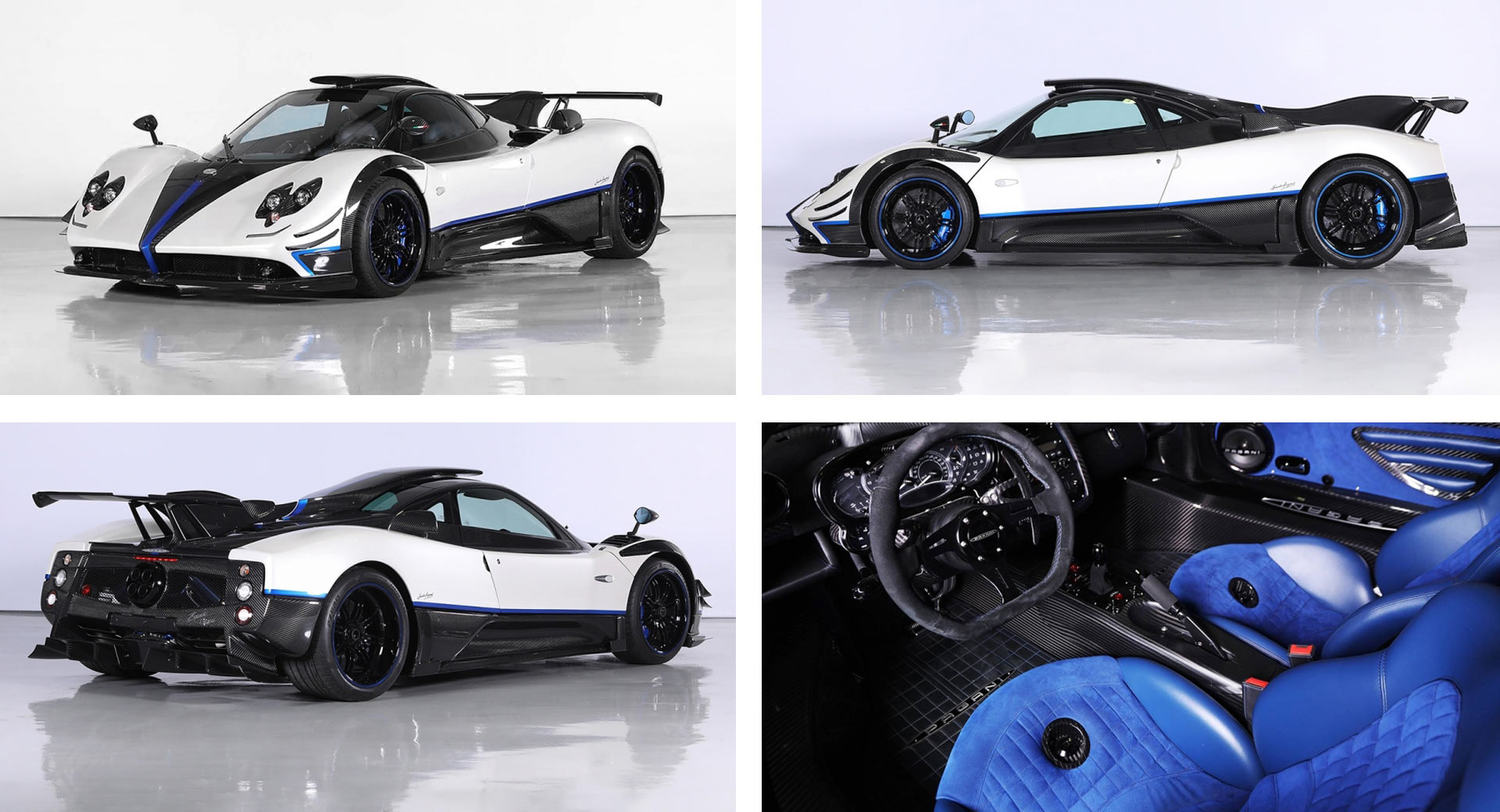
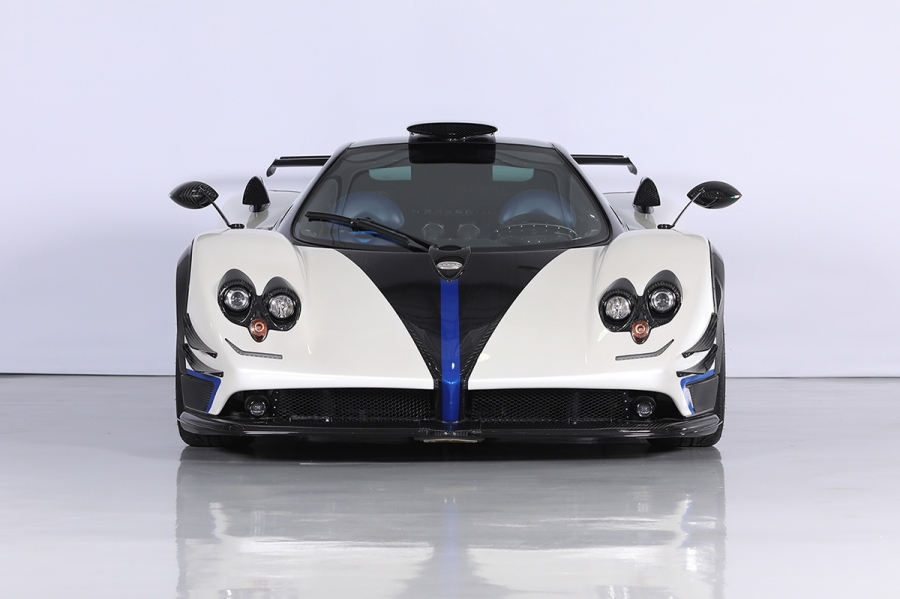
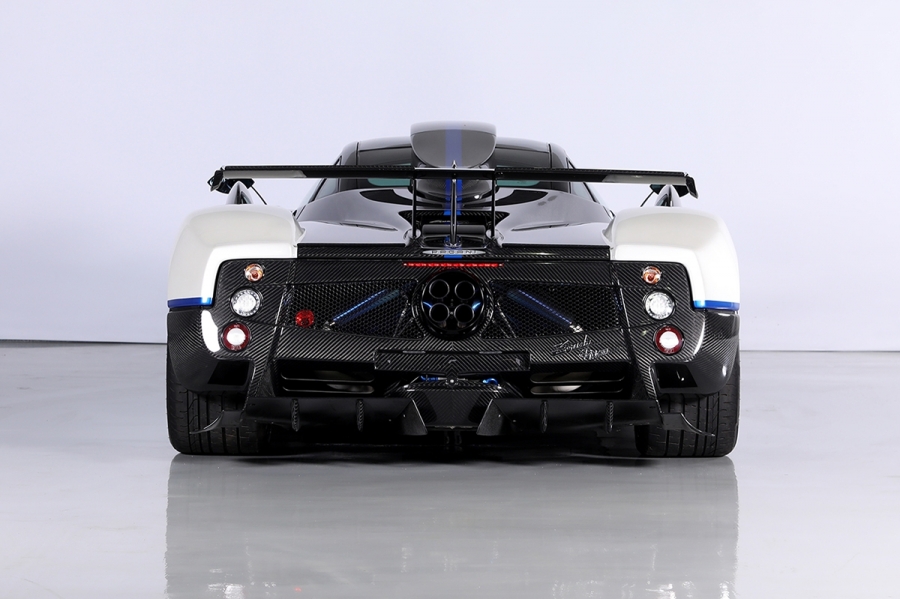
When the gavel fell on the Pagani Zonda Riviera at Riyadh Season, the final figure—$5.5 million—did more than set a record for a one-off Zonda. It confirmed a structural shift in how the world’s rarest automobiles are valued, traded, and speculated upon. Horacio Pagani’s creations, once the preserve of a small circle of connoisseurs who drove them and loved them, have become blue-chip assets in a global market where provenance, scarcity, and spectacle converge. The Riviera, a car that began life as a standard Zonda and was later transformed by Pagani’s own atelier into a unique commission, now stands as a case study in the new economics of hypercar flipping.
The mechanics of that economy are deceptively simple. Pagani builds fewer than forty cars a year, and the Zonda line—officially superseded by the Huayra and now the Utopia—has been closed for new orders for years. Every Zonda that changes hands does so in a market of fixed, dwindling supply. When a one-off like the Riviera appears, collectors are not bidding on a car so much as on a piece of documented automotive authorship.
The Anatomy of a $5.5 Million Sale
The Riviera’s specification, its commission history, and its public debut in Riyadh all contributed to a price that would have seemed absurd a decade ago, when Zondas traded for a fraction of that sum. Yet the same forces that lifted the Riviera are now visible across the marque. A Huayra crossing the block at Barrett-Jackson for $3.19 million is no longer an outlier; it is the new baseline.
What distinguishes Pagani from its rivals in this regard is the brand’s peculiar position between art and engineering. Ferrari and Porsche produce in volumes that, however restricted, still anchor their values to a broader market. Pagani operates more like a sculptor’s studio, and the market has begun to price its output accordingly. Each car carries the signature of Horacio Pagani himself, and each is effectively a commission. That personal authorship creates a narrative premium that speculators have learned to exploit.
The Narrative Premium
Buy a Pagani allocation, hold it, and sell it into a market where the waiting list stretches years and the secondary values routinely exceed the original sticker by multiples. The Riviera is simply the most dramatic recent expression of that logic.
The flip side of this financialization is a certain unease among purists. Paganis were built to be driven, and the Utopia Roadster—as recent reviews have attested—remains one of the most visceral experiences available on four wheels. Yet the cars that command the highest premiums are often the ones that accumulate the fewest miles. The Riviera’s value lies partly in its immaculate, museum-grade condition, a state that discourages the very use its engineers intended. This tension between utility and asset value is not unique to Pagani, but it is sharper here because the cars are so rare and so personal. When a single commission can appreciate by millions in a few years, the incentive to preserve rather than to drive becomes overwhelming.
From Hypercar to Lifestyle Brand
Meanwhile, the brand itself is expanding in directions that would have seemed improbable a decade ago. Pagani Residences in North Bay Village, a thirty-story tower rising on the Miami waterfront, signals that the name is now a luxury lifestyle proposition as much as an automotive one. That diversification matters for the economics of flipping, because it broadens the pool of buyers who recognize the marque. A collector who acquires a Zonda today may also be a resident of a Pagani-branded tower tomorrow, and the crossover strengthens the brand’s cultural footprint. Scarcity plus recognition equals pricing power, and Pagani now possesses both in unusual measure.
None of this guarantees that the Riviera’s $5.5 million will look reasonable in retrospect. Hypercar markets have corrected before, and the speculative fervor that surrounds limited-production machines can cool as quickly as it heats. But the underlying logic—tiny supply, documented provenance, and a global clientele with the means to compete for trophies—appears durable. Pagani has spent three decades building cars that function as both engineering marvels and collectible objects. The market has finally caught up, and the Riviera is simply the clearest evidence yet that the economics of the marque have entered a new and more rarefied phase.