Everywhere you look, the market is drowning in crossovers. High ride heights, cladded wheel arches, and the vague promise of weekend adventure dominate showroom floors. Yet Nissan, a brand more often in the news for software tie-ups with Honda or the depreciation curve of the Frontier, is quietly making the case that the most compelling engineering in its lineup sits closer to the ground. While the Altima and Sentra are routinely dismissed as rental-fleet footnotes, they may actually represent the purest distillation of what Nissan does best: building sharp, efficient, and surprisingly engaging machines that undercut their European rivals on price without sacrificing the joy of driving.
The last decade’s conventional wisdom dictated that buyers wanted utility, command seating, and the psychological comfort of all-wheel drive. But Nissan’s persistence suggests a different belief: that a meaningful slice of the driving public still understands the physics of a sedan. Lower center of gravity. Less weight. Better aerodynamics. These aren't abstract engineering talking points—they're the building blocks of a car that feels alive in your hands, something most compact SUVs simply cannot deliver.
The Altima: A Masterclass in Understated Rebellion
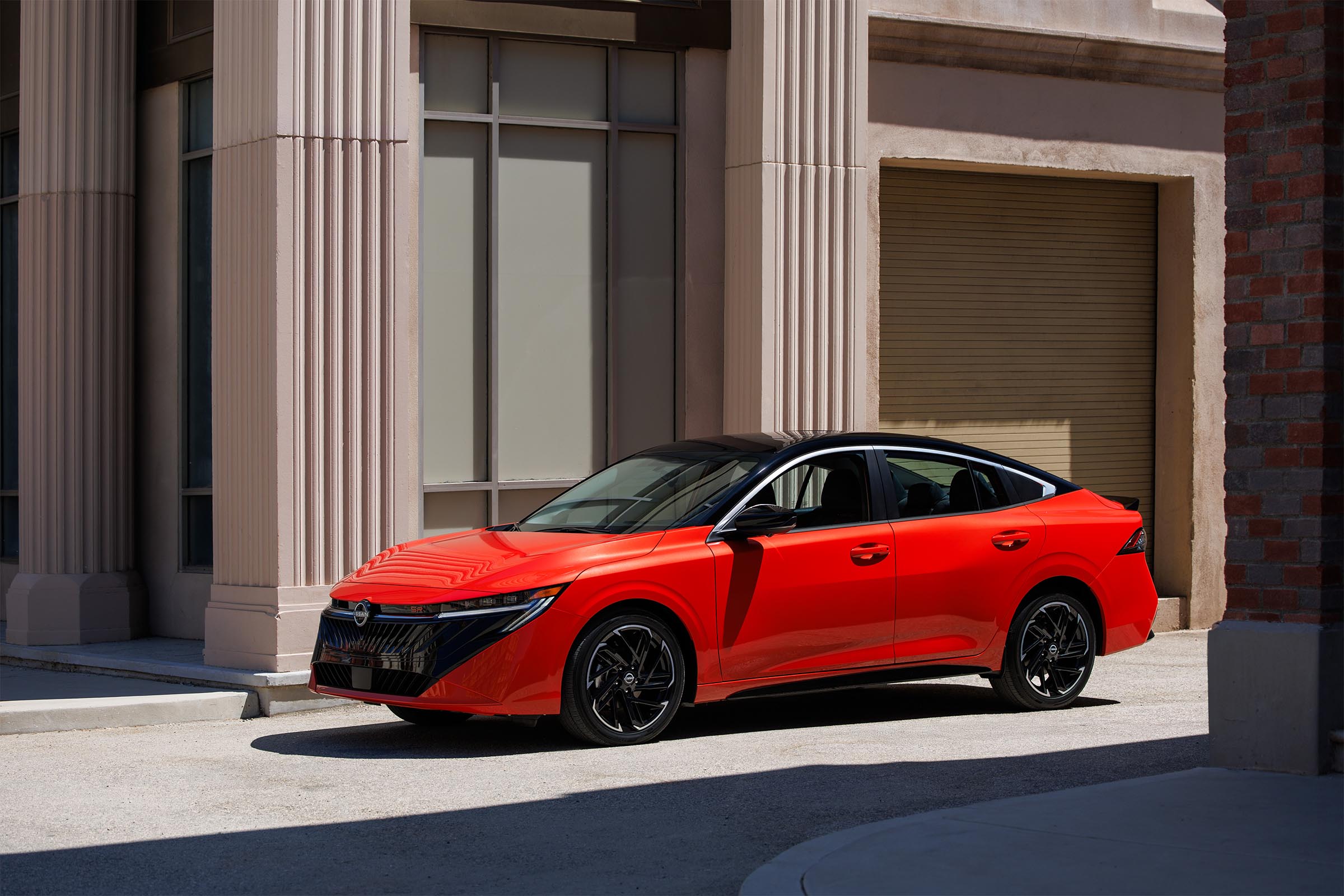
Let's talk about the current-generation Altima. It doesn't shout for attention with superfluous creases or faux-off-road cladding. Instead, it relies on a taut chassis and a variable-compression turbocharged engine that feels genuinely potent in a segment where four-cylinder apathy has become the default setting. This is a car that rewards the driver who actually enjoys steering—offering feedback that feels almost rebellious in a market that has traded dynamics for ride height.
There's a distinct craft to the sedan's packaging. The structural rigidity allows for precise suspension tuning without the compromised, wallowy setups often found in budget crossovers. Where an SUV rocks and rolls over undulating pavement, the Altima simply digs in and tracks true. It's the kind of composure that doesn't show up on a spec sheet but announces itself the moment you find a decent stretch of back road.
The Sentra: Entry-Level, Minus the Compromise
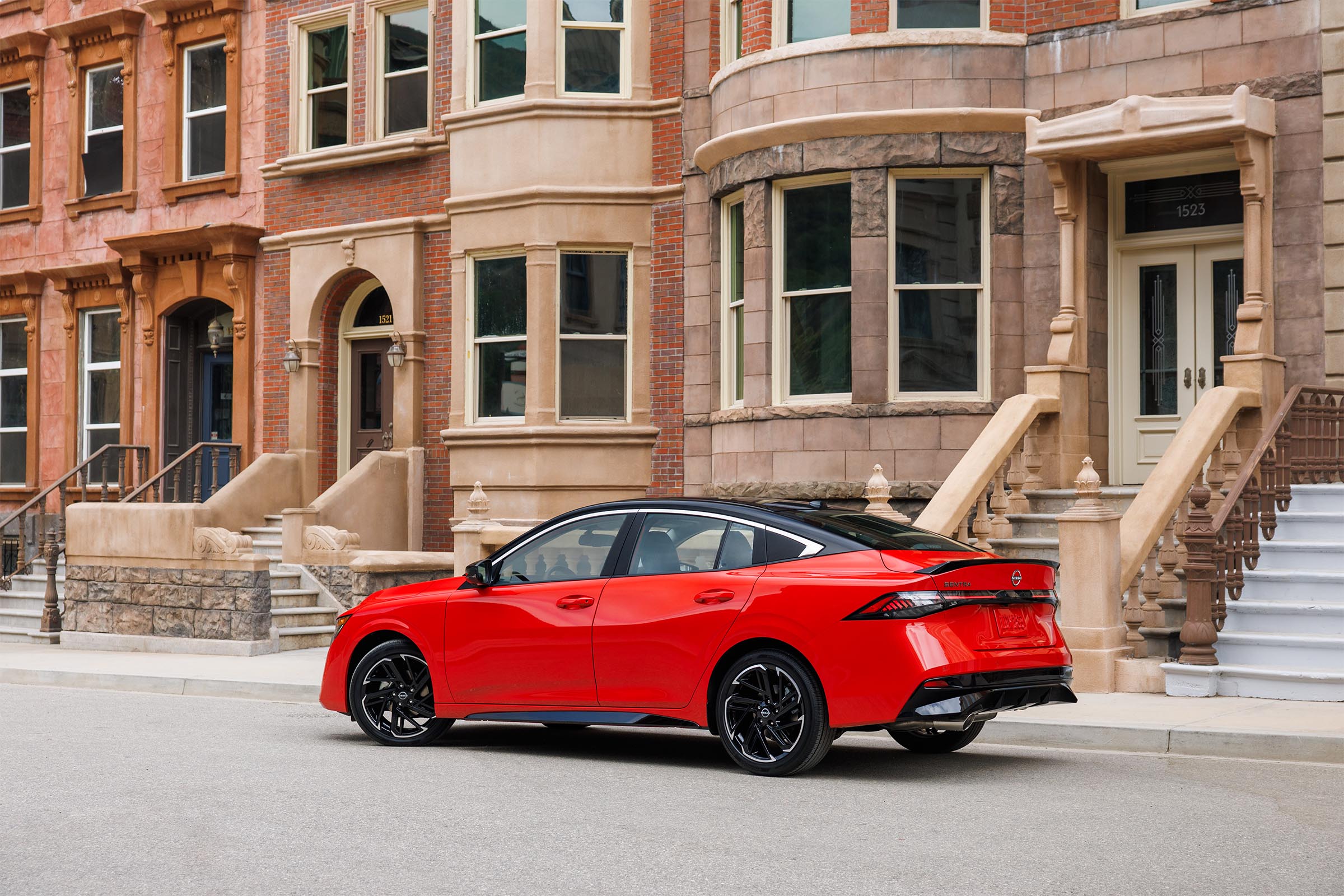
Move down the lineup and the Sentra tells a similar story. It has shed its econobox skin for a design language that borrows heavily from Nissan's more performance-oriented heritage. The result is a compact sedan that presents a compelling value proposition while signaling that Nissan isn't willing to cede the entry-level market to utilitarian hatchbacks.
But the value isn't just in the price tag—it's in the fundamentals. The Sentra's platform delivers a level of structural integrity that allows for suspension tuning you'd expect from something wearing a more prestigious badge. It's precise, predictable, and genuinely engaging. In a segment where competitors often feel like appliances, the Sentra feels like a car built by people who actually care about how it drives.
The Physics Argument: Efficiency as a Feature
Here's where Nissan's quiet case becomes loudest: the inherent advantages of the body style itself. A sedan is more aerodynamic and lighter than an equivalent crossover, which translates directly to better fuel economy and lower emissions. As the industry faces stringent regulations and volatile fuel prices, those attributes become increasingly critical—not just for the environment, but for the driver's wallet.
This focus on traditional body styles also serves as a strategic hedge. While the partnership with Honda on software architecture is a forward-looking move to amortize the enormous costs of digital integration, the physical hardware of the sedan remains a known quantity. It's a platform Nissan has perfected over decades, offering a lower barrier to entry for electrification. The Leaf proved the brand's early commitment to EVs, and the sedan architecture provides the perfect base for a future electric powertrain that doesn't carry the excessive weight of a high-riding SUV battery pack. As Nissan navigates its turnaround—with sources suggesting a unique hybrid system that differs from Toyota's approach—the sedan offers a stable, efficient platform to launch that technology.
The Rational Choice in an Irrational Market
The narrative of Nissan's revival is often told through the lens of SUVs and crossovers, but to ignore the sedan is to miss the point entirely. In a landscape where everything looks like a slightly inflated version of everything else, the Altima and Sentra offer a distinct identity. They're the rational choice for the driver who prioritizes driving dynamics over perceived utility, and who understands that the most efficient vehicle is often the one that doesn't emulate a truck.
Nissan's sedans are delivering a message the rest of the industry seems unwilling to hear: the body style isn't dead. It's simply waiting for everyone else to catch up to its logic. While the market chases the next crossover trend, Nissan is content to keep building cars that reward the act of driving—and that's a philosophy worth celebrating, even if it doesn't dominate the headlines.