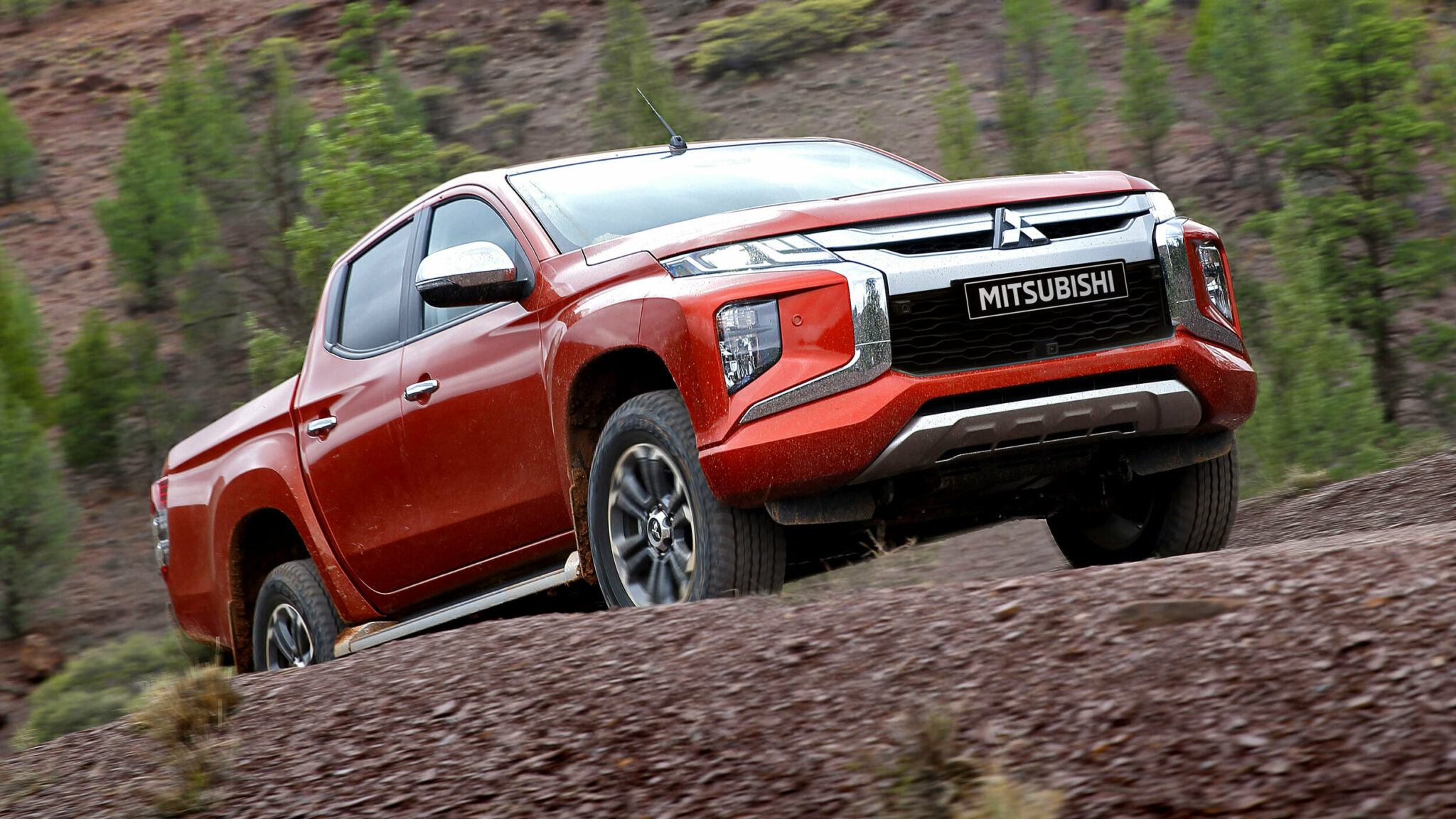
The memorandum of understanding between Honda and Mitsubishi Motors—the first of its kind between the two Japanese manufacturers—has produced its inaugural product, and it is not a hatchback, a crossover, or the kind of sensible family sedan that once defined Mitsubishi's identity. It is a pickup truck. According to reporting from Automotive News and Motor1, Honda's new truck will be built on a Mitsubishi platform and will arrive in 2028, marking the first tangible fruit of a partnership formalized in 2024.
For anyone who has tracked Mitsubishi's slow retreat from passenger cars, this announcement reads less like a strategic expansion and more like a quiet admission: the sedan is finished, and badge-engineering is the only road left. It is a strange epitaph for a company that once built rally heroes—and a revealing one.
What the Three Diamonds Used to Mean
To understand the weight of that admission, one has to remember what Mitsubishi Motors once represented. The Lancer Evolution was a rally homologation hero that embarrassed more expensive machinery on gravel and tarmac alike. The Eclipse gave a generation of enthusiasts an affordable turbocharged coupe. The Galant was a legitimate mid-size contender in markets around the world. Even the humble Mirage carved out a niche as honest, inexpensive transportation.
That portfolio has been whittled down to a handful of crossovers and the Triton pickup, with the passenger-car lineup shrinking year after year. The sedan, once the backbone of the brand's global ambitions, has simply been allowed to die.
A Partnership of Equals—On Paper
The Honda deal accelerates that surrender. Mitsubishi will supply the pickup platform; Honda will badge and sell it. This is textbook complementarity—each company filling a gap in the other's lineup without the capital expenditure of solo development. It is also, unmistakably, badge-engineering.
The arrangement is presented as a partnership of equals, but the strategic asymmetry is hard to ignore. Honda gains a truck it does not currently build for certain markets; Mitsubishi gains a partner's scale and, implicitly, a lifeline. When your first major product collaboration with a larger rival is a vehicle you build for them to sell, the balance of power is not in doubt.
The Numbers Behind the Retreat
The broader context makes the picture starker. Mitsubishi has been candid about its financial limits, with executives stating plainly that the company cannot afford to build its own EVs at scale. That admission, reported by Motor1, sits alongside news that Foxconn has acquired a $727 million stake in a Mitsubishi Electric unit making EV components—a transaction that underscores how the Mitsubishi name is increasingly valuable in the industrial and electrical spheres rather than the passenger-car one.
The Mitsubishi Corporation conglomerate, meanwhile, is pouring roughly $1.02 billion into Arizona's Copper World project alongside Hudbay, a bet on the raw materials that will underpin the electric transition. These are confident, forward-looking moves. They simply have little to do with sedans, or with the kind of cars that once made Mitsubishi a household name among driving enthusiasts.
Rational, Yes—But Revealing
None of this is to say the pickup deal is unwise. In an industry where platform-sharing is the norm and development budgets are punishing, collaboration is rational. Toyota shares with Suzuki, Ford with Volkswagen, and the results are often competent vehicles that buyers enjoy without ever knowing the engineering lineage.
But there is a difference between sharing a platform to broaden a healthy lineup and using a partner's platform because your own passenger-car program has withered. The Honda-Mitsubishi truck is being framed as a win-win. Read more carefully, it is the latest milestone in a decades-long retreat from the segment that once defined the brand.
The sedan's surrender has been gradual, almost polite—a model quietly discontinued here, a nameplate left to age there. The Honda pickup deal makes it official. Mitsubishi is no longer a company that builds sedans and occasionally collaborates; it is a company that collaborates, builds trucks and crossovers, and lets the sedan live on only in memory. For a marque with the Lancer Evolution in its bloodline, that is a melancholy trade—competent, pragmatic, and utterly devoid of the character that once made the three diamonds mean something.