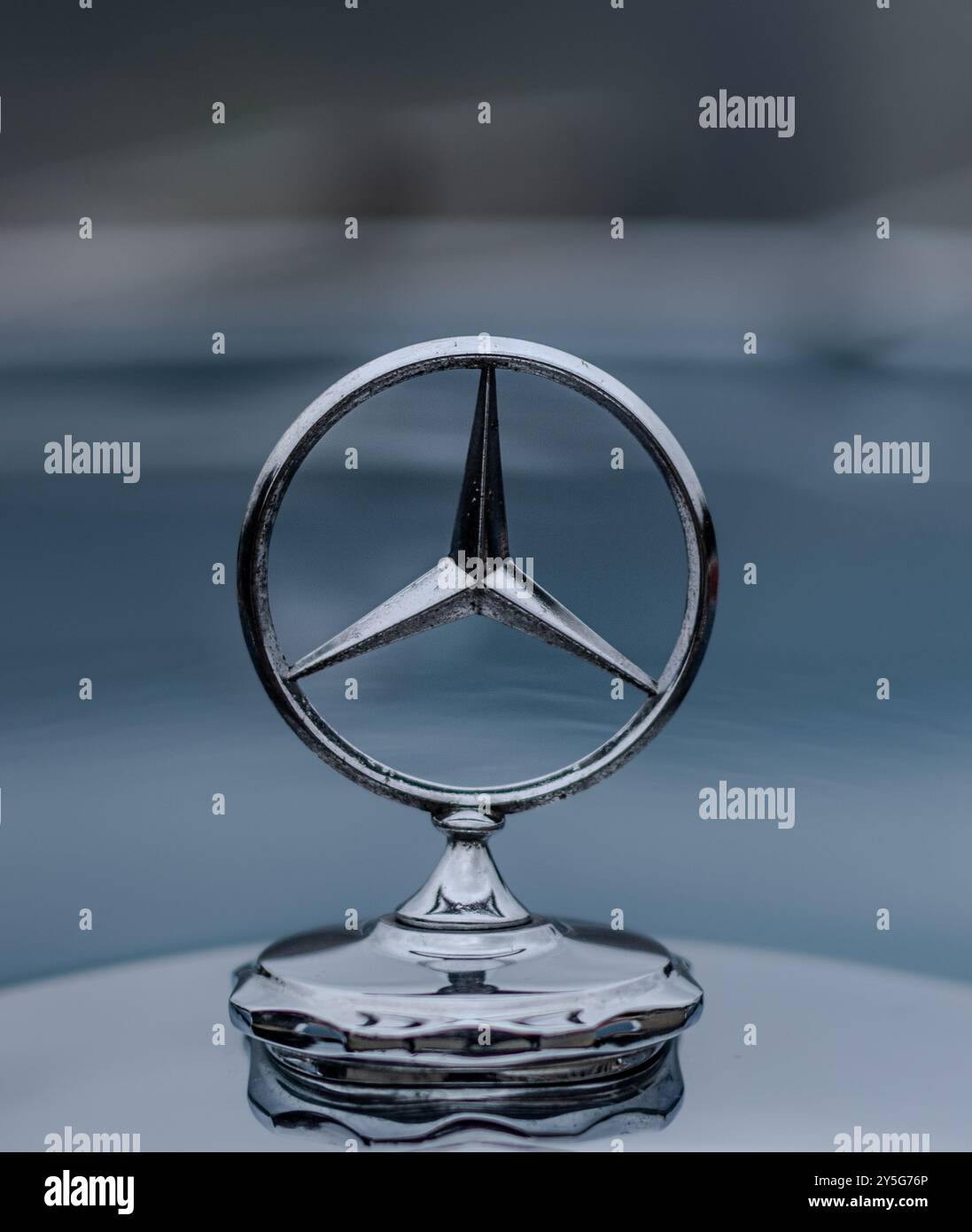
For a century, Mercedes-Benz sold status through sheet metal — the three-pointed star standing proud on the hood, the vault-like thunk of a door, the quiet arithmetic of a longer wheelbase. The new status symbol, it turns out, is being measured in spreadsheets. Voluntary buyouts for support staff, reported by the *Wall Street Journal* as market conditions worsen, represent something more profound than cost discipline. They signal that the ultimate luxury good in Stuttgart is now margin — and the willingness to shrink in order to protect it.
The timing is not accidental. Mercedes has simultaneously cut its 2026 profit guidance, with Reuters attributing the revision to China woes weighing on German automakers, while vowing through the *Financial Times* to stay in China even as sales slump. Read those headlines together and a coherent strategy emerges: the company is not retreating from its most important market, but it is no longer willing to buy volume at any price. The buyout programme is the domestic mirror of that decision — fewer people, clearer priorities, fatter margins.
The Inversion: From Ubiquity to Exclusivity
This is a remarkable inversion for a brand that built its identity on scale and ubiquity. The Mercedes-Benz of the postwar boom wanted a presence in every segment and every driveway; the modern marque wants a presence in fewer, more profitable ones. Support functions — the administrative scaffolding that grows quietly during expansion — are precisely where a company sheds weight when it decides that elegance means restraint. Offering voluntary departures rather than imposing layoffs is itself a luxury gesture: a dignified exit, conducted with the composure the brand has always claimed as its birthright.
The Product Offensive Has Rarely Been Stronger
The irony is that the hardware tells a very different story. The 2027 C-Class refresh adds AI, safety technology, and power, with the new C350 decisively outrunning the outgoing C300, while Road & Track still finds entry-level luxury intact. The GLC 400 EV has been crushing range estimates at nearly 400 miles, and the Mercedes-AMG GT SUV arrives with up to 1,153 horsepower and three electric motors. Even the GLB 250 may bring its 228-hp engine to America. This is not a company starved of investment; it is a company reallocating the cost of being everything to everyone into the cost of being unmistakably itself.
Grandeur and Discipline Under One Star
There is a philosophical dimension worth noting. When Pope Leo received Mercedes-Benz executives, the message was that technological innovation should serve human dignity — and the Vatican News coverage arrived alongside reminders of the brand's long history of building cars for the popes. A manufacturer that supplies the popemobile and then announces voluntary buyouts for its own support staff is navigating the tension between institutional grandeur and institutional discipline. The star must remain untarnished even as the organisation beneath it contracts.
The Open Question
Whether the market rewards this austerity is the open question. Guidance cuts are rarely applauded, and China's slump will not be solved by trimming back-office headcount in Germany. Yet the strategic logic is difficult to fault. Luxury has always been defined by scarcity — the limited production run, the waiting list, the object not everyone can have. Mercedes is now applying that principle to its own workforce and cost base, treating leanness as a form of exclusivity. In an era when every rival can bolt a screen to a dashboard, the rarest commodity is a balance sheet that still commands respect.
The comparison tests keep coming — the CLA Electric against the Tesla Model 3, the GLC 400 against BMW's iX3 — and Mercedes keeps showing up with credible answers. What the buyouts reveal is that the company understands the deeper contest. Prestige is no longer merely what the car says about its owner; it is what the company's margins say about its survival. Fewer staff, fatter margins, and a star that shines a little more selectively: that is the new definition of luxury, and Mercedes-Benz intends to define it first.