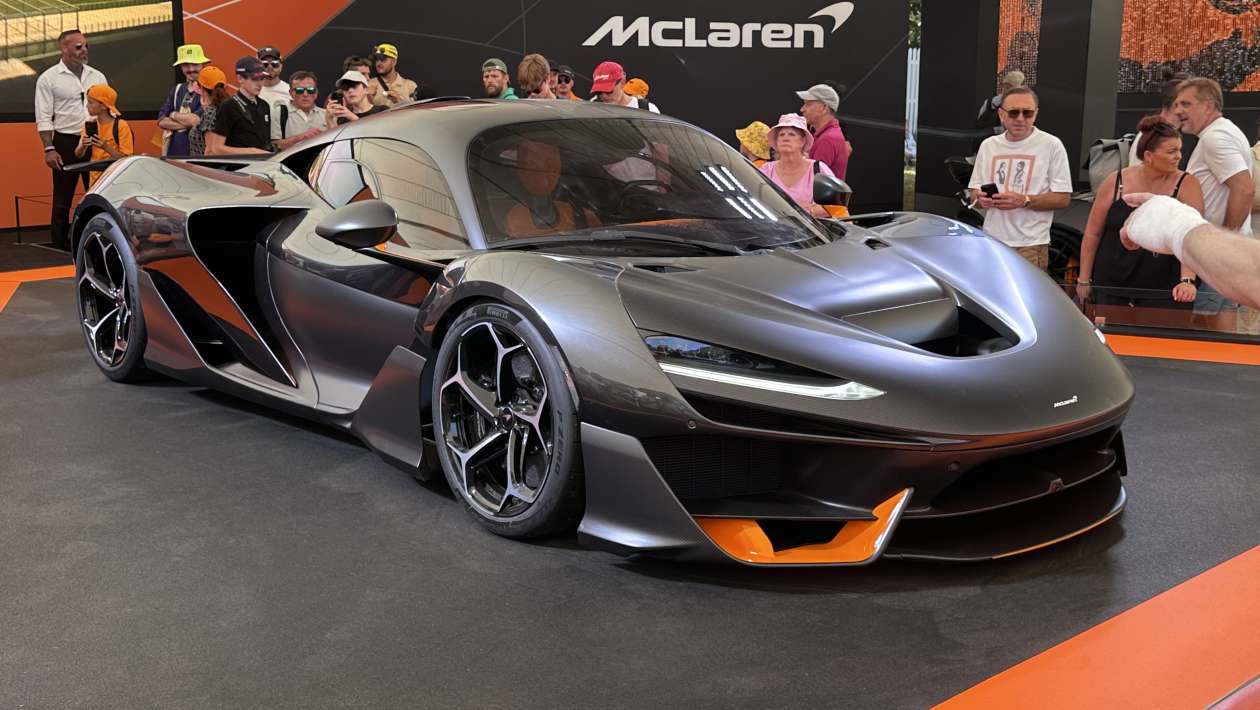
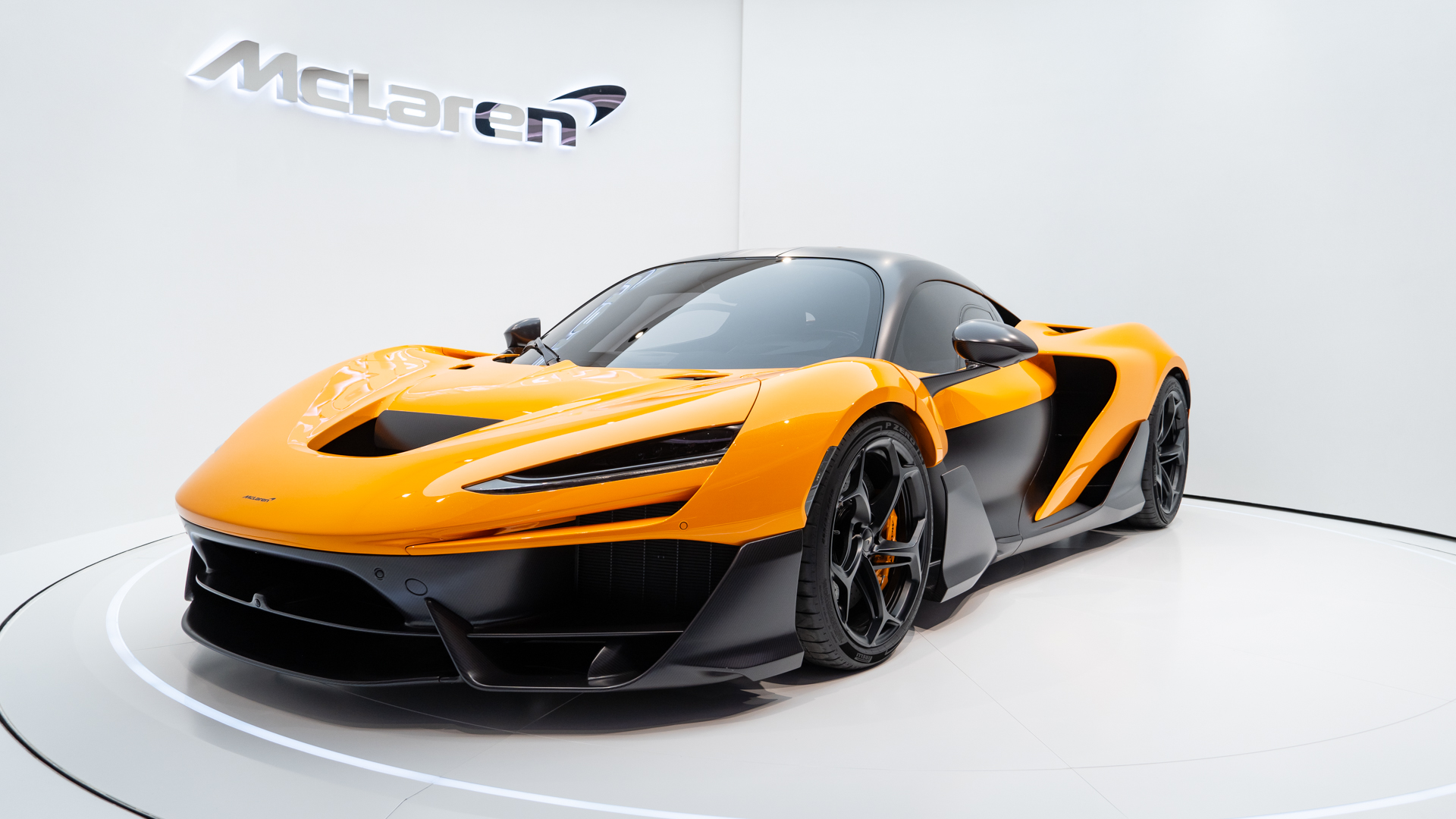
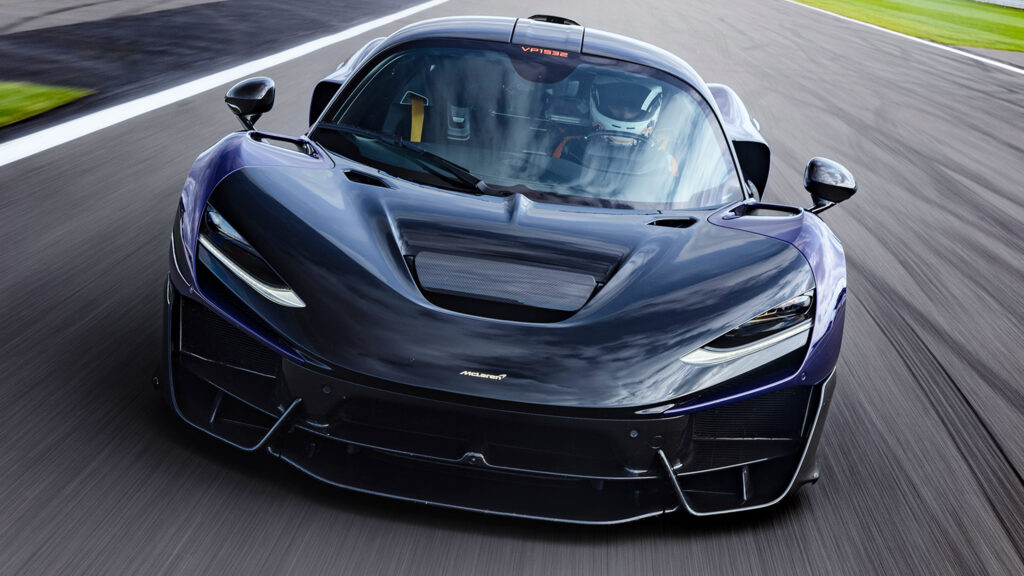
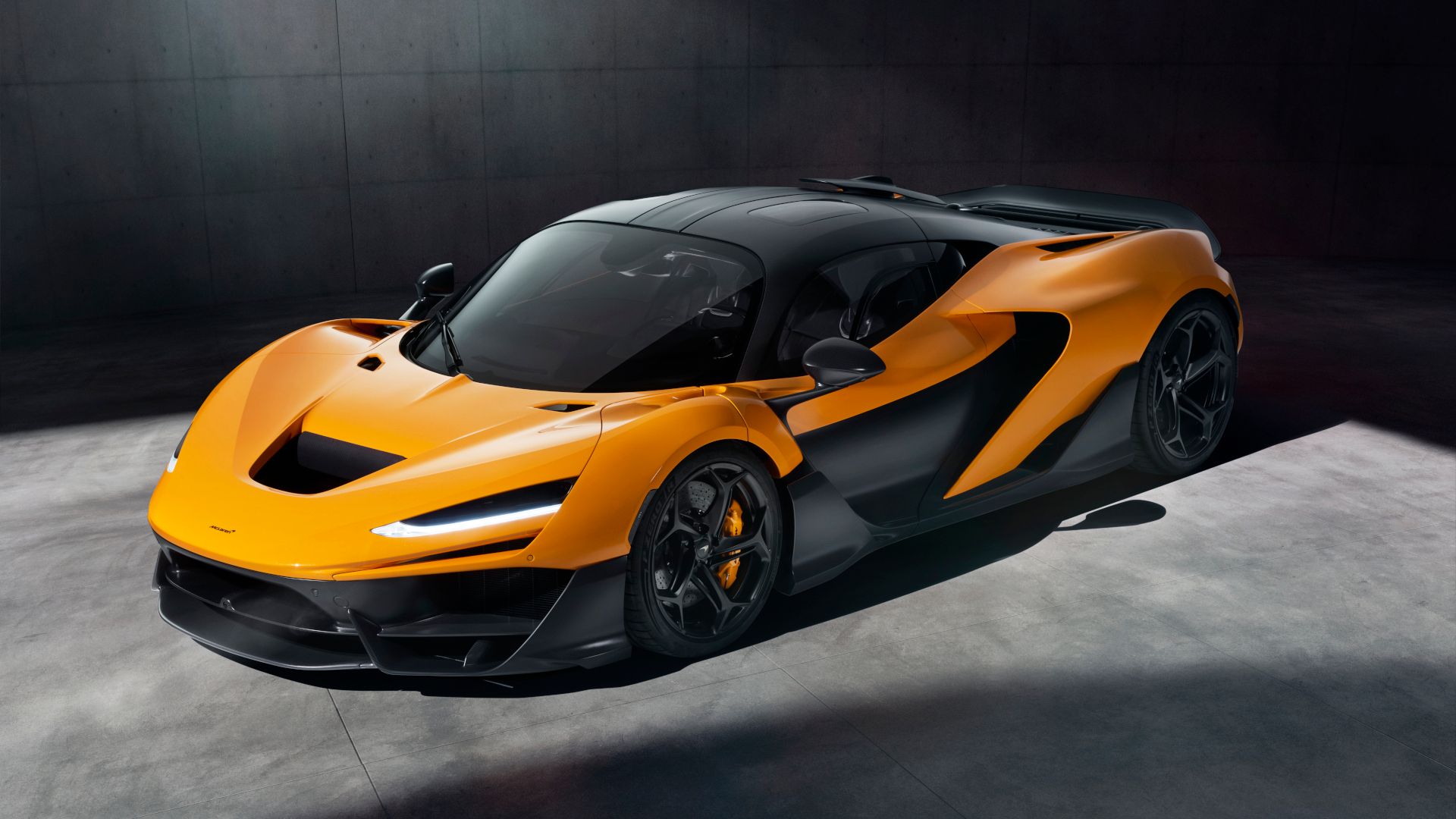
There is a particular kind of confidence required to drive a McLaren W1 into Maranello and hand back the keys with a smile. Road & Track did exactly that, and the resulting story — "In the Court of the Crimson King" — reads less like a road test than a diplomatic incident dressed in carbon fibre. The W1 isn't merely McLaren's successor to the P1. It's a deliberate provocation, a 1,275-horsepower argument that Woking now sets the benchmark Maranello must answer to. What Ferrari won't admit, publicly or otherwise, is that the answer isn't ready.
Consider the numbers, because they tell you everything about intent. The W1 pairs McLaren's new MHP-8 twin-turbo V8 with an e-module hybrid system, delivering 1,275PS through rear-wheel drive alone — no all-wheel-drive crutch, no torque-vectoring safety net. Ferrari's own flagship, the F80, counters with a twin-turbo V6 and all-wheel drive, a configuration that speaks to a different philosophy entirely: manage the power, distribute the load, engineer away the drama. McLaren's choice is the more romantic, and the more dangerous. It is also the more McLaren. Every flagship since the F1 has been rear-driven, and the W1 refuses to break that lineage even as the hybrid era makes breaking it tempting.
Rear Drive as a Statement of Faith
Strip away the hybrid hardware and the W1 is an old-school argument delivered with new-school firepower. Sending 1,275PS to two wheels rather than four is not a packaging accident; it's a declaration. Where Ferrari's F80 spreads the load and lets electronics sort the consequences, the W1 asks the driver to be the stability programme. That is a choice you make with your chest, not your spreadsheet, and it's the thread that runs from the F1 through the P1 and straight into the W1.
The MHP-8 V8 and its e-module exist to serve that philosophy, not to dilute it. The hybrid system adds thrust and response without rewriting the fundamental character of the car — a rear-driven McLaren flagship that rewards commitment and punishes complacency. In an era when flagship supercars increasingly default to all-wheel drive as a safety blanket, the W1 stands apart by refusing the blanket altogether.
Maranello Is Not a Town. It's a Tribunal.
The front-yard test matters because driving a British supercar through Ferrari's home territory is a rhetorical act, not a sightseeing trip. And the W1's reception there — curiosity rather than contempt, if the reporting is to be believed — tells you something about how far McLaren's road-car division has travelled since the MP4-12C arrived in 2011 to polite scepticism. The W1 is the fourth act in a story that has moved from upstart to equal to, arguably, standard-setter.
Ferrari will not say this. Ferrari does not need to. The order books and the waiting lists say it for them.
A Racing Division Moving to a Different Clock
Meanwhile, McLaren's racing operation is providing an accidental counterpoint. Reports from Motorsport.com and The Race describe a Formula 1 team phasing upgrades for 2026 while grappling with handling issues that cannot be fully resolved until 2027 — a reminder that McLaren's road-car business and its grand prix operation are not the same organism, even if they share a badge and a wind-tunnel philosophy.
The W1 exists in the space where McLaren's engineering ambition is unconstrained by a cost cap. On the road there is no budget cap, no parc fermé, no tyre allocation. There is only the question of whether the thing works — and by every account from the crimson court, it does.
The Last of Its Kind, or the First
There is something quietly symbolic in the timing, too. HotCars notes that the clock has started on McLaren's last V8 supercar, and the 750S is in its final ordering window. The W1, then, is not just a flagship — it is a hinge point between McLaren's past and whatever comes next. The hybrid V8 may be the last of its kind, or it may be the template for a decade of derivatives.
Either way, the W1 has already done something no specification sheet can capture. It has made Ferrari's hometown a place where a British car can be driven without apology — not as a novelty, not as a provocation for its own sake, but as a legitimate claimant to the throne. Maranello may not admit it. But the court of the crimson king has heard the argument, and the verdict is not in Ferrari's favour.