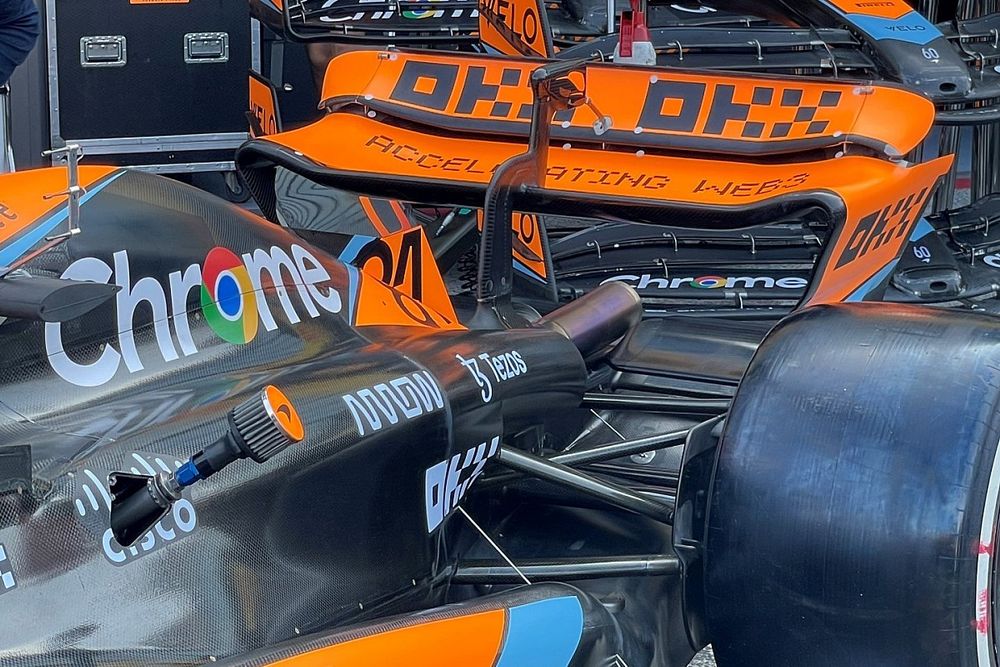
Monza. The Temple of Speed. A place where horsepower rules and aerodynamics whisper through the trees. But this weekend, the whispers are roars of protest, because McLaren has arrived with something that looks like it was dreamed up in a mad scientist's wind tunnel—and then built anyway. The "H-Wing" is a rotating rear wing assembly that has the paddock divided between applause and apoplexy.
This isn't just another aero bit bolted onto the papaya machine. It's a philosophical declaration. In a sport that legislates innovation into submission, McLaren has found a way to write poetry inside the margins of the rulebook.
The Mechanism of Mischief
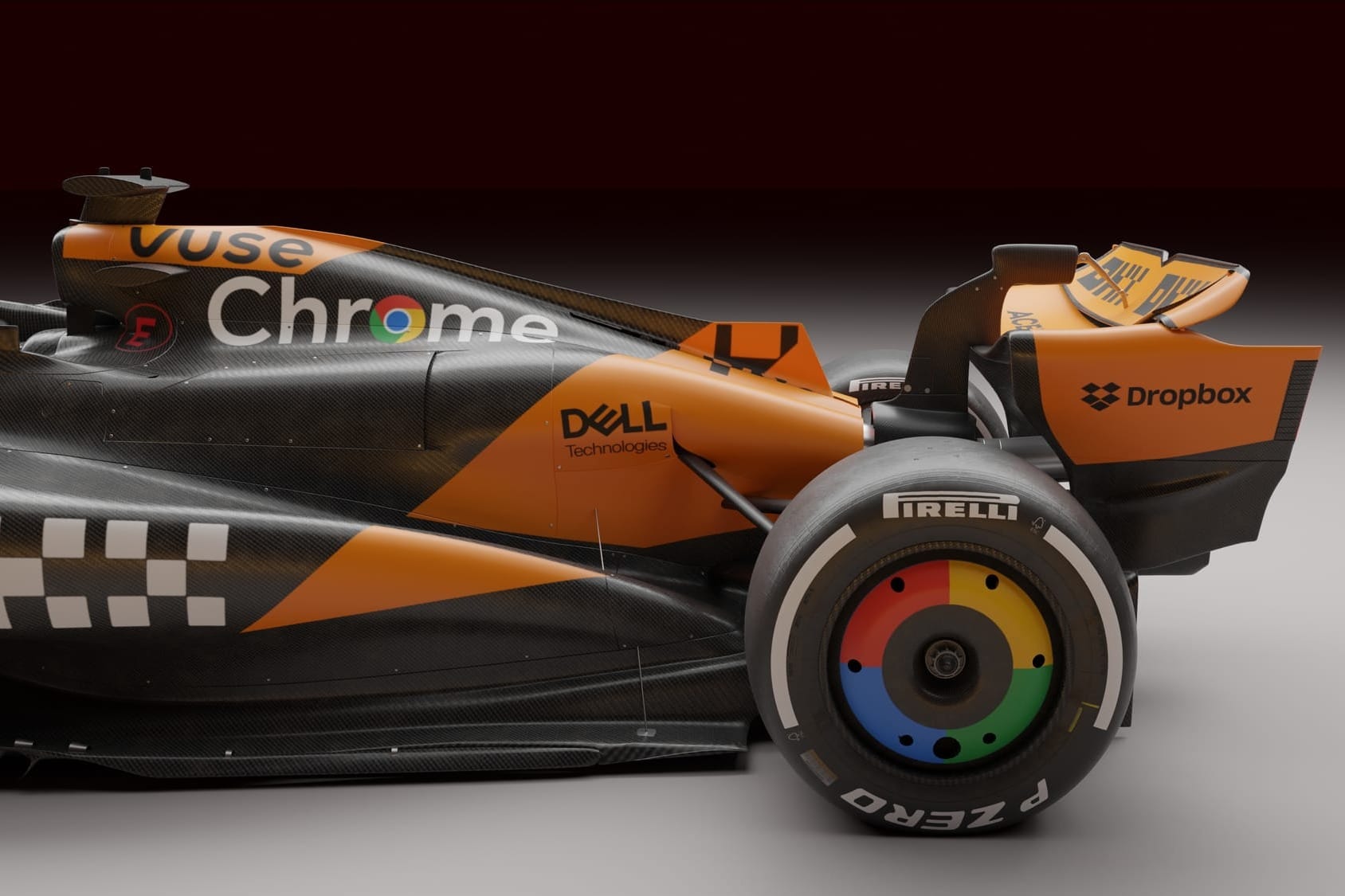
Let's get technical, because that's where the magic lives. Standard DRS is binary: flap down, drag drops, straight-line speed spikes. Simple. Brutal. Done. The H-Wing is something else entirely. It rotates—not just the main plane, but the endplates and central section in a coordinated sequence that alters airflow structure across the entire rear of the car. The name comes from those structural supports forming an "H," but the real genius is in the gradient.
This isn't an on-off switch. It's a dial. The driver can fine-tune rear balance through high-speed corners with a sophistication that feels like active suspension has quietly snuck back into the sport. McLaren claims it manages the drag-downforce trade-off with an organic subtlety that makes the binary DRS look like a hammer next to a scalpel. And for a moment, you believe them.
The immediate reaction from the grid was, shall we say, theatrical. Red Bull, Ferrari, and Mercedes have all but accused McLaren of exploiting a loophole in the technical regulations on moveable aerodynamic devices. The FIA's rules are famously strict—only the DRS flap moves, and only under specific conditions. But McLaren's engineers, masters of the legal grey area, argue the H-Wing's rotation isn't a primary aerodynamic function but a structural necessity that *incidentally* influences airflow.
It's beautiful. It's cynical. It's utterly brilliant. And it's legal—confirmed by the stewards ahead of the Italian Grand Prix. The question now isn't legality; it's whether this marks the future of Formula 1 or the start of a regulatory arms race that will squeeze the smaller teams into bankruptcy.
Two McLarens, One Philosophy
There's a delicious irony here. The road car division at Woking is currently celebrating the return of the manual gearbox in its latest GT models—a love letter to the purist heritage of the 1990s. Meanwhile, the F1 outfit is pushing computational fluid dynamics and moveable aero to the absolute limit. Two McLarens, two philosophies, same DNA.
The H-Wing embodies the racing ethos: relentless pursuit of lap time, treating the rulebook as a design brief rather than a set of constraints. While the McLaren P1 and the new 5 Turbo 3E pay homage to the past, the F1 team is entirely focused on the future—even if that future involves bending the laws of physics and sport in equal measure.
A Psychological Weapon
The timing is no accident. With Lando Norris locked in until 2030 and McLaren embroiled in a bitter constructors' title fight, the H-Wing is as much psychological warfare as it is aerodynamic innovation. It signals to the paddock that McLaren isn't just fast; it's intellectually superior. While rivals file complaints with the FIA, McLaren is already developing the Mark II version of the system. That's not arrogance; that's conviction.
Monza, with its long straights and minimal downforce requirements, is the perfect proving ground. If the H-Wing delivers even a tenth of a second advantage, the Italian Grand Prix will be remembered not for the race itself, but for the moment McLaren changed the game.
The rest of the grid can only watch, protest, and ultimately, try to copy. As the saying goes, imitation is the sincerest form of flattery. But in Formula 1, it's also the only way to keep up.
The Verdict
McLaren has always understood something deeper about motorsport: the rulebook is not a cage, but a canvas. The H-Wing is a masterpiece painted in the margins—a reminder that true innovation doesn't just find speed; it finds freedom. The protests will continue, the FIA will deliberate, and the rivals will scramble. But for now, in the cathedral of speed that is Monza, McLaren has delivered a sermon that will echo through the paddock for years to come.
This is what happens when genius meets a loophole. And honestly? We wouldn't want it any other way.