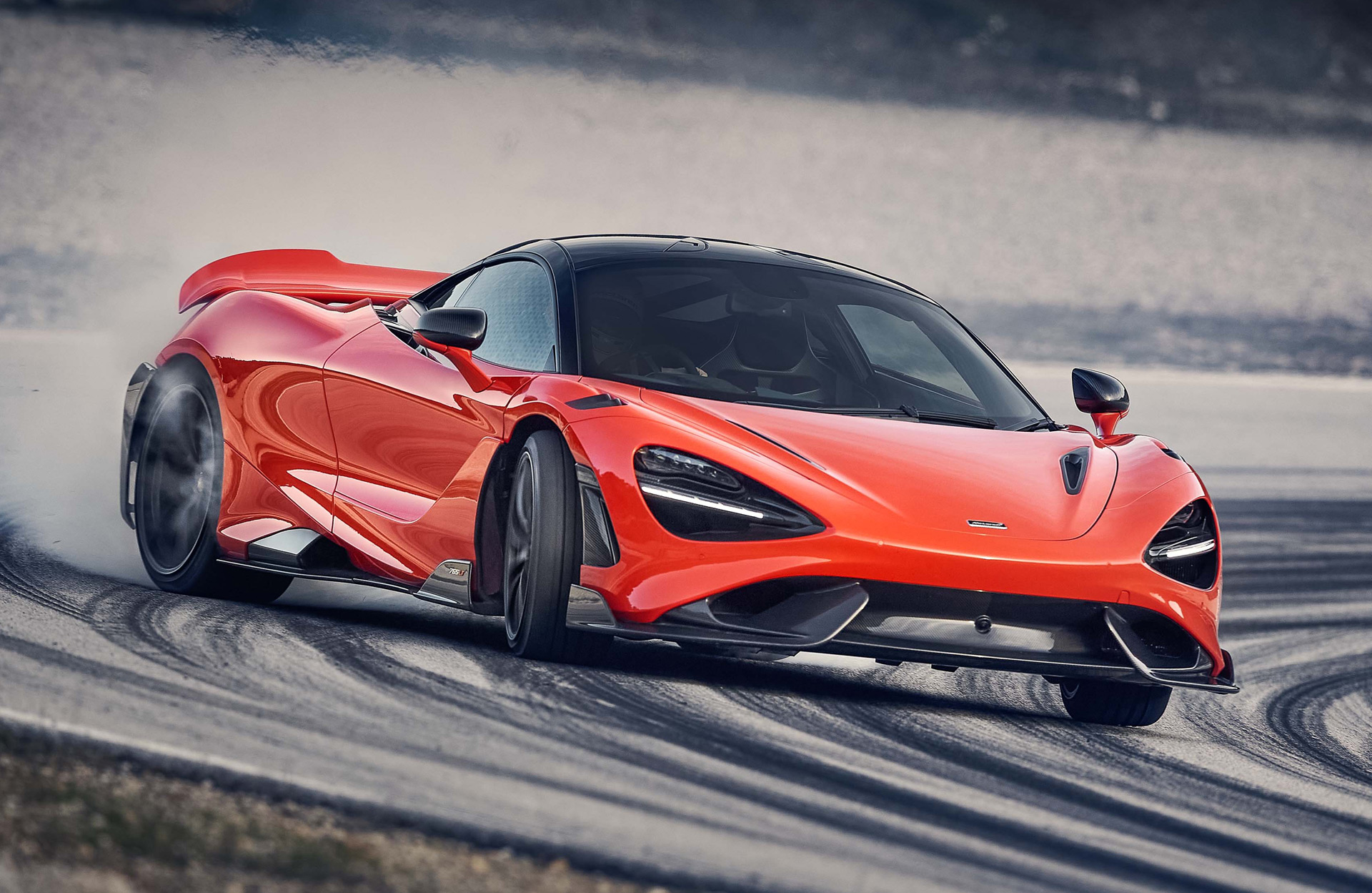
McLaren built its reputation on the ruthless logic of the carbon tub: cars engineered to a singular purpose, sold to a clientele who did not ask the price so much as the delivery date. Discounts were for volume manufacturers. McLaren dealt in desire. That distinction, according to a growing pile of evidence, is now in serious jeopardy.
Reports that McLaren is offering 0% financing on the Artura — with terms lenient enough that even imperfect credit may qualify — read less like a promotional flourish and more like a distress signal launched from the showroom floor. Zero-percent financing on a six-figure mid-engine hybrid is not a marketing tactic in any conventional sense; it is a subsidy. Someone, somewhere in the corporate structure, has concluded that the cost of carrying these cars is now greater than the cost of essentially lending money for free. That calculus does not emerge from strength.
The Artura as an Instrument of Signal
The Artura was supposed to be McLaren's volume saviour, the accessible hybrid that broadened the brand's appeal without diluting it. Instead, it has become the instrument through which the brand is quietly signalling that the supercar boom has cooled. Consider what such an offer actually represents. It emerges when inventory sits, when order books thin, and when the buyers who once queued enthusiastically for allocation begin to hesitate.
That hesitation is the real story. A car like the Artura lives or dies on the conviction of its buyer, and conviction is precisely what a 0% rate is designed to manufacture. When the finance office becomes the most aggressive department in the building, the romance of the marque is already under strain.
When the Racing Arm Grinds, the Showroom Feels It
The broader context makes the desperation harder to dismiss as an isolated promotion. McLaren's motorsport operations, typically the most reliable engine of brand equity, have endured a bruising stretch. Lando Norris described his feeling after a low-key start in Azerbaijan as a "knife in the heart," with the team "miles off" the pace — language that betrays a competitor who expected to be fighting at the front and found himself scrapping in the midfield. Oscar Piastri admitted a mistake "certainly took me by surprise" in Baku. Even the team's own race report framed the weekend as a turnaround exercise rather than a triumph.
When the racing arm is grinding, the road-car division loses its most potent marketing tailwind, and the showroom has to work harder to move metal. The two halves of the McLaren story have always fed each other. One side stumbles, and the other feels the drag.
The Arithmetic Has Flipped
There is a deeper structural issue at play, one that afflicts the entire ultra-luxury segment rather than McLaren alone. The pandemic-era surge in demand for high-end goods — driven by cheap money, constrained supply, and a wealthy cohort with nowhere to spend — created a false ceiling. Manufacturers responded by expanding production and, in McLaren's case, pushing the Artura into a price bracket where it competes not just with Ferrari and Lamborghini but with Porsche's most aggressive offerings.
Now that interest rates have normalised and the easy money has evaporated, the arithmetic has flipped. A supercar is a discretionary purchase of the purest kind, and discretionary purchases are the first casualties of expensive credit. Offering 0% financing is an admission that the customer's cost of capital, not the car's desirability, has become the binding constraint. The machine itself has not changed. The buyer's world has.
A Brand That Trades on Scarcity Cannot Easily Sell on Affordability
What makes this moment particularly telling is the contrast with McLaren's own self-image. This is a company that has spent years positioning itself as the purist's alternative — lighter, sharper, more technically audacious than its rivals. It flirted with naming conventions that "mean something" rather than alphanumeric codes, a nod to heritage and emotion. It has been mentioned in the same breath as Max Verstappen as a potential future destination, a signal of enduring competitive ambition.
And yet here it is, dangling free money in front of buyers who once needed no encouragement whatsoever. The dissonance is jarring. A brand that trades on scarcity cannot easily pivot to selling on affordability without eroding the very mythology that justifies its premiums. The Artura remains a genuinely formidable machine — but formidable machines do not ask to be financed at zero percent. They ask to be wanted.
None of this means McLaren is in mortal peril. The company has survived worse. But the 0% financing offer is a data point that cannot be waved away. It suggests that the supercar market's long post-pandemic party is winding down, and that even the most storied names are now competing for a shrinking pool of buyers willing to sign on the dotted line.
McLaren built its legend on the premise that desire needs no discount. The Artura deal suggests that premise is now, quietly, up for renegotiation.