Mercedes-Maybach has spent the better part of a decade engineering its own mythology. The brand resurrected a dormant nameplate in 2014, attached it to the S-Class, and set about convincing the world's wealthiest buyers that quiet opulence—not overt spectacle—was the new apex of luxury. It was a careful, deliberate strategy: understated chrome, whispered V12s, interiors that smelled of Nappa leather and restraint. What Maybach never planned, however, was for a basketball player from Akron, Ohio to become its most effective brand ambassador—not through a sponsorship deal, but through a pair of identical, custom-built S680s that have now thrust the marque into a cultural conversation it never engineered.
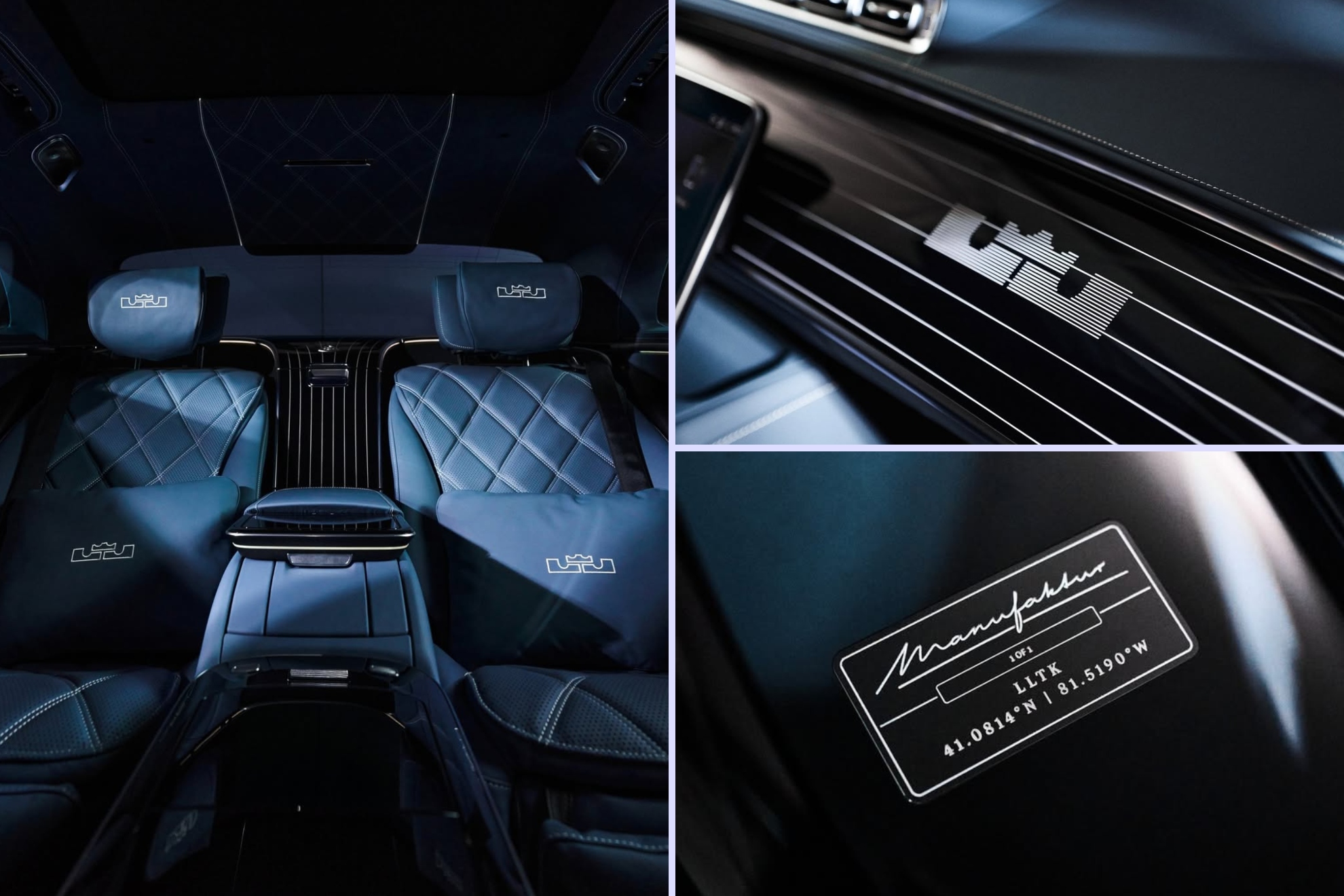
The story is straightforward enough. LeBron James commissioned two bespoke Maybach S680s, working directly with Mercedes designers to create a vehicle that reflected his personal aesthetic. The details read like a collaboration between a design house and a cultural institution: a two-tone finish, custom badging, an interior that merges Maybach's traditional craftsmanship with James's own visual language. One car stays with him. The other heads to auction, with proceeds earmarked for his foundation's work supporting students in Akron. It is, on its face, a charitable gesture wrapped in automotive excess—a familiar celebrity move. But the implications for Maybach run deeper than any press release could articulate.
The S680 and the Narrative Gap
For years, Maybach has occupied an awkward position in the ultra-luxury hierarchy. It sits above the standard Mercedes-Benz lineup but below Rolls-Royce in the public imagination, a space that is commercially lucrative yet culturally ambiguous. The brand's attempts to assert itself have often felt like recitations of heritage rather than living statements. The S680 is a magnificent machine—twin-turbo V12, rear-seat opulence that rivals private aviation—but magnificence alone does not generate desire. Desire requires narrative. And narrative, in the modern era, requires a protagonist.
Why LeBron's Choice Matters
LeBron James did not need Maybach. That is precisely what makes his association so valuable. He could have chosen a Rolls-Royce Phantom, a Bentley Flying Spur, or any number of bespoke commissions from boutique manufacturers. Instead, he chose the S680—twice. In doing so, he implicitly validated Maybach's proposition: that true luxury is not about shouting from the rooftop but about controlling the terms of your own comfort. James, a man who has spent two decades managing his own narrative with surgical precision, selected a car that does the same. The alignment is not accidental, but it is also not the product of a marketing department's focus group.
The Auction as Design History
The auction itself introduces a new dimension. When the twin S680 crosses the block, it will not simply be a used Maybach with celebrity provenance. It will be a piece of design history, a documented collaboration between an athlete and a manufacturer, and a charitable artifact. The winning bidder will acquire something no standard commission can offer: a direct connection to James's creative process. For Maybach, the halo effect is immediate and unearned by traditional metrics. The brand did not chase this moment. It was selected for it.
This is the kind of cultural capital that cannot be bought through advertising. Maybach has spent years trying to convince the world that it belongs in the same conversation as Rolls-Royce and Bentley. LeBron James, with a single charitable gesture, has done more than any campaign could. He has placed the S680 in the realm of personal expression rather than mere consumption. The car is no longer just a vehicle; it is a statement of values, a design object, and a philanthropic instrument all at once.
When Craft Meets Culture
The irony is that Maybach's own marketing has often emphasized the brand's heritage and craftsmanship in ways that feel detached from contemporary culture. The S680 is a technical masterpiece, but technical mastery is not the same as cultural relevance. James's involvement bridges that gap. He is not a brand ambassador in the traditional sense—there is no contract, no commercial arrangement. He is simply a man of taste and influence who chose Maybach, and in doing so, made it matter to an audience that might otherwise have overlooked it.
As the auction approaches, the automotive world will watch with interest. The winning bid will be substantial, but the real value lies elsewhere. Maybach has been handed a narrative it could never have scripted: a story of generosity, design, and cultural convergence. The brand's future may depend on whether it can learn from this moment—not by chasing celebrities, but by understanding that true luxury is not about isolation. It is about connection. LeBron James understood that. Maybach is only beginning to.