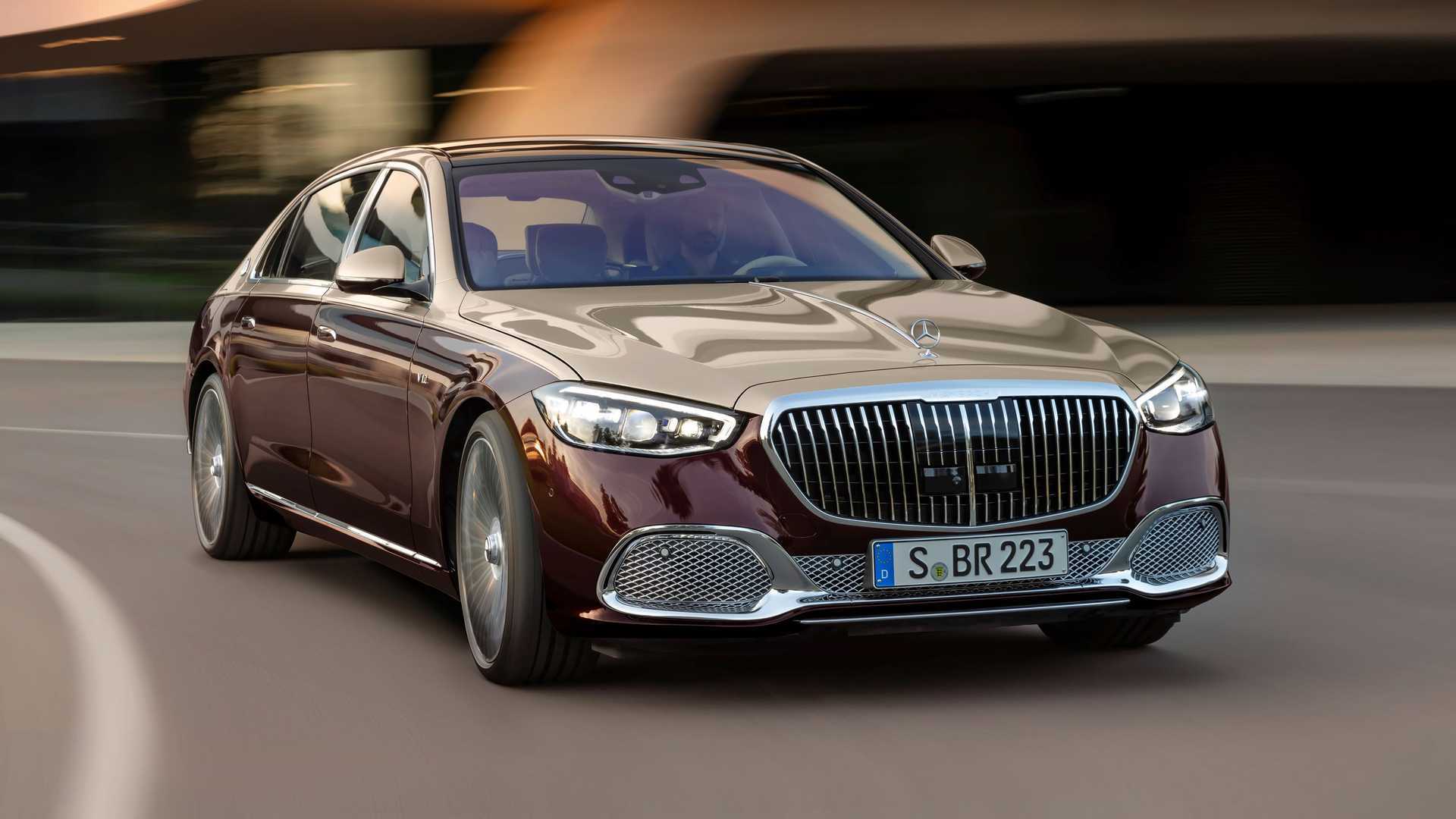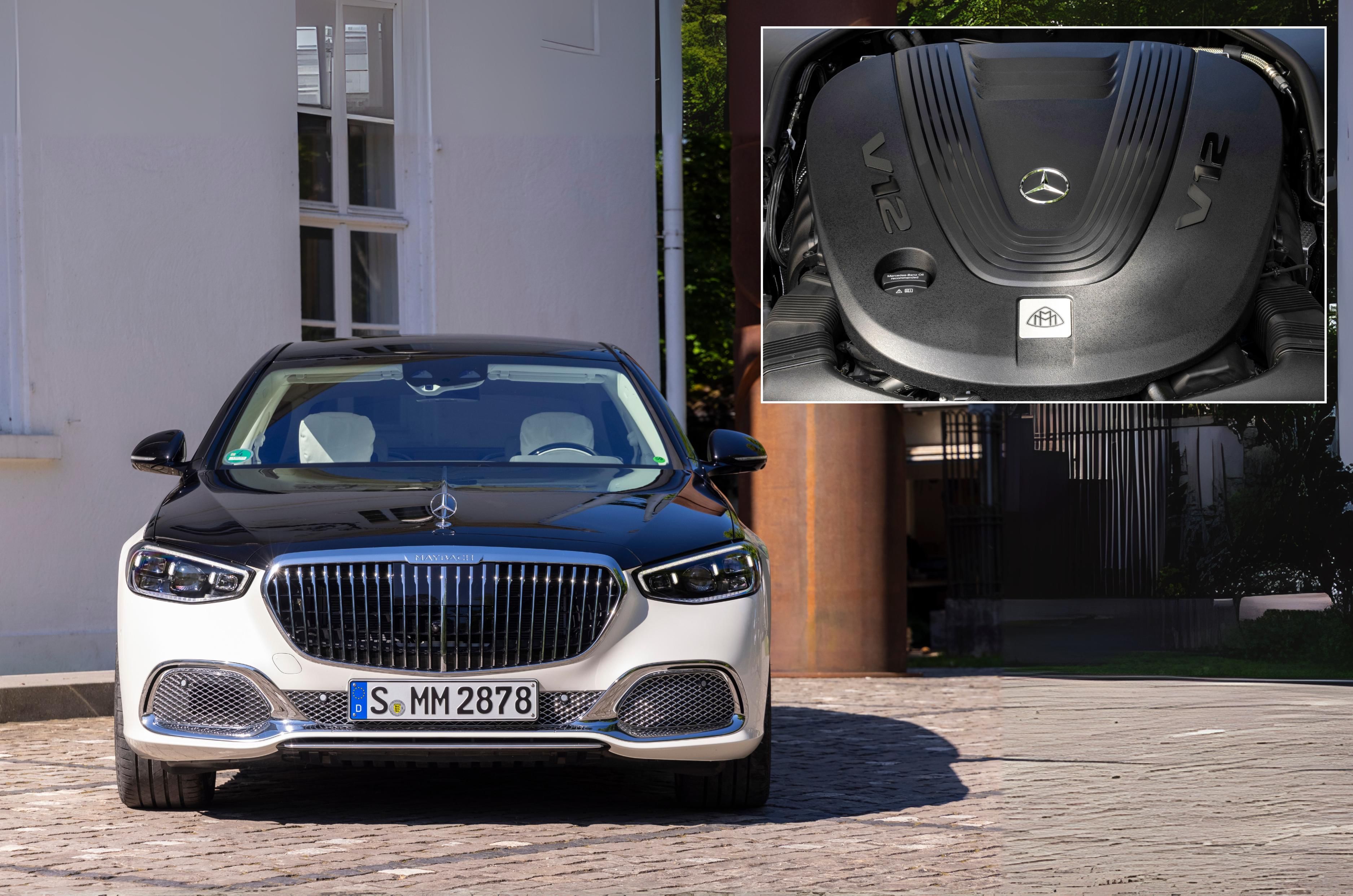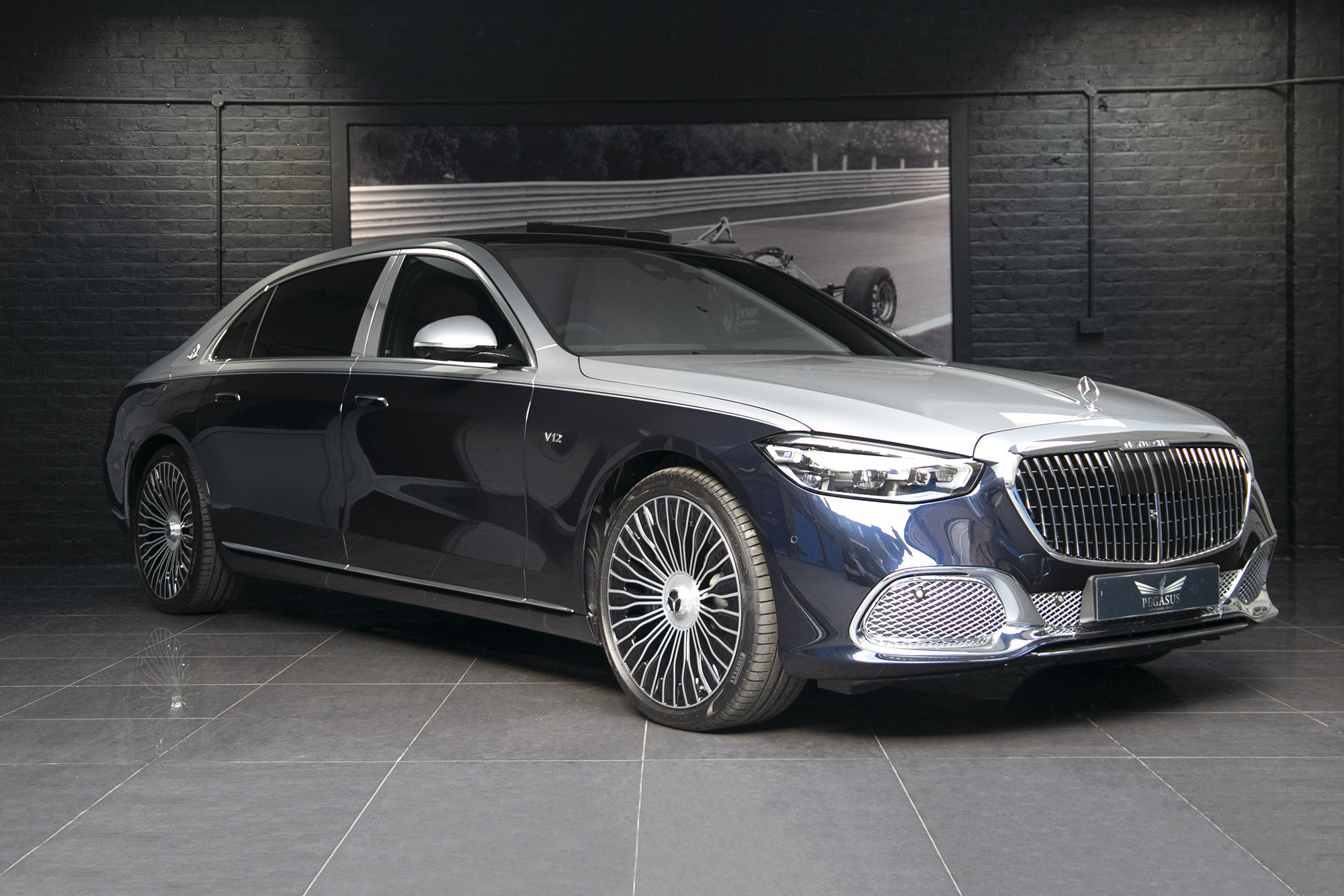
For two decades, the Maybach nameplate has been inseparable from one mechanical signature: the 6.0-litre twin-turbo V12. From the reborn Maybach 57 and 62 of 2002 to the Mercedes-Maybach S680, the twelve-cylinder engine has served as the brand's core credential — a rolling proof of arrival, priced north of $200,000, idling with the hush of a private bank vault. That engine is now living on borrowed time, and Maybach's quietest problem is that its replacement makes no noise at all.
The evidence is already on the road. The Mercedes-Maybach EQS 680 SUV, launched in 2023, is the first series-production Maybach without a combustion engine of any kind. It arrives with 649 horsepower, a claimed 600 kilometres of WLTP range, and a hyperscreen spanning the dashboard — yet it carries no displacement badge, no cylinder count, no exhaust note engineered into the cabin.
The End of the Twelve-Cylinder Credential
For a marque whose marketing once leaned on the phrase "the ultimate in automotive exclusivity," the EQS 680 asks buyers to accept exclusivity as a software-and-material proposition: Nappa leather quilted in a rose-gold stitch pattern, a chauffeur package that reclines the rear throne, and a silent-running drivetrain that makes the V12's acoustic theatre feel suddenly antique.
This is not an isolated product decision. Mercedes-Benz has committed to an all-electric lineup by 2030 where market conditions allow, and Maybach sits at the top of that pyramid. The Maybach EQS SUV is the template; the forthcoming electric Maybach SL and a battery-powered successor to the S-Class Maybach are the logical next steps. Meanwhile, the S680 — the V12 flagship — has been quietly restricted in several European markets by emissions regulations, and its 4.0-litre V8 plug-in hybrid sibling, the S580e, already outsells it in key regions. The V12 isn't being killed by a single announcement; it's being starved of air.
When Silence Stops Being a Luxury
The deeper disruption is cultural. For a century, the V12 was a shorthand that required no explanation: more cylinders meant more money, more prestige, more distance from the ordinary. Electric drivetrains flatten that hierarchy. A Tesla Model S Plaid or a Lucid Air Sapphire delivers acceleration that humiliates any twelve-cylinder sedan, and a Rolls-Royce Spectre — the first electric Rolls — has already proven that silent propulsion can carry ultra-luxury pricing without apology.
When silence is the default, Maybach can no longer sell silence as a luxury. It must sell something else: craftsmanship, bespoke commissioning, and the theatre of the rear cabin, where the brand's Maybach Manufaktur personalisation programme now does the heavy lifting once performed by the engine bay.
The Risk in the Rebrand
There is a genuine risk in this transition. Maybach's identity was built on mechanical excess — the 62 S Zeppelin, the Landaulet with its folding roof over the rear seats, the S650 Cabriolet limited to 300 units. These were objects defined by what they contained under the bonnet. An electric Maybach contains a battery pack, a platform shared with the EQS SUV, and software. The brand's challenge is to convince its clientele that a Maybach badge on an electric crossover is not a dilution but an evolution — that rose-gold stitching and a champagne refrigerator can substitute for twelve pistons firing in perfect sequence.
The early signals are mixed but instructive. The EQS 680 SUV has found buyers in China and the Middle East, markets where the Maybach name carries weight independent of engine configuration, and where chauffeur-driven ownership is the norm rather than the exception. In those markets, the V12's soundtrack matters less than the rear-seat massage function. In Europe and North America, where Maybach buyers often drive themselves, the loss of the V12 is a harder sell — the engine was part of the ritual.
The Future Arrives Without a Sound
What Maybach is attempting, then, is the most delicate rebranding in luxury automotive history: preserving a status symbol while removing the very mechanism that symbolised status. The V12 will not disappear overnight. It will linger in limited-run Final Edition models, in collector garages, in auction listings that will only appreciate.
But the future Maybach — the one that will define the brand in 2035 — will be electric, silent, and judged on materials rather than displacement. The question is whether the clientele that once paid a premium for twelve cylinders will pay the same premium for none at all. Maybach's answer, delivered without a sound, is already rolling off the line.