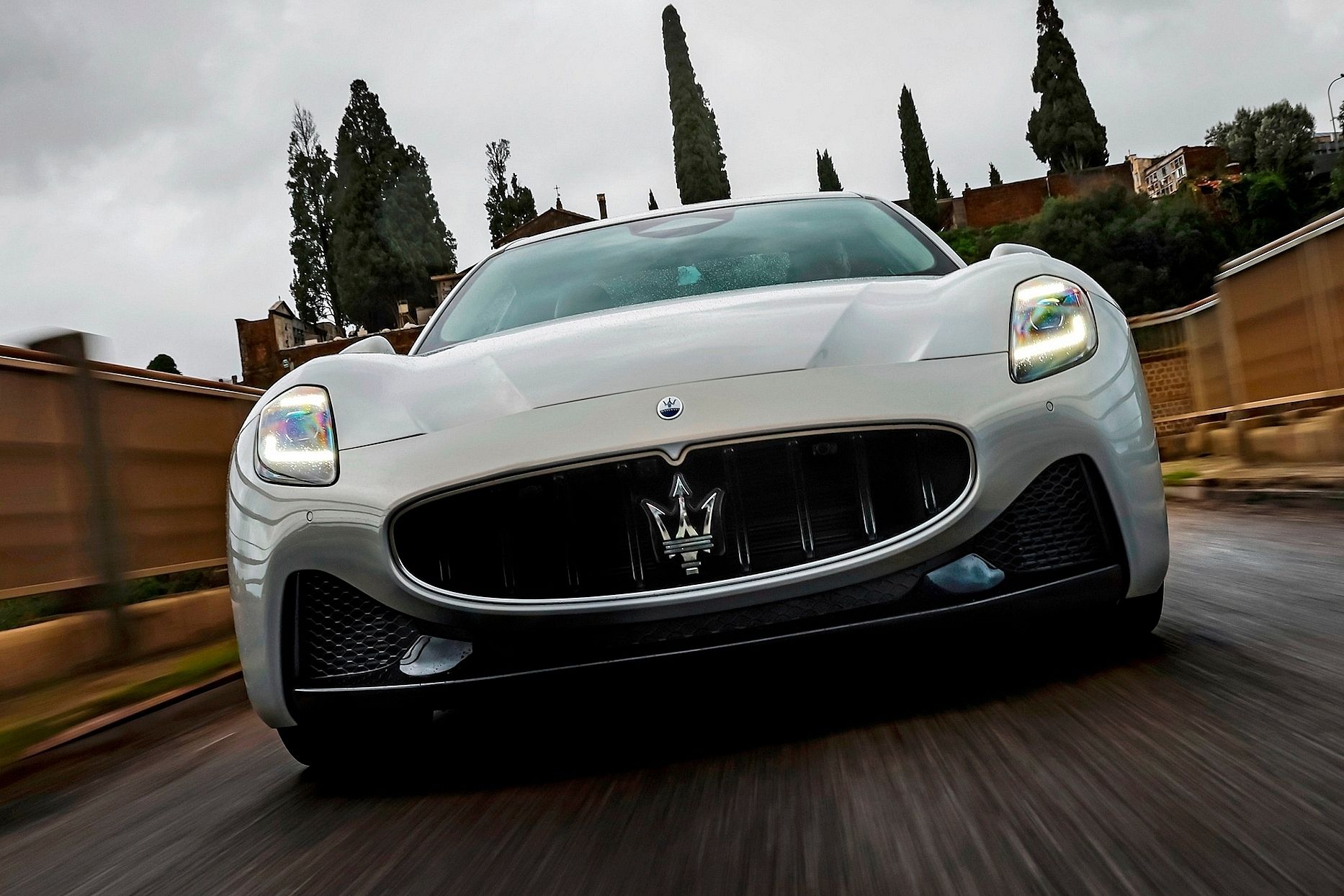
The image is almost too perfect: a 1959 Maserati Tipo 61 Birdcage, its skeletal frame a monument to analog purity, hammering down for $4.24 million at Pebble Beach—a world record that reaffirms the marque’s sacred place in motorsport history. Yet even as auction paddles raised for that relic of leather-strapped genius, a far more consequential transaction was being negotiated a continent away. Reuters and Automotive News have confirmed that Stellantis is in advanced talks with China’s Huawei and JAC Group over a partnership that would see Maserati vehicles built on Chinese soil, powered by Chinese software, potentially as early as 2027. For a brand whose entire mythology is built on the visceral roar of a Ferrari-built V8 and the hand-stitched opulence of Modena, the question is no longer whether Maserati can survive the electric transition—but whether what emerges from that transition will still deserve the trident badge.
The Pragmatic Calculus of Survival
The logic from Stellantis’s corner is brutally pragmatic. Maserati has been bleeding market share and credibility, caught between the electric onslaught of Porsche and the software-defined luxury of Chinese marques like Nio and Li Auto. Huawei, despite American sanctions, has developed an autonomous driving and cockpit ecosystem that rivals anything from Silicon Valley, while JAC possesses the manufacturing scale to churn out vehicles at costs Italy can no longer match. On paper, this is a textbook rescue: leverage Huawei’s HarmonyOS and advanced driver-assistance systems, marry them to JAC’s production efficiency, and slap a trident on the hood. The result would be a Maserati that finally competes on digital merit rather than heritage alone.
But this is where the cultural calculus gets dangerous. Maserati has never been a technology leader—it has been an emotional one. Its customers don’t buy a Levante because it has the best lane-keeping assist; they buy it because the exhaust note triggers a primal response that no spreadsheet can quantify. Handing the car’s brain to Huawei means surrendering the very interface through which modern drivers experience a vehicle, and Chinese tech giants do not do subtlety. Their interfaces are dense, feature-laden, and aggressively digital—a stark contrast to the tactile, analog-inflected minimalism that has historically defined Italian luxury.
The Geography of the Soul
The deeper betrayal, however, lies in where these cars would be built. JAC’s factories in Anhui province are efficient, but they are not Modena. Maserati’s identity is inextricably tied to its Italian provenance—the Viale Ciro Menotti plant, the local artisans, the implicit promise that your car was born in the same soil as the legendary 250F. Moving production to China, even for a “China-only” lineup that eventually expands globally, transforms the brand from a purveyor of Italian passion into a globalized conglomerate’s budget line. It is the same fate that befell MG, once a proud British marque, now a Chinese-owned badge on anonymous crossovers.
The fact that Stellantis is reportedly considering this for a brand that just celebrated a record auction result for its heritage suggests a profound disconnect between the company’s marketing narrative and its operational desperation. While Hollywood prepares a star-studded biopic with Al Pacino and Anthony Hopkins to romanticize the Maserati brothers, the real drama is unfolding in boardrooms where the brand’s future is being traded for access to China’s massive EV market.
The Digital Divide
There is, of course, a counterargument that every iconic brand must evolve or die. Maserati’s current lineup, including the updated Grecale SUV, has struggled to differentiate itself in a sea of premium electric rivals. Huawei’s software could give Maserati a genuine competitive edge in China, where in-car digital experiences often outweigh traditional driving dynamics in purchasing decisions. And JAC’s manufacturing expertise could allow Maserati to price its EVs competitively, something the brand has never managed in its home market.
But this pragmatic path treats the car as a mere appliance with a luxury badge—a philosophy that undermines everything the Birdcage represents. That $4.24 million auction price wasn’t paid for horsepower figures or infotainment screen resolution; it was paid for a piece of history, for engineering artistry, for the intangible essence of a racing pedigree forged in an era before silicon chips. The risk is that by 2027, Maserati will have traded that essence for a Huawei-powered future that no amount of Italian leather can redeem.
The Trident’s True Test
Maserati has always sold emotion, not specification sheets. Its greatest cars—the 250F, the Ghibli, the Quattroporte—succeeded because they made drivers feel something no German rival could replicate. That feeling was born in Modena, shaped by racing, and refined by artisans who understood that a car is more than the sum of its components. If Stellantis believes that Huawei’s software and JAC’s factories can replicate that alchemy, they are fooling themselves. The trident may survive, but it could easily become just another logo on a Chinese-built screen—and that is a surrender no heritage auction record can mask. For a brand that just proved its past is worth millions, the real question is whether its future will be worth anything at all.