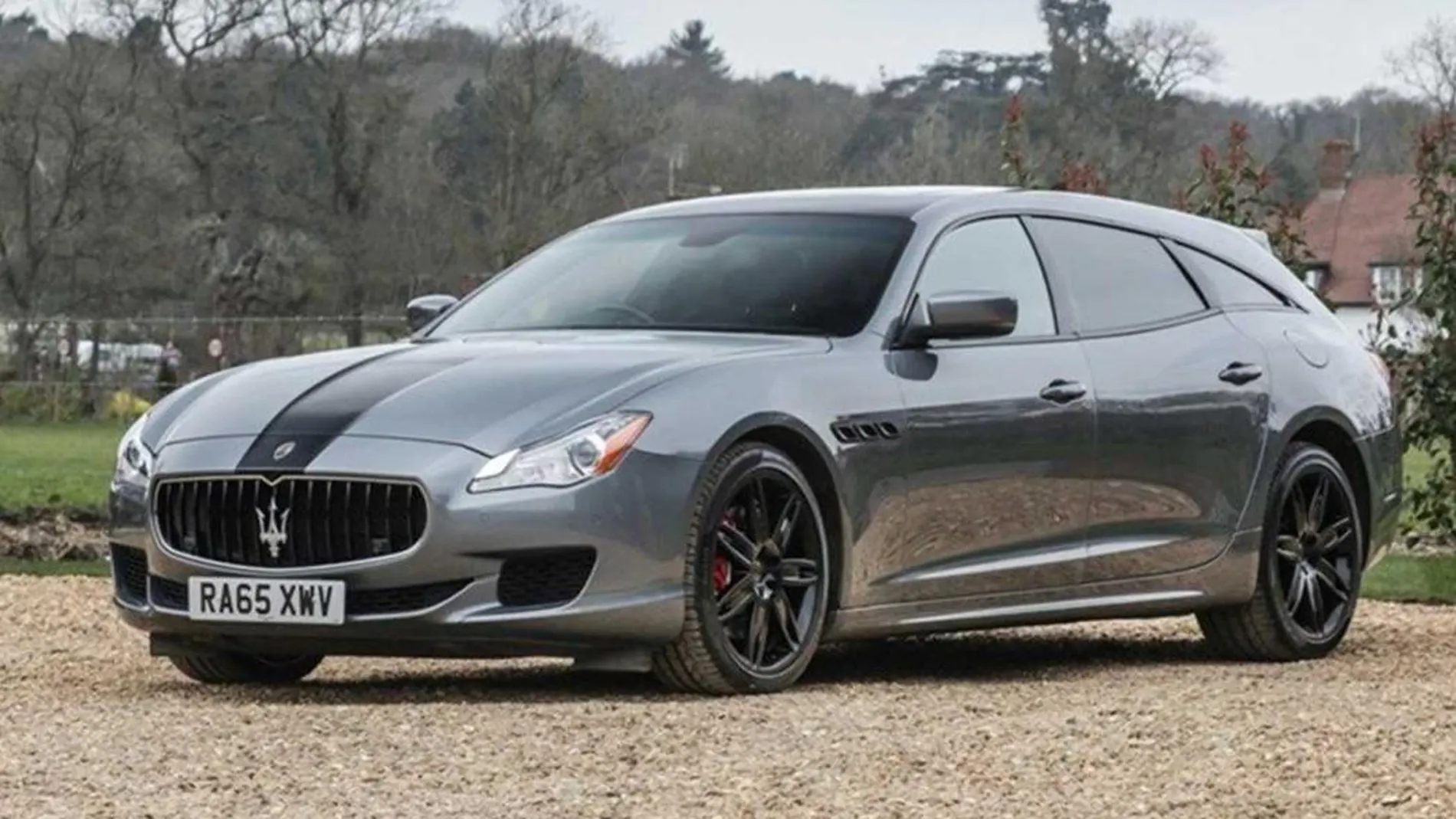
Maserati has spent the better part of a decade promising that its best days are perpetually just around the corner, and the industry has grown understandably weary of the refrain. But December looms as something genuinely different: a moment of truth rather than another glossy teaser. Stellantis has confirmed it will lay out Maserati's future before the year is out, and the stakes could hardly be higher.
This is a marque that once sold romance and racing heritage by the container load, and now finds itself discounting electric vehicles by as much as $23,000 simply to move metal off showroom floors. The Trident, for all its mythic resonance, is being asked a brutally practical question: what, exactly, is it for?
The Shape of Survival
The answer, if CEO Santo Ficili is to be believed, arrives in the shape of a shooting-brake-style Quattroporte crossover — a phrase that would have sent shudders through Modena a generation ago and now reads like a survival strategy. Alongside it comes a new electric Levante SUV, the two forming the twin pillars of a reinvention that leans hard on the body styles buyers actually purchase.
The logic is cold but coherent. The traditional four-door saloon is a shrinking, profit-starved corner of the market, and Maserati has never commanded the volume to make a conventional flagship sedan pay. A rakish, high-riding Quattroporte with shooting-brake proportions — part grand tourer, part crossover, wholly contemporary — is at least a proposition with a pulse. Whether it is enough to reverse a long slide is another matter entirely.
Credible Product, Muddled Position
The surrounding evidence is mixed in ways that should unsettle the faithful. The Grecale, Maserati's volume play, has been met with polite reviews and indifferent showrooms; Car and Driver has argued the updated 2027 model is a natural substitute for a Porsche Macan, while Autoblog countered that it simply isn't selling and pointed buyers toward three better alternatives. That contradiction captures the brand's predicament precisely: the product is credible, the positioning is muddled, and the customer is unconvinced.
Meanwhile, the machinery that once defined Maserati's soul — the MCPura, the Project GT4 previewed at Goodwood — reminds us that the engineering ambition never left. The problem was never the ability to build a desirable car. It was the ability to sell one at a price that justified its existence.
The Partnership Question
Then there is the awkward matter of partnership. Reuters reports that Stellantis has been in talks with two potential partners for Maserati, with names including Huawei and JAC circulating in connection with the marque's next chapter. Read generously, this is pragmatism: leveraging Chinese software and electrification expertise to keep costs viable in a capital-intensive era. Read cynically, it is an admission that the Trident cannot stand alone. Either interpretation points to a brand being restructured rather than merely refreshed, and December's announcement will need to address the uncomfortable subtext as much as the shiny new sheet metal.
Heritage Is an Asset and a Trap
There is, of course, the counter-narrative — the one Maserati's marketing department is quietly nurturing. A Hollywood biopic, "Maserati: The Brothers," with Al Pacino and Anthony Hopkins, arrives to remind the world that this is a name with genuine cinematic gravity. The Trident Stars programme and the heritage auctions in Manila testify to a residual mystique that money cannot manufacture. That mystique is an asset, but it is also a trap: heritage sells a handful of halo cars and precisely zero family SUVs. The brand cannot dine out forever on the romance of the 250F and the roar of a V8 it no longer builds.
So December becomes a referendum. If the shooting-brake Quattroporte EV is executed with real conviction — distinctive proportions, genuine driving character, a price that doesn't require a fire sale — it could give Maserati the one thing it has lacked for years: a clear reason to exist that isn't simply a cheaper alternative to Porsche. If it arrives as another compromised crossover wearing a storied badge and a discount sticker, then the reckoning will be considerably grimmer than a product presentation. The Trident has survived worse. But it has rarely needed a saviour quite so badly, and it has never had one shaped quite like this.