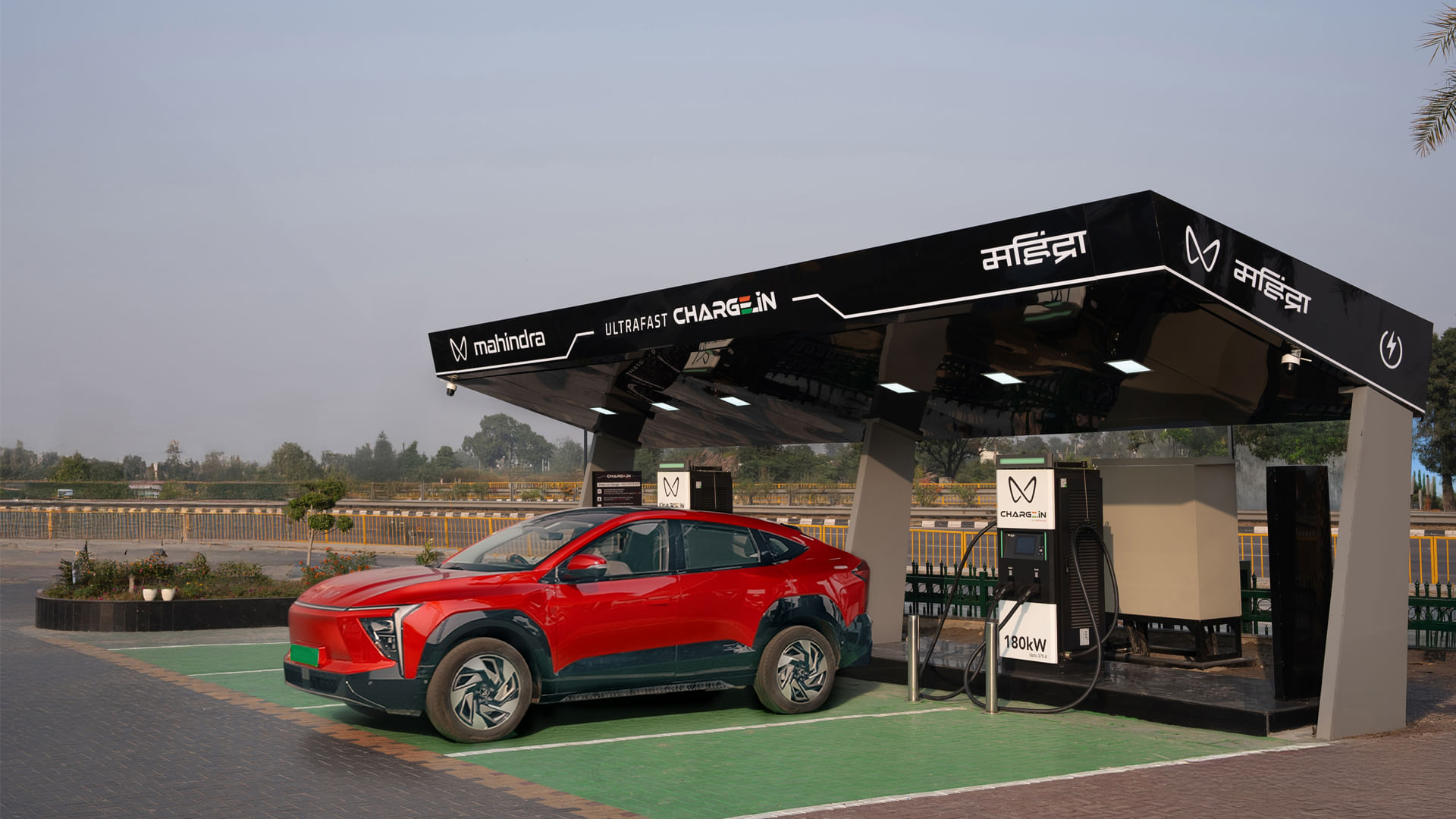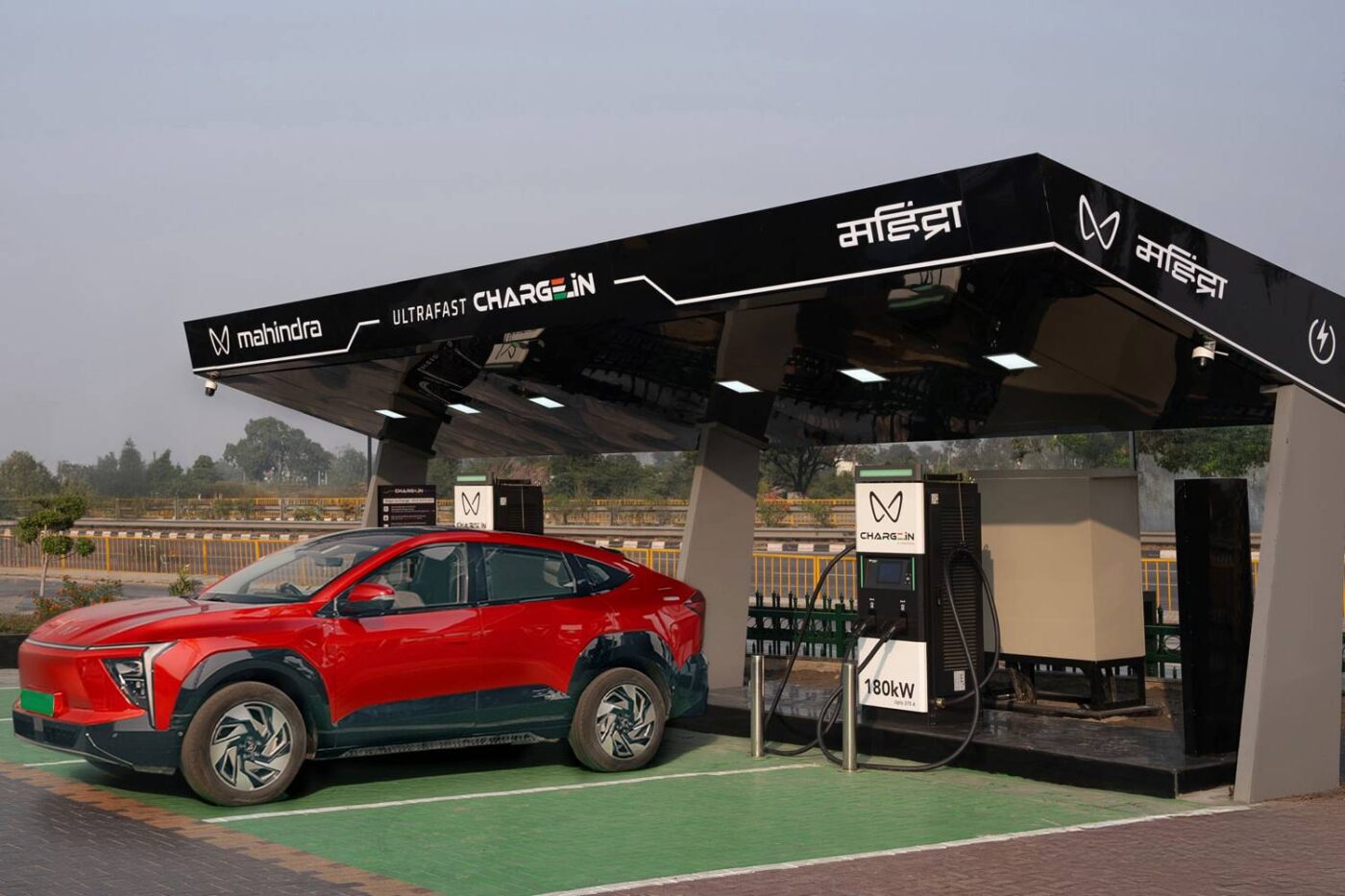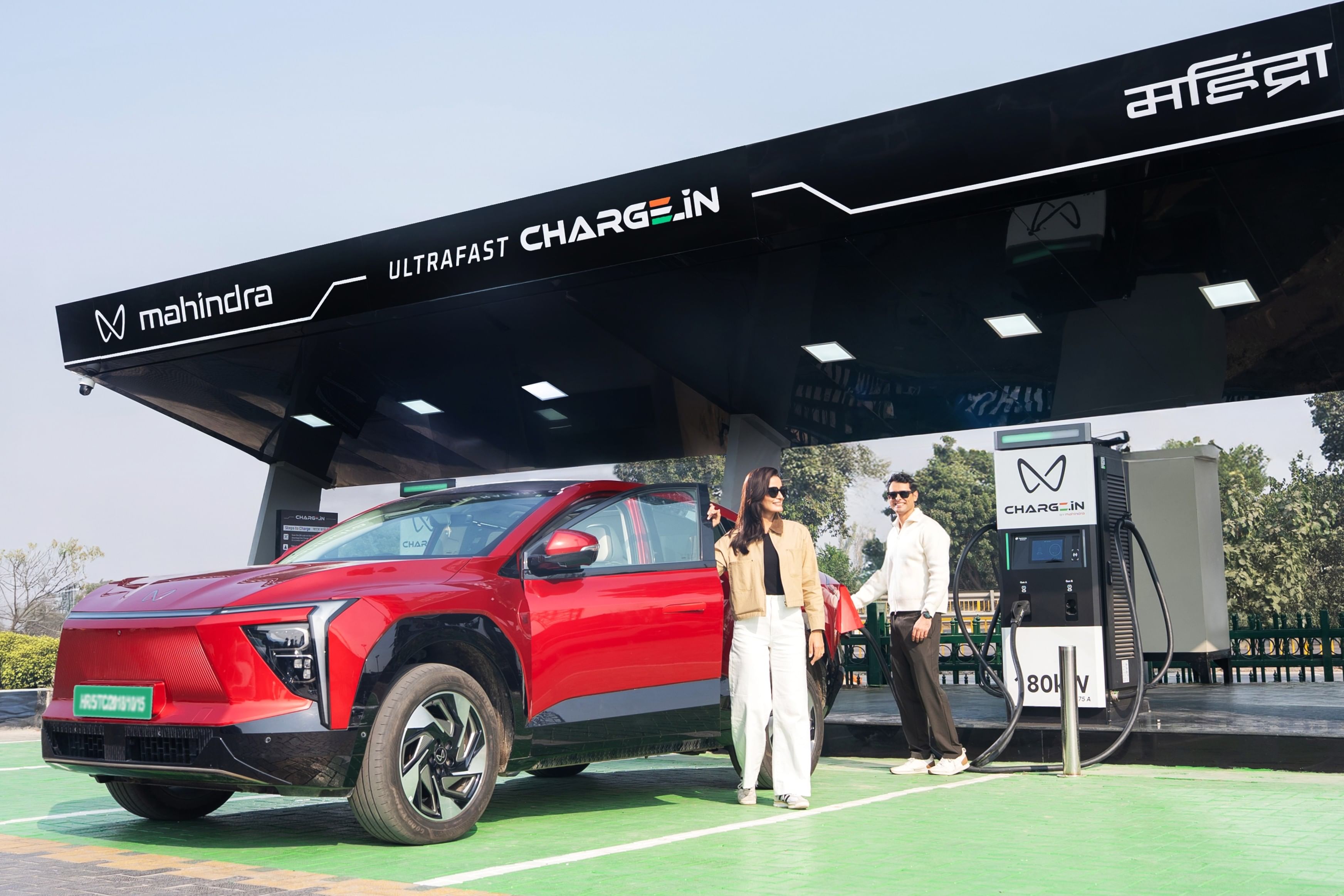
The story of electric vehicles in India was never really about cars. It was about plugs. For every early adopter willing to shrug off range anxiety, a dozen prospective buyers quietly went back to petrol, because the map between Mumbai and Pune — or Delhi and Jaipur — was full of gaps. Mahindra read the room before most, and its answer, the Charge_iN network now extending into a formal partnership with HPCL, may prove the most consequential thing the brand has done for Indian electrification. More consequential, arguably, than the SUVs themselves.
The numbers behind Mahindra's electric push are no longer speculative. The Electric Origin SUV portfolio has crossed the 1 lakh sales mark in just 18 months, a milestone Anand Mahindra publicly celebrated. Monthly dispatches regularly show the company clocking over 64,000 SUVs with 15 per cent overall growth, and Reuters reports Mahindra expects mid-to-high teens SUV growth while expanding capacity to meet demand. The XEV 9e and XEV 9s have even become something of a status symbol among ministers — a cultural signal that electric mobility has arrived in the mainstream. None of that momentum holds, though, if charging stays a scattered, unreliable afterthought.
Charge_iN: The Template, Not the Ribbon-Cutting
This is where Charge_iN turns quietly revolutionary. Mahindra's first EV charging station developed with HPCL isn't a photo opportunity — it's a template. HPCL brings what no pure-play charging startup can replicate: thousands of existing fuel retail locations, land already secured, highway frontage already established, footfall patterns mapped over decades. By grafting Charge_iN onto that spine, Mahindra effectively converts India's petrol pump network into an electric corridor, skipping the years of land acquisition and regulatory friction that have stalled competitors. The expansion to 50 locations is the visible tip of a much larger strategic iceberg.
A Flywheel, Not a Feature
The timing matters enormously. Mahindra is preparing two new electric SUVs — the BE 07 and the Vision T — while a Thar Electric has already been spied testing, drawing inspiration from the Vision T concept. Each new nameplate adds pressure on the charging ecosystem; each new charging location de-risks the next launch. That is the quiet flywheel: sell electric SUVs, use the revenue and credibility to expand Charge_iN, use the expanded network to sell more electric SUVs. Legacy rivals and new entrants alike have struggled to close that loop, largely because they treated charging as a marketing add-on rather than core infrastructure.
The Psychology of the Plug
There's a distinctly Indian logic at work here, too. India's charging desert isn't a technology problem — it's a problem of distribution and trust. Drivers don't fear the absence of chargers so much as the presence of broken, inaccessible, or inconvenient ones. By anchoring Charge_iN at HPCL outlets, Mahindra borrows the reliability cues of a familiar institution. Pulling into a known fuel station to charge is a psychologically easier act than hunting for an unfamiliar charger behind an office complex. That subtle shift in behaviour is what turns a charging desert into a corridor.
Systems, Not Slogans
Mahindra's platform strategy, as analysts have noted, rests on the idea that vehicle and ecosystem must evolve together. Velusamy R and the engineering leadership have consistently framed electric mobility as a systems problem rather than a product problem. The Charge_iN-HPCL partnership is the clearest expression of that philosophy — unglamorous, infrastructural, and precisely the kind of unsexy work that determines whether a million electric SUVs can exist on Indian roads.
The sales milestones will keep making headlines. The real story is happening at fifty fuel stations, one plug at a time — and that, more than any spec sheet, is Mahindra's automotive philosophy made visible.