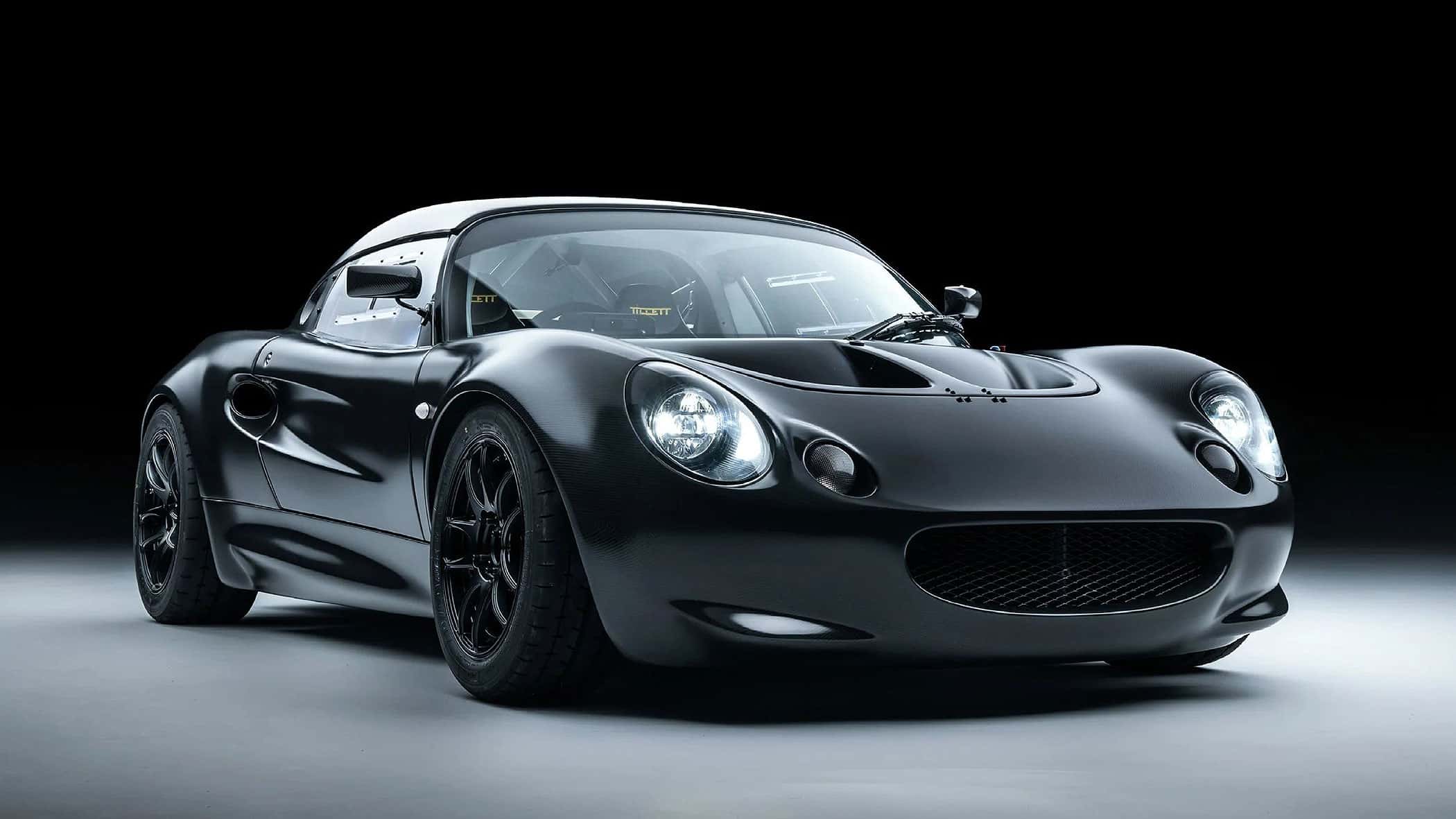
There’s a delicious irony brewing in the collector car world, one that pits the bloated, battery-laden behemoths of the modern era against a featherweight specter from Norfolk. While the headlines scream about the Lotus Emeya 900 Gold and its 900-horsepower electric saloon, a quieter, far more significant story has emerged from the specialist workshops that worship at the altar of Colin Chapman. It involves the humble Elise, a car that ceased production years ago, now reborn as a $470,000 restomod that tips the scales at an almost incomprehensible under 1,322 pounds. This is not merely a restoration; it is a philosophical statement, a defiant rebuttal to the age of excess, and arguably the ultimate expression of the Lotus ethos for the discerning modern collector.
The restomod in question, a meticulous creation shrouded in the kind of obsessive detail that defines the genre, takes the already razor-sharp S1 Elise chassis and strips it back to its absolute essence. The original car, launched in the mid-1990s, was a revolution precisely because it ignored the horsepower war, focusing instead on the sacred equation of power-to-weight. But this new iteration, priced at a figure that eclipses a new Ferrari, takes that principle to a logical, almost terrifying, conclusion. The target of under 1,322 pounds is not just a marketing bullet point; it is a number that places the car in the same weight class as a Formula Ford or a classic Lotus Seven.
The Ruthless Pursuit of Less
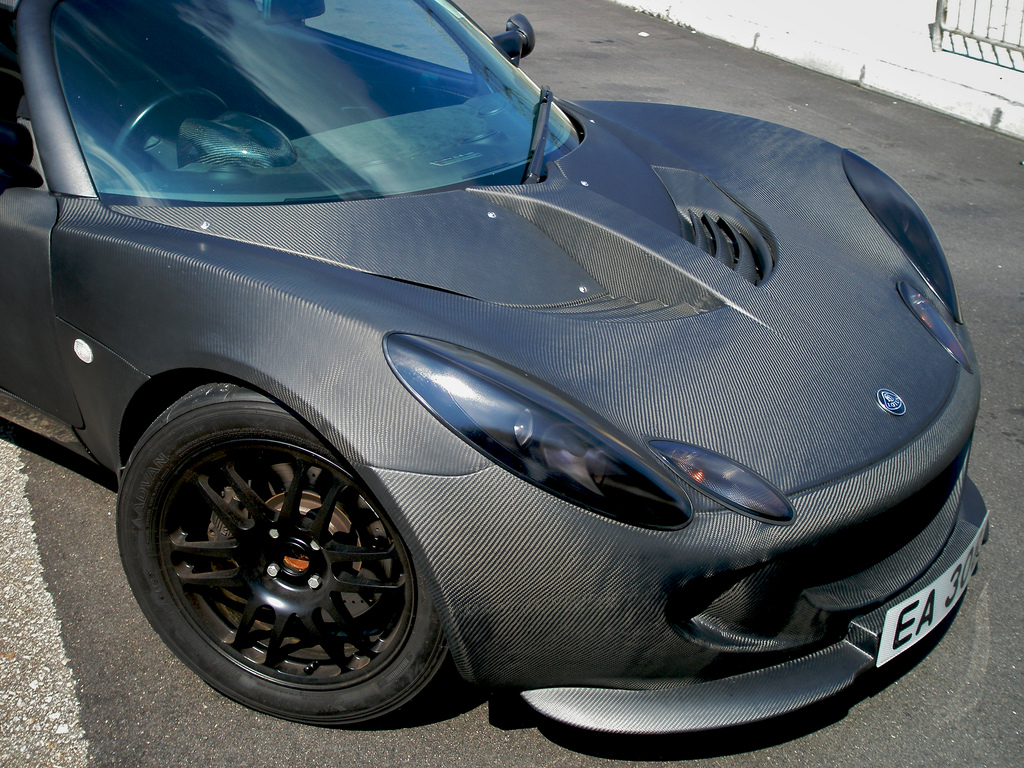
To achieve this, the builders have engaged in a ruthless campaign of weight reduction that borders on the fanatical. Carbon fiber is not just an accent; it is the primary material. Titanium hardware replaces steel bolts. The interior is a masterclass in purposeful minimalism, stripped of sound deadening, infotainment screens, and any creature comfort that fails to justify its mass. Every gram has been audited, and every component has been questioned. The result is a machine that offers a sensory experience no modern hypercar can replicate. It is not about how much power you can deploy, but how much you can feel. The steering, unassisted and direct, communicates every grain of tarmac; the suspension, tuned with a precision that only comes from low mass, reacts instantly; and the brakes, needing to arrest far less inertia, offer a pedal feel that is pure, unadulterated feedback.
A Powertrain Built for the Enthusiast
The powertrain, while not specified in the broader announcement, is expected to be a high-strung, naturally aspirated unit, likely a tuned version of the Toyota-sourced 2ZZ-GE or a bespoke engine build. In a world of turbocharged torque curves and electric instant thrust, this car will demand to be driven hard, its power delivered high in the rev range, rewarding a skilled driver with a visceral connection that is becoming extinct. It is the antithesis of the Lotus Emira, the brand’s current combustion swan song, which, while excellent, is a more refined and heavier grand tourer. This restomod is a scalpel to the Emira’s butter knife, a reminder that the purest joy in driving comes from simplicity.
The Collector’s Dilemma
For the modern collector, this creates a fascinating dilemma. They can acquire an Emeya 900 Gold, a technological tour de force that showcases Lotus’s electric future, or they can invest in this restomod, which preserves the company’s spiritual past. The $470,000 price tag is justified not by exotic materials alone, but by the engineering intellect required to create something so pure. It is a piece of functional art, a rolling sculpture that can be enjoyed on a back road in a way that no static art piece ever could. And it speaks to a growing desire among enthusiasts for authenticity, for a connection to the road that has been sanitized away by traction control, launch modes, and heavy batteries.
This is not a car for everyone, nor should it be. It is a niche within a niche, a hyper-exclusive club for those who understand that the ultimate luxury is not more power, but less weight. It proves that the spirit of Lotus, the obsession with "simplify, then add lightness," is alive and well, not necessarily in the corporate halls of Hethel, but in the dedicated workshops where passion still dictates the final product. It is a reminder that the most thrilling performance car of the decade might not have a massive screen or a thousand horsepower; it might just weigh less than a Smart car and cost more than a house. For the purist, that is not a paradox; it is perfection.