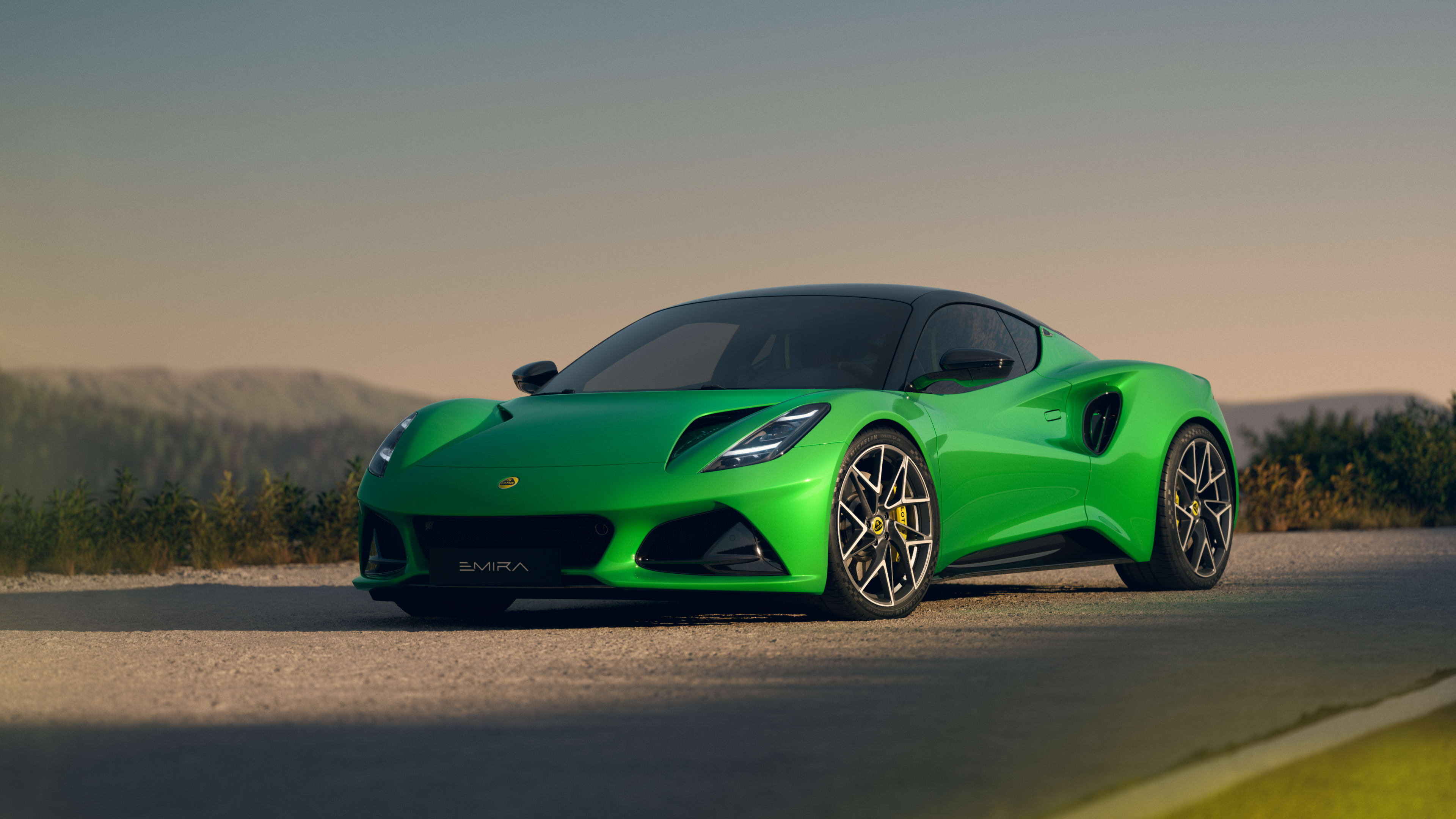
There's an irony in the automotive world that's almost too delicious to believe: the heart of America's most sensible sedan is about to beat inside one of Britain's most exciting sports cars. Toyota's 2GR-FE V6—the silken, indestructible powerplant that defined the Camry for nearly two decades—has been pulled from the automotive graveyard by Lotus and reanimated for a 400-horsepower mid-engined machine. A decade ago, this would have sounded like a fever dream. Today, it reads as one of the more inspired engineering gambles in recent memory.
The logic is brutally pragmatic. The 2GR-FE is a 3.5-liter aluminum-block unit that has proven itself across millions of miles of suburban commutes and highway cruises. Its architecture is fundamentally sound, its tolerances are proven, and its cost base is negligible precisely because Toyota built it in such enormous volume. Lotus, a marque that has always punched far above its weight by exploiting borrowed components, recognized that a proven V6 is a far more sensible starting point for a sports car than a bespoke engine drawn from a blank sheet. The 400-horsepower figure comes courtesy of forced induction—a supercharger arrangement that transforms the engine's character from docile to genuinely aggressive while retaining the fundamental civility that made it so beloved in the Camry.
The Art of Alchemy
There is a certain poetry to this. Lotus has always understood the value of restraint and the intelligence of using existing hardware. The original Elise leaned on a Rover K-series engine; the Exige and Evora drew on Toyota powerplants that were, at their core, ordinary. The company's genius has never been in inventing engines from scratch but in extracting extraordinary performance from ordinary foundations. Reviving the 2GR-FE for a 400-horsepower application is not a nostalgic gesture. It is a statement that Lotus intends to remain a builder of lightweight, driver-focused machines at a moment when the broader industry is racing toward electrification and increasingly complex hybrid systems.
A Pragmatic Hedge
The timing is significant. Lotus has publicly committed to an electric future, yet the market has responded with ambivalence to the first wave of electric sports cars. Enthusiasts have made clear that the visceral appeal of a combustion engine—particularly a sonorous V6—remains a powerful draw. By bringing the Camry's V6 back into production for its own purposes, Lotus is signaling that it understands its customer base better than the spreadsheet-driven planners at larger manufacturers. The engine's reemergence is not a retreat from electrification but a pragmatic hedge, a way to keep the brand's core audience engaged while the broader transition unfolds.
Scale Versus Vision
What makes the story particularly compelling is the contrast it draws with Toyota's own decision-making. Toyota, the world's largest automaker, judged the V6 unnecessary for the Camry's future and retired it without ceremony. Lotus, a company that sells a fraction of that volume, looked at the same engine and saw a viable path to a 400-horsepower sports car. It is a reminder that scale and vision are not the same thing, and that the largest companies are not always the ones who recognize value in their own discarded assets. The 2GR-FE will live on not because Toyota wanted it to, but because Lotus understood what it was worth.
Competence as Raw Material
For enthusiasts, the news is a rare piece of good fortune. The Camry V6 was never glamorous, but it was always competent, and competence, properly harnessed, is the raw material of greatness. The engine's return represents a continuation of a tradition that has defined Lotus for decades: the art of making something exceptional from something ordinary. In an era of increasingly heavy, increasingly complicated performance cars, there is something deeply appealing about a proven V6, a supercharger, and a lightweight chassis—the elemental ingredients of driving pleasure, assembled with the kind of intelligence that has always set Lotus apart.
Lotus has built its reputation on exactly that kind of alchemy, and this latest chapter suggests the company has not lost its touch. In rescuing the Camry's V6, Lotus reminds us that the best automotive ideas are not always the newest ones—sometimes they are simply the ones everyone else was too quick to discard.


