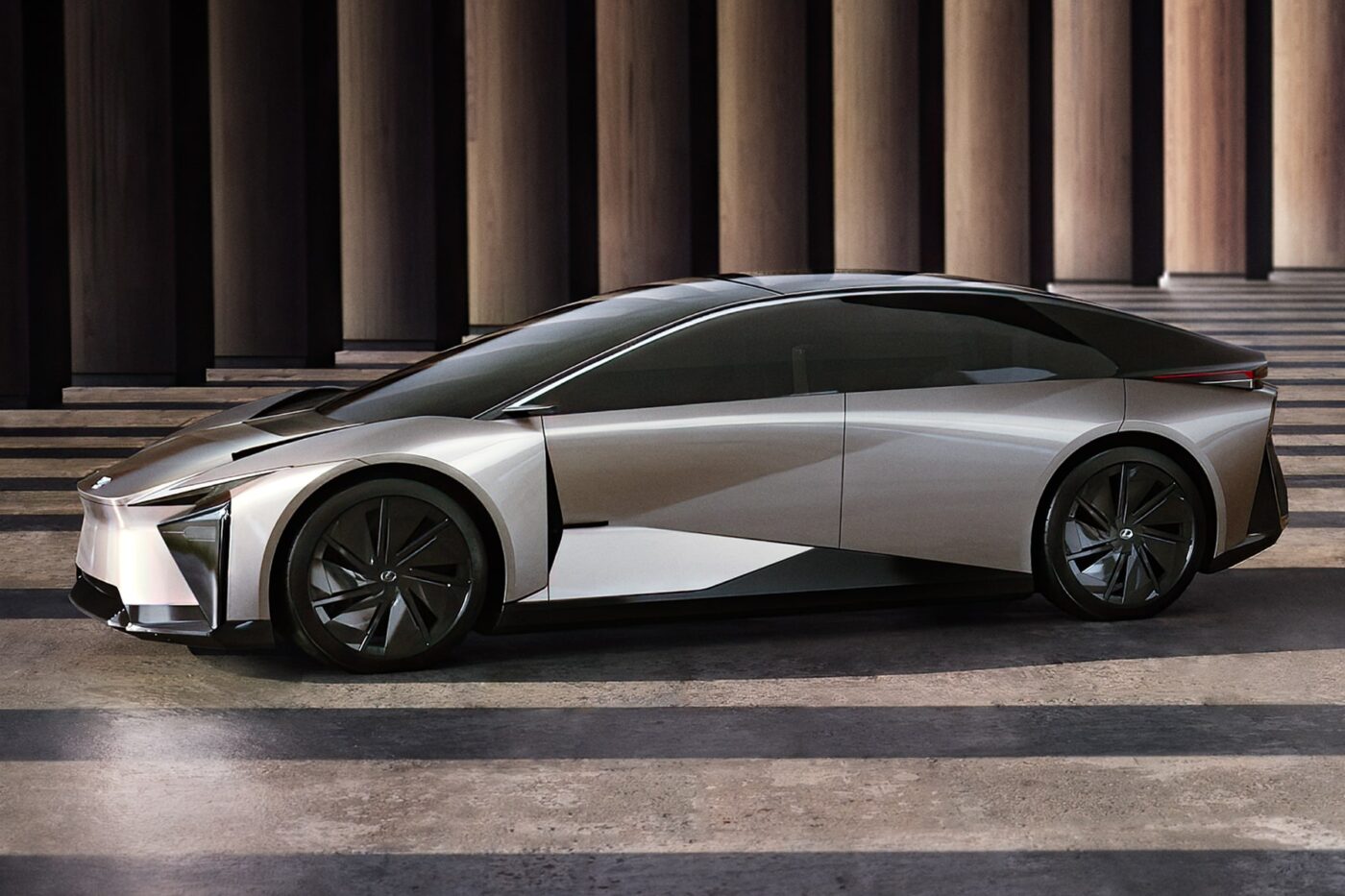
For three and a half decades, Lexus built its reputation on a single, unwavering promise: obsessive Japanese craftsmanship, delivered with a silence and precision that made the Germans look ostentatious. The LS 400 didn't just launch a brand in 1989; it rewrote the luxury rulebook. Now, that rulebook appears to be heading to Shanghai.
News that Lexus will build its first China-made electric SUV at a Shanghai plant, with production targeted for 2027, is more than a manufacturing footnote. It is a confession that the brand's future is being outsourced to the very market that has come to define the global EV era—and it raises uncomfortable questions about what, exactly, a Lexus will mean in the years ahead.
The Logic Is Sound. The Symbolism Is Anything But.
Consider the strategic reasoning first, because it holds up. China is the world's largest EV market and the epicenter of battery and software innovation. Localizing production there is pragmatic, tariff-savvy, and necessary for competitiveness. On paper, it's the obvious move.
Yet Lexus has spent its entire existence selling a distinctly Japanese form of luxury—takumi craftsmen, hand-finished details, an almost spiritual devotion to quality. Moving its electric flagship's assembly to a Chinese contract facility risks diluting the very mystique that justifies its premiums. When a shopper in Munich or Manhattan sees "Made in China" on the door jamb of a $70,000 Lexus, will the brand's hard-won aura of artisanal superiority survive the translation?
Chasing Range Figures Instead of Setting Them
The timing makes the tension sharper. Lexus is simultaneously asking American buyers to pay an $8,000-plus premium for plug-in hybrid versions of its SUVs—a bet that customers will pay dearly for electrification wrapped in the brand's traditional values.
Meanwhile, the 2027 RZ arrives under $50,000 with over 300 miles of range: a competent, sensibly priced electric crossover that nonetheless competes in a crowded field where Lexus no longer leads on technology. The brand that once defined quiet luxury now finds itself chasing range figures and price points set by rivals. Its identity as an innovator has quietly eroded into something more defensive—a premium badge applied to increasingly commoditized hardware.
The Software Cracks in a Bulletproof Reputation
Compounding the narrative is a drumbeat of recalls. More than 68,000 Lexus vehicles have been recalled over a display error that could conceal critical engine indicators, with the NX SUV accounting for the bulk of the affected units.
These are not catastrophic failures, but they are precisely the kind of unforced software errors that undermine a reputation built on bulletproof reliability. The irony is acute: a brand whose founder obsessed over a single millimeter of panel gap is now fielding recalls for digital instrument clusters that can hide an overheating warning. In the software-defined vehicle era, craftsmanship means something different—and Lexus has yet to prove it has mastered the new definition.
The Nostalgic Counterargument—and Why It Isn't Enough
There is, of course, the nostalgic counterargument, and it is a potent one. The brand still knows how to build a proper luxury machine. Used examples of its 467-horsepower V8 sedans trade at half their original MSRP, offering old-school ultra-luxury performance at a fraction of the price—a reminder of the engineering ambition that once defined the marque.
The ES soldiers on as a serene, dependable road companion, and the RX remains a benchmark family SUV against rivals like the Acura MDX. These are genuine strengths. But they are strengths rooted in the past, in internal combustion and incremental refinement, while the future—electric, Chinese-built, software-driven—represents a leap into territory where Lexus's traditional advantages count for far less.
A Patchwork Without a Throughline
The deeper issue is one of coherence. A luxury brand is, at its core, a promise about provenance and consistency. Lexus built its identity on Japanese precision, dealer experience, and an almost monastic restraint. Now it is stitching together a global patchwork: Japanese heritage, American sales dependency, Chinese manufacturing, and a product line split between nostalgic V8s and pricey plug-in hybrids.
Each decision is defensible in isolation. Together, they blur the throughline. When a brand's electric future is built in Shanghai while its reputation was forged in Tahara, the question is no longer whether Lexus can compete—it is whether anyone can articulate what still makes a Lexus a Lexus. That is the definition of an identity crisis, and 2027 is approaching faster than the brand's carefully managed narrative would like.


