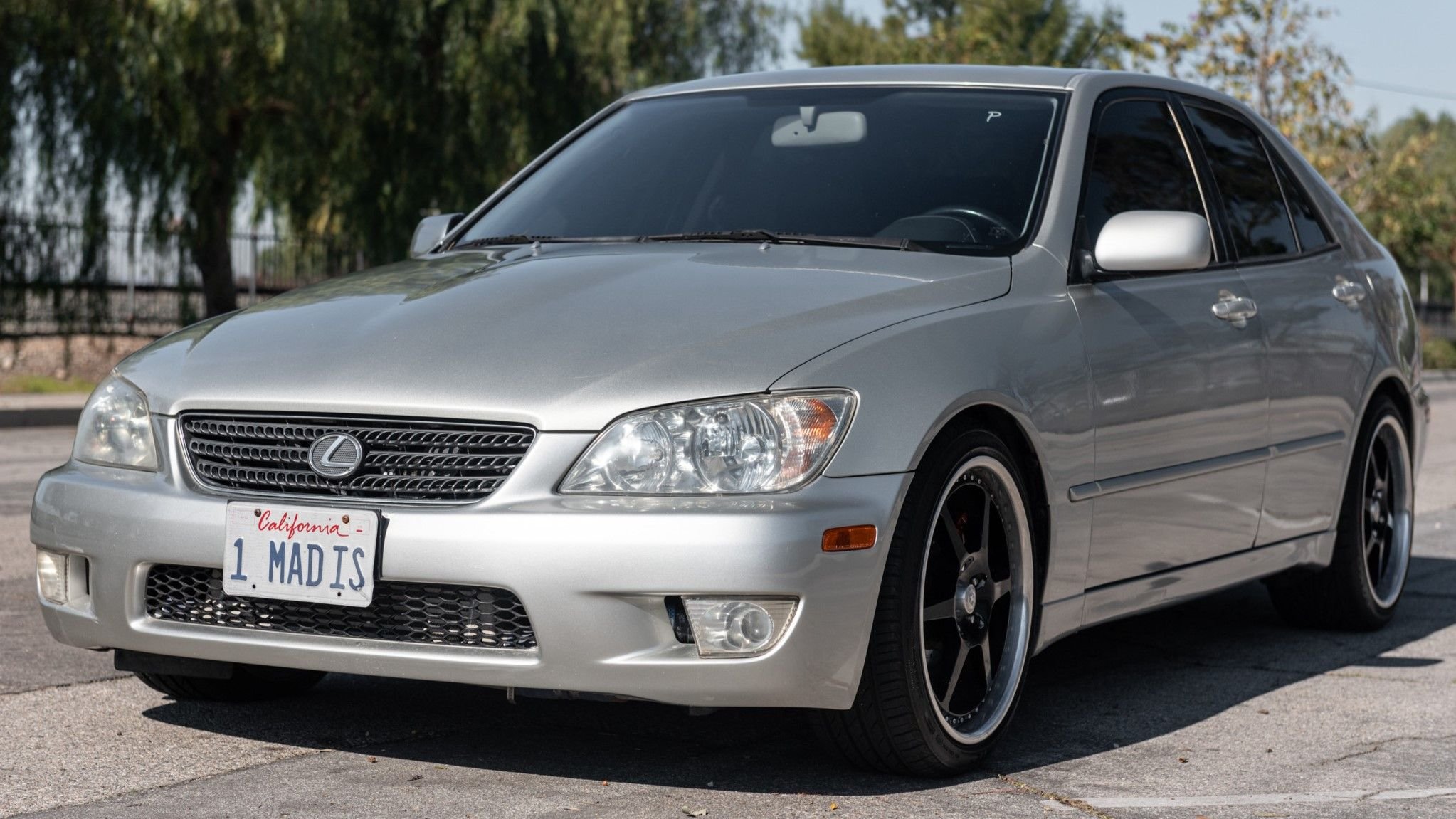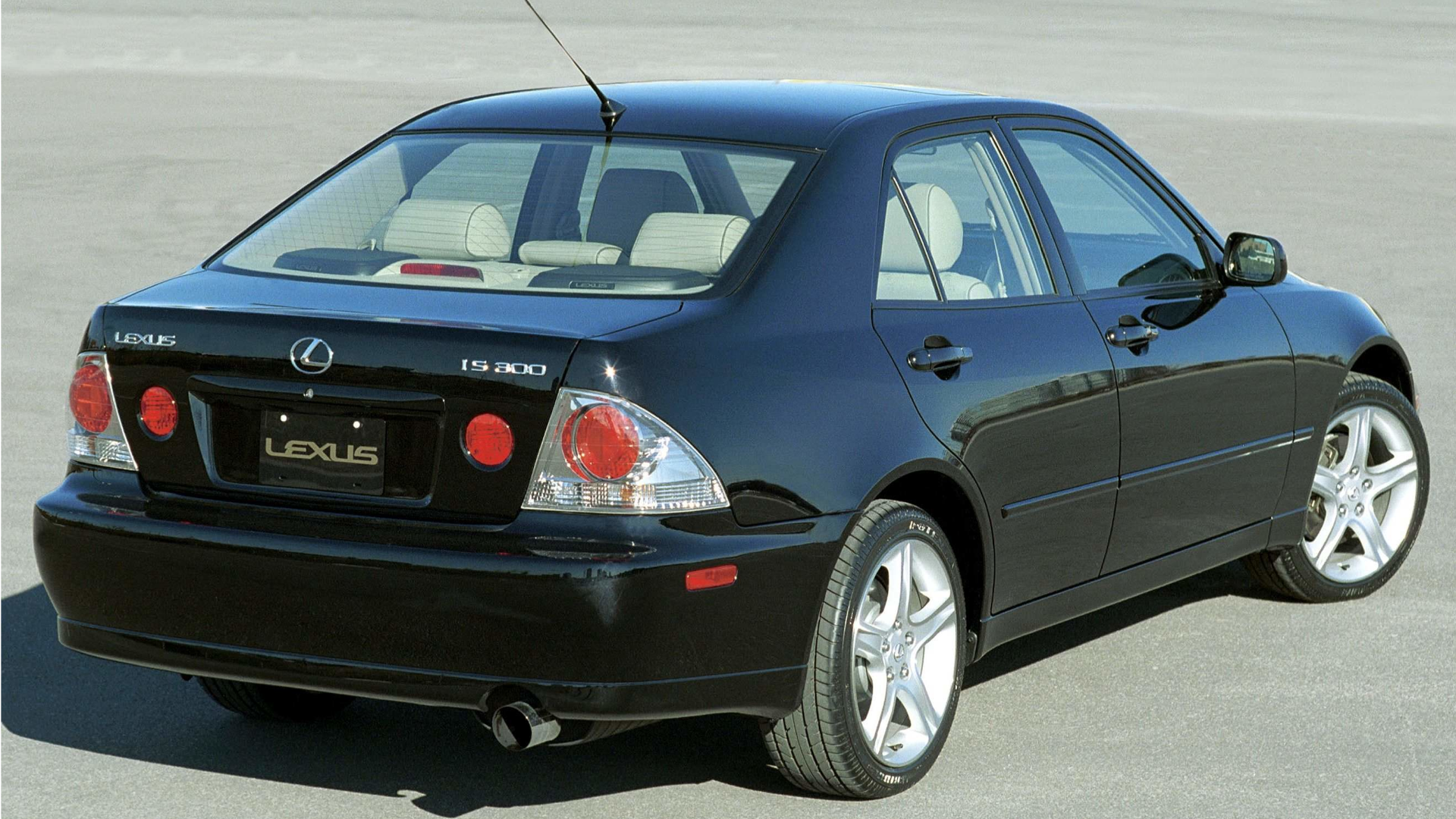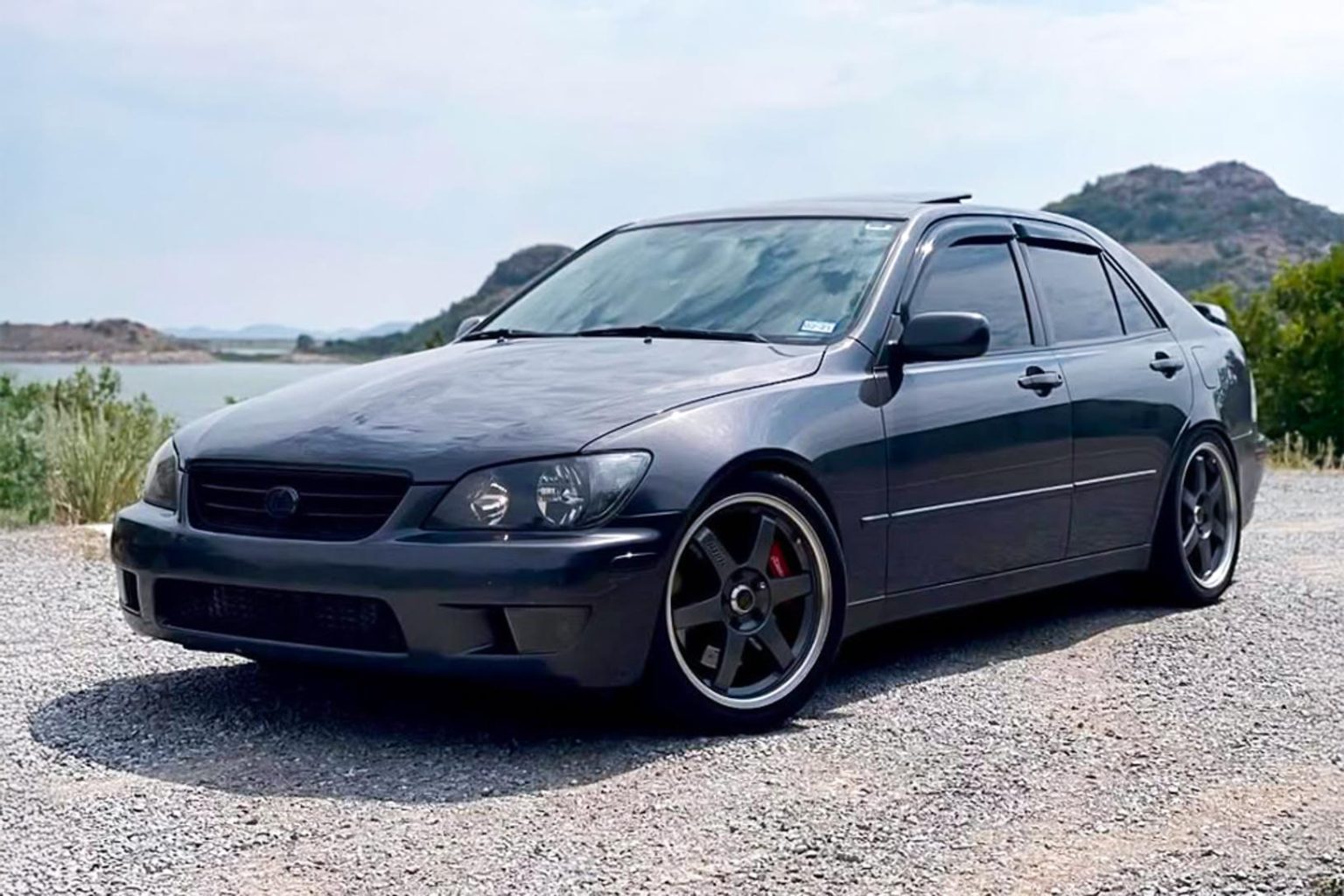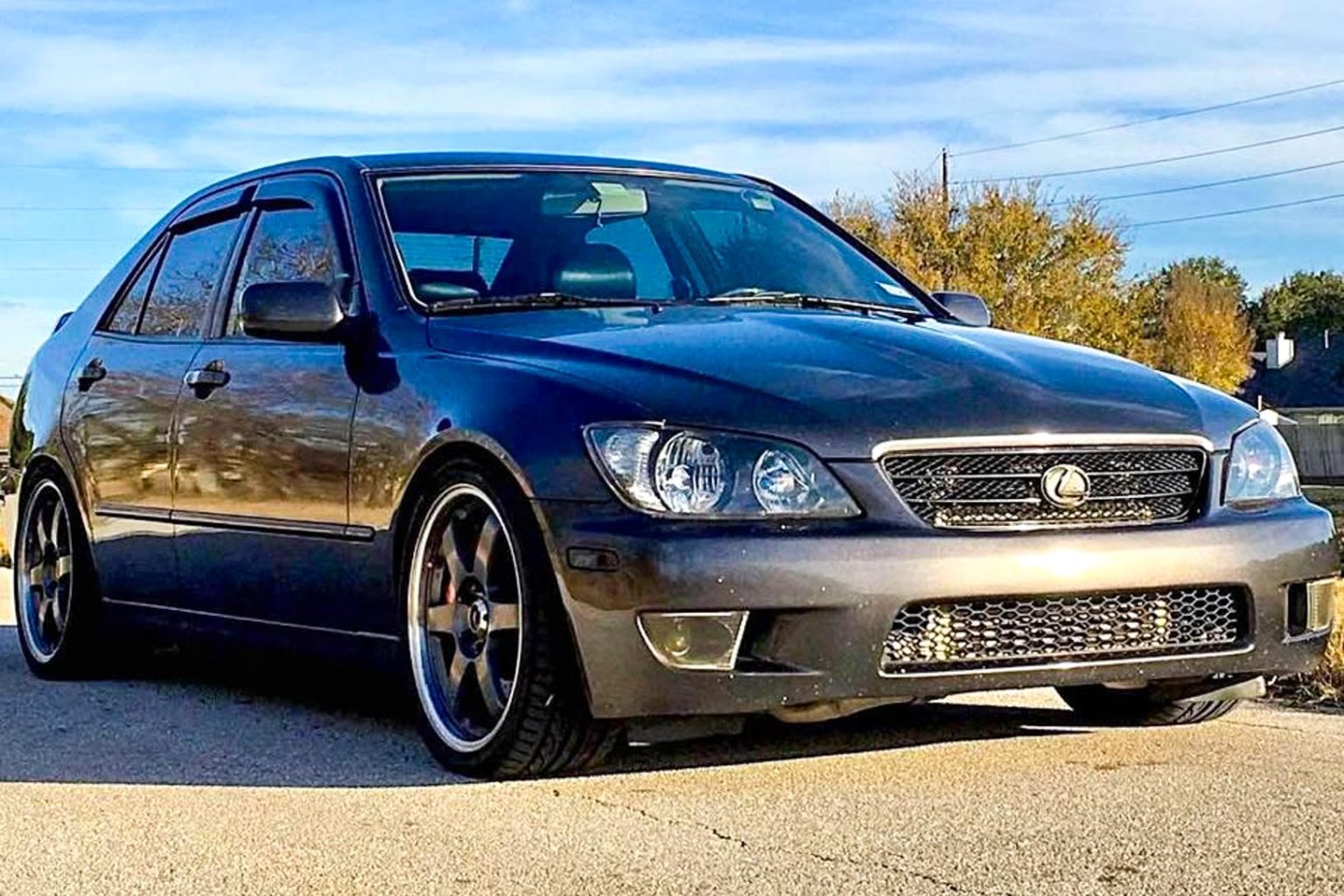
Walk into any Toyota dealership today and try to order a base Corolla. The salesperson will smile, hand you a spec sheet, and casually mention the $25,000 plus destination. You'll wait six months for the privilege. Meanwhile, the used market is quietly offering something far more interesting: a first-generation Lexus IS 300 with the legendary 2JZ-GE inline-six under the hood, available for roughly $15,000 less than that Corolla — and it will outlast, outhandle, and outclass the economy sedan in nearly every measurable way. The math is not close. The driving experience is not close. And anyone who has ever felt the silky surge of that 3.0-liter straight-six knows exactly why this isn't hyperbole.
This isn't nostalgia talking. It's physics, engineering, and a very particular kind of Japanese over-engineering that simply doesn't exist anymore. The IS 300 is a rear-wheel-drive sports sedan from an era when Lexus built driver's cars with genuine intent — before touchscreens, before hybrid efficiency became the only virtue, before the industry decided that a car's soul could be replaced with a subscription service. Let's break down why this 20-year-old sedan is the smartest money you'll spend in this market.
The 2JZ: An Engine That Refuses to Die
The 2JZ engine needs no introduction to enthusiasts — it's the same iron-block foundation that powered the Supra to immortality, albeit in naturally aspirated guise here. In the IS 300, it produces 215 horsepower and 218 pound-feet of torque, figures that sound modest on paper but feel anything but in practice. The six-cylinder's power delivery is buttery, linear, and utterly devoid of the thrashy desperation that plagues modern turbocharged four-cylinders. It revs freely to redline, emits a mechanical soundtrack that no CVT-equipped Corolla could ever replicate, and pairs beautifully with either a five-speed manual (rare and coveted) or the slick-shifting Aisin automatic.
More importantly, the 2JZ is virtually indestructible — these engines routinely eclipse 300,000 miles with nothing more than routine maintenance, and the IS's unibody and suspension components are equally overbuilt. This is a car engineered to a standard that simply doesn't exist in the current economy-car landscape. You're not buying a used car; you're buying a foundation that was designed to outlast the company that built it.
Chassis and Cabin: Built to a Different Standard
What you sacrifice in 2027 connectivity and driver-assistance tech, you gain in purity. The IS 300's steering is hydraulic, communicative, and weighted perfectly — a direct line to the front tires that no lane-keeping assist can mimic. Its double-wishbone front and multi-link rear suspension, derived from the Supra's architecture, delivers a ride that's both supple and composed, soaking up broken pavement while remaining flat through corners.
The cabin, trimmed in real leather with a simple, elegant dashboard, feels like a $40,000 luxury car from the era — because it was. The driving position is spot-on, the seats are genuinely comfortable over long distances, and the overall ambiance is one of quiet, purposeful quality. A new Corolla's interior, by contrast, is a monument to cost-cutting: hard plastics, a touchscreen that demands your attention, and a driving experience that prioritizes efficiency over engagement. The Lexus whispers "premium" in a way that no econobox can shout.
The Economics of Depreciation (Or Lack Thereof)
There's also the depreciation factor that makes this a no-brainer. The Corolla will shed roughly 40 percent of its value in the first five years. A well-maintained IS 300 from 2001 to 2005 has already bottomed out in value, and low-mileage examples are actually appreciating. You're not just saving $10,000 upfront — you're buying an asset that's likely to hold its worth, while the new-car buyer eats thousands in instant depreciation.
Insurance is cheaper, parts are plentiful, and the aftermarket is enormous if you ever feel the urge to bolt on a turbocharger and tap into the 2JZ's legendary boost tolerance. Even in stock form, this Lexus is a rear-wheel-drive sports sedan with a perfect weight distribution, and it drives like a far more expensive car than its current asking price suggests. It's the rare used car that rewards you twice: once at purchase, and again every time you press the start button.
A Farewell to the Sports Sedan
Lexus just announced a 2027 IS Special Edition, a green-tinted farewell to the sedan that has stubbornly refused to die. It's a lovely gesture, but it's also priced in the mid-$40,000 range. For that money, you could buy two excellent 2JZ IS 300s, keep one pristine in the garage, and daily the other while still having cash left over for maintenance and tires. The brand's new NX and ES models are impressive in their own right, but they're chasing a different buyer — one who values hybrid efficiency and digital displays over mechanical authenticity.
The 2JZ IS 300 represents the last era when Lexus built sports sedans with genuine driver-first intent, before the industry's pivot to electrification and touchscreen-everything design philosophy. It's a time capsule of when Japanese engineering was obsessed with overbuilding, not meeting cost targets. And that's precisely why it remains relevant today.
The Rational Choice Isn't Always the Obvious One
The new Corolla is a fine appliance. It will get you to work, return stellar fuel economy, and never embarrass you. But it will also never make you smile on an empty on-ramp, never reward a late apex with a hint of tail-out playfulness, and never make you look back after parking it. The Lexus IS 300 does all of those things while carrying the same reliable DNA and a fraction of the price.
The choice isn't between old and new — it's between a transportation device and a driving machine. Lexus built the IS 300 when the brand still believed that luxury meant engineering excellence, not just ambient lighting and a bigger screen. For the same money, the 2JZ Lexus is the only rational decision. Sometimes the smartest purchase is the one that makes the least sense on paper — and the most sense behind the wheel.