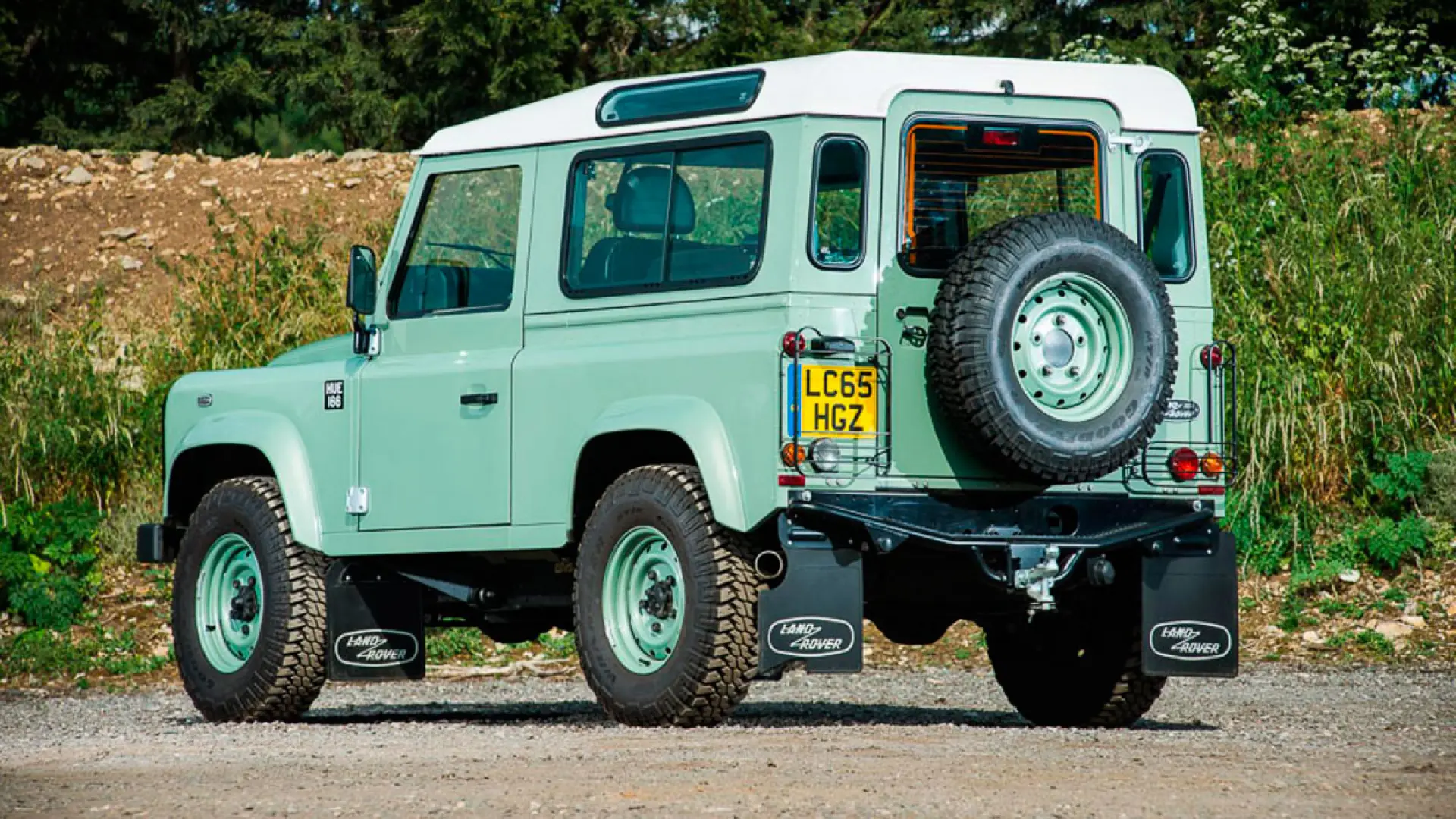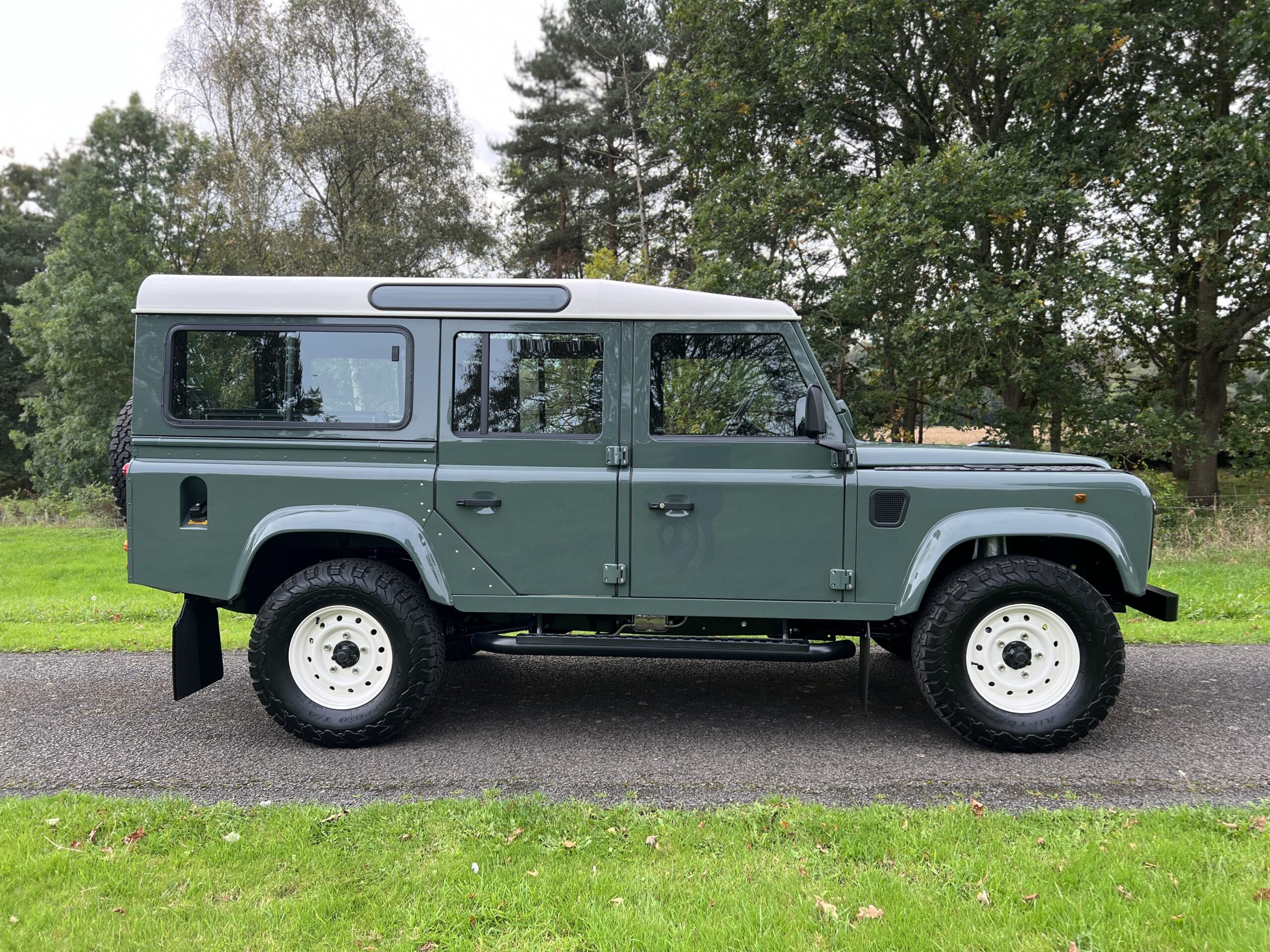
While the rest of the automotive world sprints headlong into an electrified future, Land Rover has quietly executed one of the most strategically clever countermoves in the modern luxury market. The new Heritage Works program, which fast-tracks customer restorations of classic Defenders, is not merely a nostalgia exercise or a boutique vanity project. It is a calculated, deeply intelligent play that reframes what electrification means for the brand — and for the buyers who have kept Land Rover's mythology alive for generations.
Consider the context. JLR recently confirmed that the UK's largest EV battery gigafactory has shelved its expansion amid stalled talks with the automaker, a signal that the road to electrification is neither smooth nor guaranteed. Add to that a string of recalls — 24,000 SUVs flagged for power-converter faults, Range Rover Sport models recalled over cracking rear subframes, and another 23,000 vehicles facing sudden drive power loss — and the narrative around Land Rover's electric ambitions grows considerably more complicated. Meanwhile, the electric Range Rover Sport has arrived with specifications designed to take on the Lucid Gravity, and an electric Defender prototype has been spied testing with a G-Class-style rear box. The future, ostensibly, is electric.
The Case for Authenticity Over Amperage
But Heritage Works says something else entirely. It says that the most valuable Land Rover in the room may not be the one plugged into a wall. By offering factory-backed, fast-tracked restoration of classic Defenders, Land Rover is monetising the very thing no startup can replicate: seventy years of earned credibility. Every restored Defender that rolls out of a Heritage Works facility is a rolling argument that authenticity cannot be engineered overnight, and that the rugged, mechanical honesty of the original is something an electric powertrain can imitate but never truly replace.
This is where the anti-EV logic sharpens. The conventional critique of heritage programs is that they are rearward-looking distractions. But in Land Rover's case, the calculus is inverted. The brand faces a genuine tension: its identity was forged in diesel, in low-range transfer cases, in the clatter of a Td5 engine crossing the Serengeti. Electrification threatens to sever that lineage. Heritage Works doesn't fight the EV transition — it hedges against it. It creates a parallel product universe where the brand's core customers, the ones who actually use a Defender for what it was built for, can buy into the legend without compromise. And it does so profitably, at margins that make volume EV sales look thin.
Defence, Dirt, and Institutional Memory
There is also a geopolitical dimension that gives the program added weight. JLR is reportedly in talks to sell Defenders to NATO countries — a testament to the vehicle's enduring utility in an era of renewed defence spending. A restored classic Defender and a NATO-spec Defender share the same DNA. Heritage Works keeps that DNA culturally alive, ensuring that when governments and militaries think of rugged capability, they think of Land Rover. No amount of electric Range Rover Sport marketing can buy that kind of institutional memory.
Nor should we overlook the marketing elegance. The "Play Harder This Winter" campaign with U.S. Ski & Snowboard leans on the same heritage-driven narrative: capability, adventure, the promise that a Land Rover will get you there and back. The Defender OCTA, with its thunderous V8, has been met with bemused adoration from reviewers who call it ridiculous in every way — and mean it as a compliment. These are not products of a company ashamed of its past. They are products of a company that understands heritage is a moat.
Strategy Wearing a Waxed Jacket
The smartest thing about Heritage Works, then, is that it doesn't pretend electrification isn't happening. It simply refuses to let it define the brand. While the industry races to build the future, Land Rover is quietly building a business around the past — and charging handsomely for it. In a market where every premium marque is scrambling to differentiate itself with screens and range figures, Land Rover has found a differentiator that cannot be copied, cannot be recalled, and cannot be electrified away. That is not nostalgia. That is strategy.
And it returns the brand to a simpler, more honest truth: a Land Rover is not defined by what powers it, but by where it can take you — and whether it gets you home again. Heritage Works simply reminds us that the answer has always been yes.