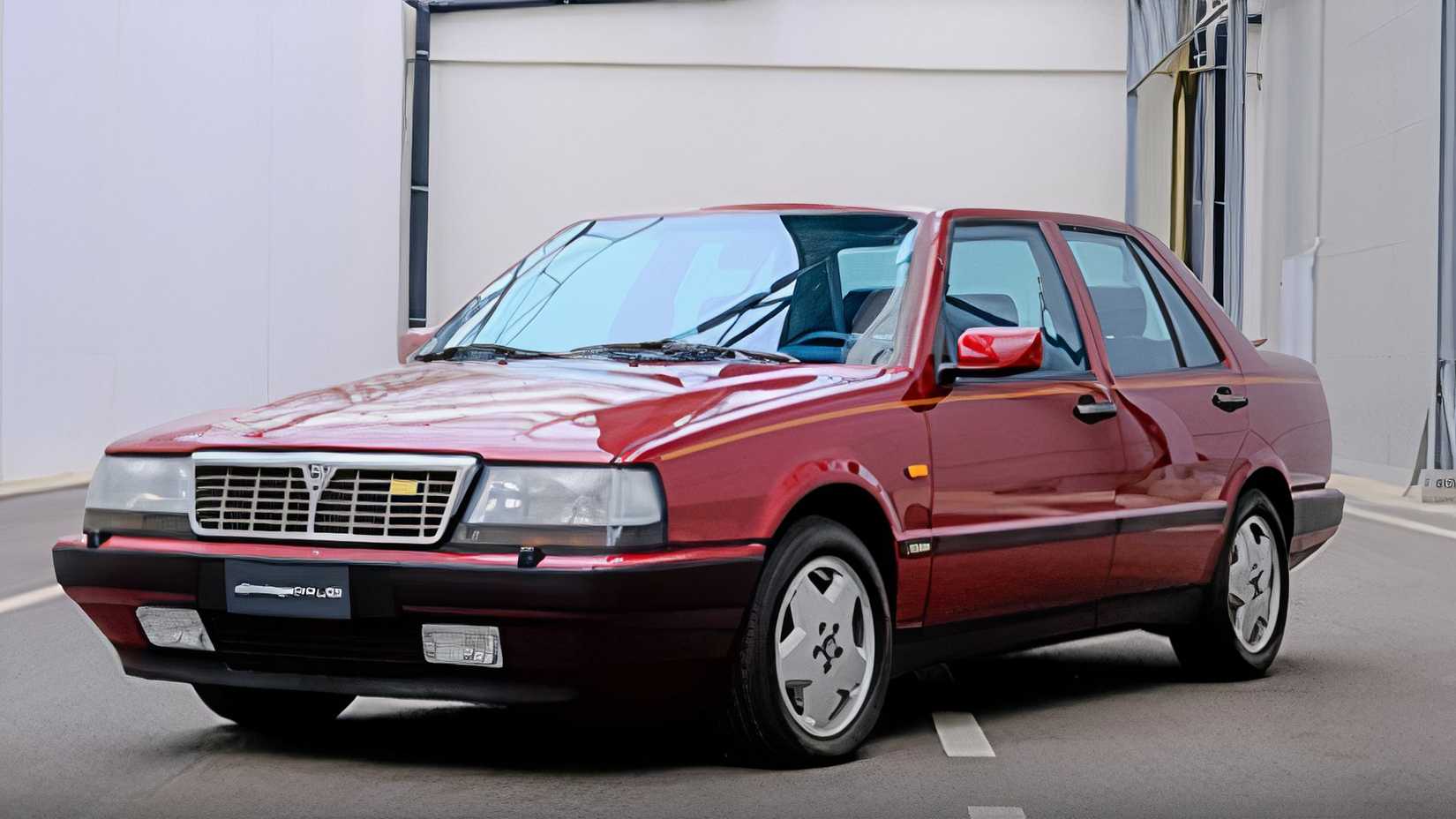
There is a peculiar magic when Italian industrial rivals briefly lay down arms and collaborate on something absurdly beautiful. The automotive world loves a good origin story, but few are as deliciously convoluted as the tale of the Lancia Thema 8.32 — a sedan that, for a fleeting moment in the late 1980s, married the blue-blooded roar of Maranello to the artisan precision of Borgo Panigale. It remains one of the most misunderstood cars ever to wear the Lancia shield, and its story is a masterclass in how brand heritage can be both a blessing and a curse.
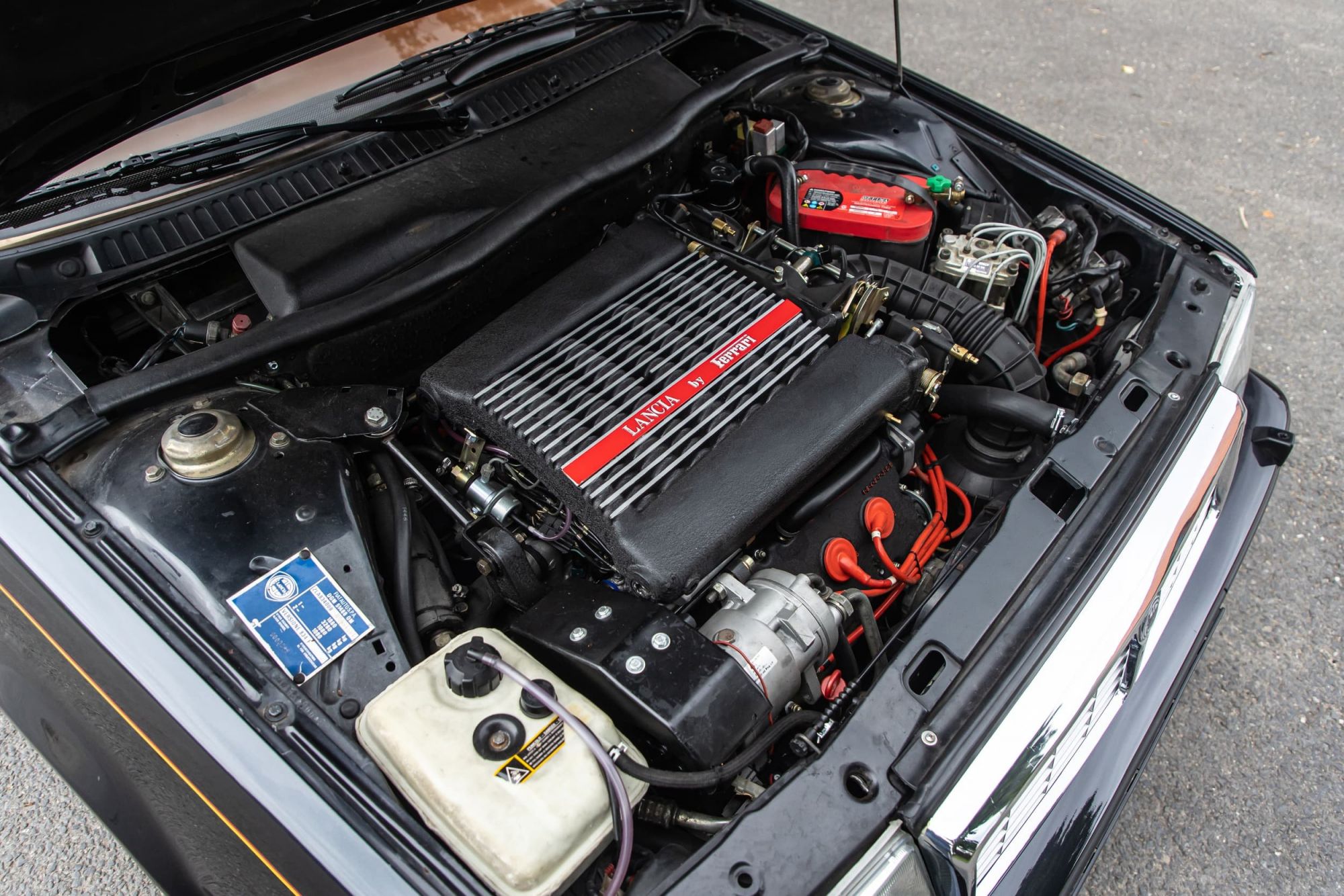
The 8.32’s heart was a 2.9-litre V8, and here is where the narrative takes its most intriguing twist. The engine was not built by Ferrari itself, at least not in the traditional sense. Instead, the task of assembling this jewel-like powerplant was outsourced to Ducati, the motorcycle manufacturer famed for its desmodromic valvetrains and obsessive approach to mechanical finish. Ferrari supplied the design, derived from the unit that powered the 308 and Mondial, but it was Ducati’s craftsmen who hand-assembled each engine, balancing internals and ensuring tolerances that would satisfy the most exacting of engineers. The result was a powerplant that revved with a metallic, almost pneumatic urgency — a stark contrast to the turbocharged four-cylinders that dominated the premium sedan segment at the time.
A Wolf in a Business Suit
Why does this matter now? Because it illuminates the very essence of what Lancia once represented: a willingness to take risks that bordered on the irrational. The Thema itself was a handsome, sober four-door, a product of the Fiat group’s platform-sharing era. But by slotting a Ferrari-derived V8 under its bonnet, Lancia created a paradox — a wolf in sheep’s clothing that was simultaneously a gentleman’s express and a hooligan’s tool.
Slide behind the wheel and the duality hits you. The cabin is all executive restraint — plush hide, subtle wood, the quiet confidence of a car built for autostrada cruising. But blip the throttle and that V8 answers with a snarl that belongs on a race track, not in a boardroom car park. The engine’s character is defined by its top-end rush; it wants to be revved, encouraged, chased toward the redline where the mechanical symphony reaches its crescendo. This is not the lazy wave of torque from a turbo motor. It’s a scalpel, not a sledgehammer.
The chassis, meanwhile, was tuned to cope with the newfound muscle, and the result was a sedan that could hustle with surprising verve. It wasn’t a Delta Integrale — nothing could match that homologation special’s point-to-point fury — but the 8.32 possessed a different kind of appeal: the ability to arrive at a business meeting with the heart of a berlinetta hidden beneath its tailored suit.
The Paradox of a Flawed Masterpiece
The 8.32 was not a sales success; it was expensive, thirsty, and its timing was catastrophic, arriving just as the market pivoted toward more efficient, more mundane executive offerings. Yet its very existence speaks to a philosophy that has all but vanished from the modern industrial landscape. The critics of the day were divided — some praised the engineering ambition, others dismissed it as a vanity project. Both were right. And that, perhaps, is the point.
Today, Lancia is a brand in flux, a shadow of its former self, currently undergoing a slow, tentative revival under the stewardship of Stellantis. The recent appointment of Arnaud Belloni as CEO of Fiat, Abarth, and Lancia signals an intent to consolidate, but the road back to relevance is paved with difficult questions. The company’s glorious past — the Stratos, the Delta Integrale, the Aurelia — casts a long shadow, and the new management must decide whether to lean into that nostalgia or forge a new identity. The news of Lancia Corse HF clinching the WRC2 Teams’ World Championship and the delivery of the first Rally2 car outside Europe suggests a motorsport-focused resurgence, but the road car lineup remains thin, with the new Ypsilon hatchback carrying the weight of expectation on its small shoulders.
A Blueprint for the Future
The 8.32 offers a template for a different kind of revival, one that doesn’t rely on replicating past glories but on recapturing the spirit of fearless engineering. In an era of homogenised platforms and electrified sameness, the idea of a Lancia sedan with a bespoke, high-performance powerplant — perhaps even one co-developed with a specialist partner — feels almost radical. The Ducati connection is particularly poignant, as the motorcycle firm remains a jewel in the Italian manufacturing crown, renowned for its craftsmanship and emotional resonance. A modern Lancia that tapped into that same ethos, that same willingness to collaborate with a master of a different discipline, could carve a niche that the German giants cannot easily occupy.
Of course, the economics of such a venture are daunting. The 8.32 was a halo car in the truest sense — a loss leader that burnished the brand’s image while the volume models did the heavy lifting. But the lesson of the 8.32 is not about sales figures; it is about the importance of audacity. A brand that dares to fit a Ferrari engine into a family sedan, and entrusts its assembly to a motorcycle maker, is a brand that understands something profound about desire.
As Lancia navigates its uncertain future, it would do well to remember that its most enduring legacy is not the trophies or the rally stages, but the sheer, unapologetic brilliance of its engineering choices. The missing link between Ferrari, Ducati, and Lancia is not a footnote in history; it is a blueprint for what the brand could become again — if only it has the courage to be reckless once more. In a world of cautious platform-sharing and electrified conformity, perhaps that’s the one thing worth reviving above all else.