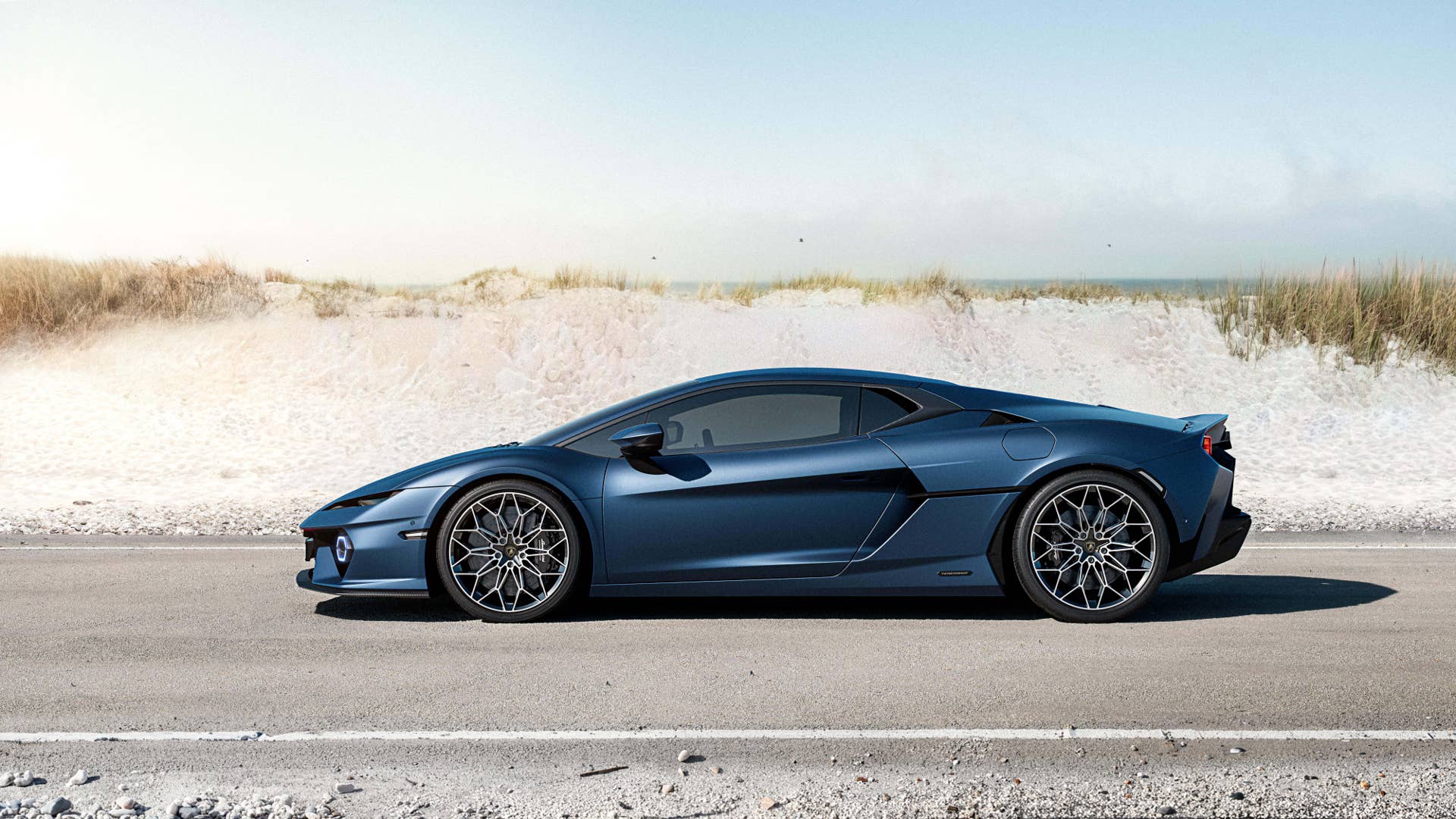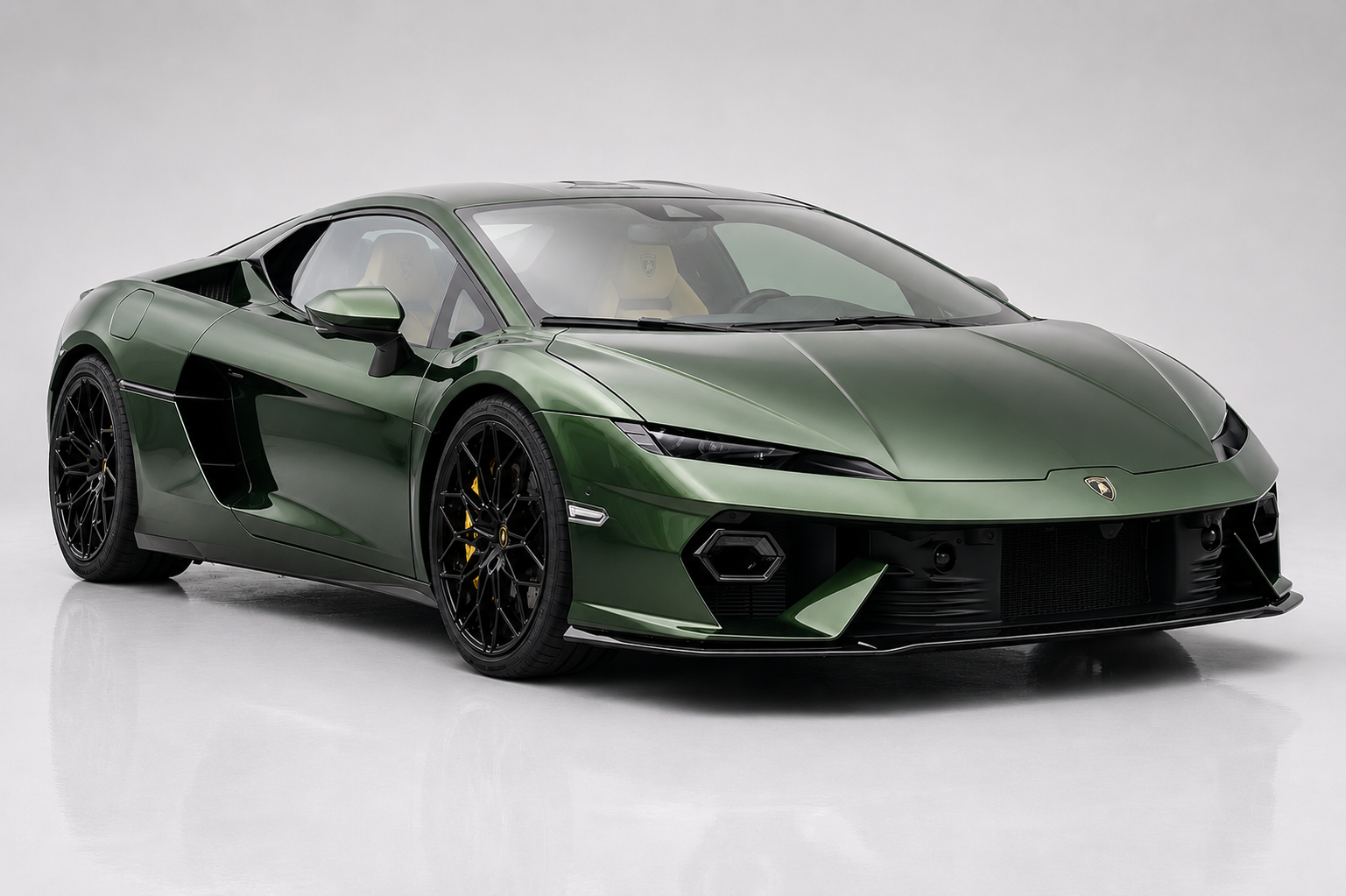
There are few second acts in automotive design. Stylists move between studios, inherit platforms they did not conceive, and shoulder legacies they cannot fully author. Every so often, though, the industry grants a designer the rarest of privileges: the chance to revisit an idea he left unfinished. That is precisely what has unfolded at Sant'Agata Bolognese, where the hand responsible for the Gallardo—the car that carried Lamborghini from boutique exotic maker to global powerhouse—has returned to shape its true spiritual successor, the Temerario. It is continuity disguised as reinvention, and it deserves to be understood as the through-line of Lamborghini's current moment.
Recall what the Gallardo meant. Introduced in 2003, it was the first Lamborghini designed under Audi's stewardship and the first to be built in serious volume. It was also, crucially, a car of restraint. Where the Murciélago shouted, the Gallardo articulated. Its surfaces were taut, its proportions compact, its geometry precise. It established a visual language—sharp creases, hexagonal motifs, a low, wedged stance—that would echo through every Lamborghini that followed. The designer who drew it understood something essential: a Lamborghini need not be outrageous to be unmistakable. That lesson, apparently, was never forgotten.
A Sentence Completed
Now comes the Temerario, and with it a quiet homecoming. The Gallardo's original stylist has returned to the fold, and the result reads less like a clean-sheet exercise than a long-deferred conclusion. Where the intervening Huracán sharpened and aggression-hardened the formula, the Temerario restores a measure of that first-generation clarity. The greenhouse is more generous, the shoulder line more considered, the surfacing more disciplined. This is a designer completing a sentence he began two decades ago—refining rather than reacting.
Old Bones, New Fire
None of this is mere nostalgia. The Temerario arrives as Lamborghini's second plug-in hybrid supercar and successor to the Huracán, carrying the weight of an entire era's expectations. Its twin-turbo V8 hybrid powertrain revs to a startling 10,000 rpm—a figure that has drawn genuine admiration from reviewers who have driven it. The Temerario is no retro exercise; it is a forward-facing machine that happens to carry the DNA of its forebear in its bones. That the same eye shaped both is the point.
The Canvas Returns
The timing of this narrative is reinforced by Lamborghini's recent flourish of personalisation. The marque has just unveiled a collection of bold two-tone Temerarios—marketed under the Tettonero banner—pairing contrasting roofs and bodywork across a striking palette of five colourways. Reaction has been divided, with some observers charitably describing the treatment as "eyeshadow" and others questioning the naming. The subtext, though, is unmistakable: Lamborghini is treating the Temerario as a canvas, exactly as it once did with the Gallardo's endless special editions. The car is being positioned not as a mere replacement but as a new foundation.
The Weight of the Through-Line
What makes the Gallardo-to-Temerario arc so compelling is that it mirrors Lamborghini's own maturation. The Gallardo proved the brand could build a supercar with discipline and commercial reach. The Temerario must prove the brand can do so again in an electrified, regulation-bound world—without losing the theatricality that defines it. Summoning the same design sensibility to bridge those two moments suggests a company confident enough to look backward in order to move forward.
In an industry obsessed with the next thing, there is something quietly radical about a designer returning to finish what he started. Lamborghini's philosophy has always been built on tension—between restraint and spectacle, geometry and drama, heritage and reinvention. The Temerario is that finished thought, and on the evidence, it was worth the wait.