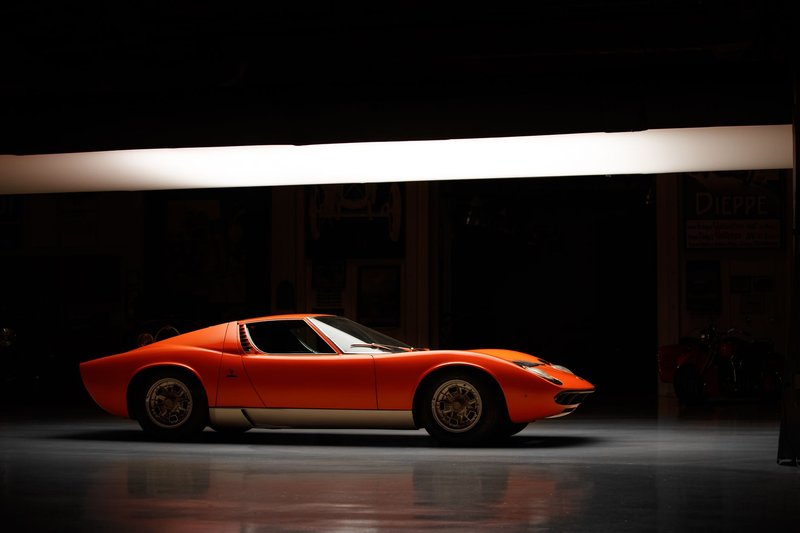
A Lamborghini is going to auction with an opening bid of less than a dollar. Not a scale model, not a barn-find basket case, not a scam listing on a classifieds site at two in the morning. A genuine Sant'Agata machine, once owned by Rod Stewart, the man who sang "Maggie May" and has spent five decades being exactly the kind of rock star you'd expect to own a Lamborghini. The opening bid is roughly the price of a gumball.
On its face, this is auction-house theatre, a calculated provocation engineered to generate precisely the coverage it has received. And it worked — here we are. But beneath the gimmick sits something genuinely instructive about where the collector market, and the Lamborghini brand itself, now stands.
What a One-Dollar Opening Bid Actually Says
When an auction house sets a token opening figure, it isn't confessing that the asset is worthless. It's confessing that the seller no longer wishes to anchor the price. In a market where Countach and Miura values had been treated as near-religious certainties, the decision to let the room decide everything is a quiet admission that certainty has become expensive to maintain.
The celebrity provenance — Stewart's ownership — is no longer a floor. It's a wildcard. And wildcards, in a cooling market, are precisely what sellers reach for when they suspect the old benchmarks no longer hold. The gavel will tell us whether a knighted rock legend's garage history still moves the needle, or whether the room has quietly moved on.
The Same Story, Told From Every Angle
Look at the broader Lamborghini news cycle surrounding this auction and the picture sharpens. A 1991 Diablo with just 12,000 miles surfaces for sale — a time-capsule example of the brand's most analogue era, the kind of car that once represented the purest expression of Sant'Agata's philosophy. Meanwhile, a Texas fraud bust forfeits more than ninety exotic cars, Lamborghinis among them. A reminder that these machines have spent the past decade functioning as much as financial instruments as automobiles.
When the same brand appears simultaneously in a rock star's garage, a courtroom evidence lot, and a dealer's curated showroom, you are no longer looking at a car company. You are looking at a speculative asset class undergoing a correction in real time.
Narrative as Mechanical Specification
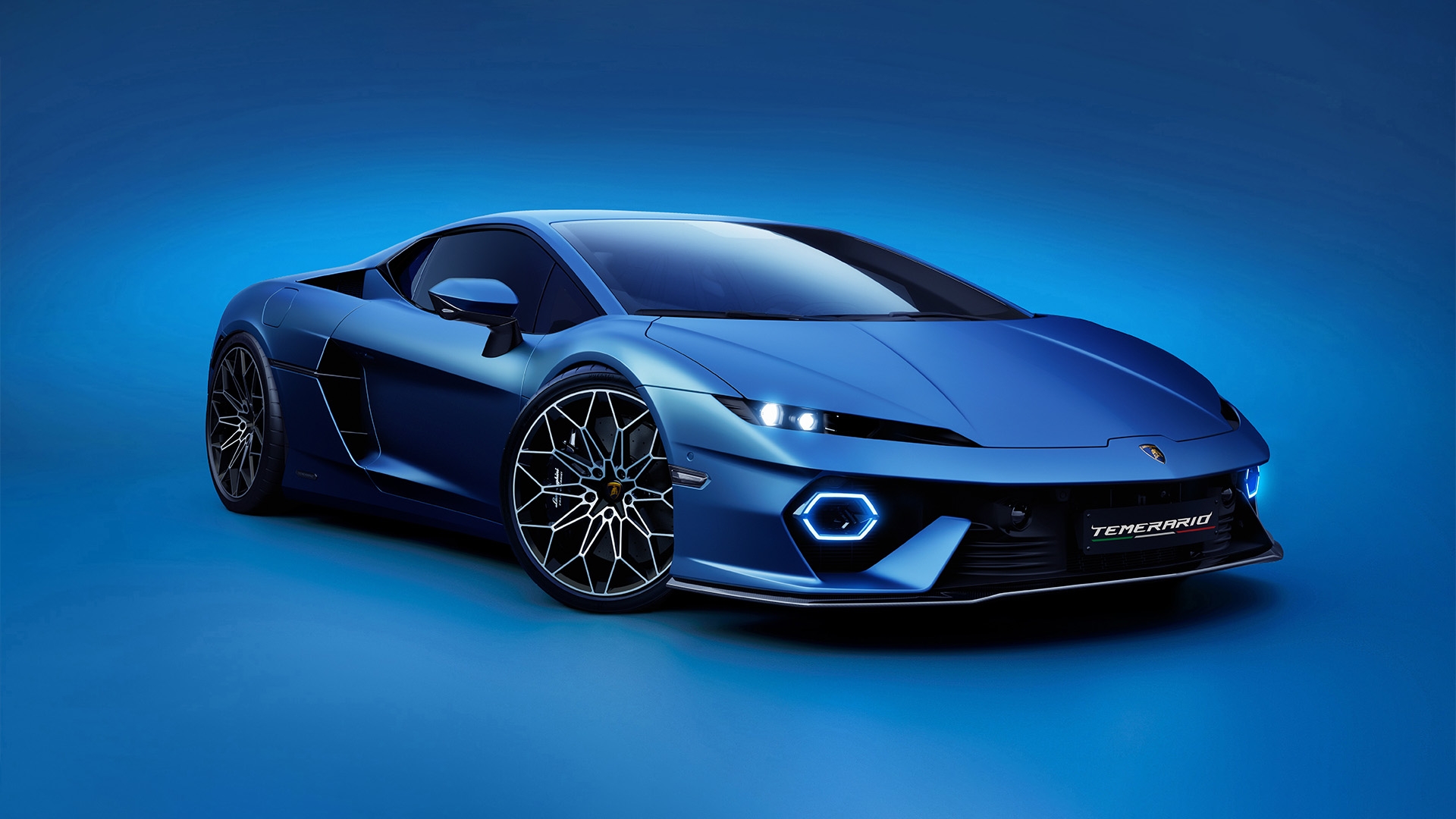
The one-dollar bid matters because it strips away the last illusion of intrinsic value. A Lamborghini has never been priced by its materials or its engineering alone. A Huracán and a Temerario share componentry logic with far humbler machines. The premium has always been narrative: scarcity, drama, the promise of being seen.
That narrative is now being stress-tested from every direction. ABT extends its racing partnership into 2027, pushing the Temerario toward the Nürburgring and into simulation software like Assetto Corsa EVO, where a new generation will first encounter the badge on a screen rather than a street. The mystique is being industrialised, distributed, and made frictionless — wonderful for brand reach, quietly corrosive to exclusivity.
Then come the cautionary fables. A Huracán driver ticketed for exhaust pops. A crashed Lamborghini rescued from flames. A footballer in court over a £200,000 near-miss. A twenty-two-year-old igniting a petrol station. Each is a data point in the same ledger: the gap between what these cars signify and what they actually deliver is widening.
And nothing makes the point more neatly than a twin-turbo Lamborghini V10 dropped into a Volvo 240, running a 5.3-second eighth-mile. The engine is magnificent. The badge is optional. The aura is transferable, and therefore perishable.
The Silence After the Number
So when Rod Stewart's Lamborghini opens at a dollar, the number is not the story. The story is the silence that follows it — the pause while the market decides whether provenance, beauty, and noise still command a premium in a world that has learned to replicate all three.
A million-dollar bid tells you what someone hopes a Lamborghini is worth. A one-dollar opening bid tells you what the room is no longer willing to assume.
For a brand built on the audacity of Ferruccio Lamborghini — a tractor magnate who believed he could out-build Enzo Ferrari and then went and did it — there is a certain poetry in watching the market interrogate the value of the badge itself. Lamborghini has always been the answer to a question nobody asked: Why not? Why not mid-engine? Why not scissor doors? Why not a V12 howling behind your head at three in the morning? That philosophy doesn't depreciate. It just waits for the room to remember what it's bidding on.