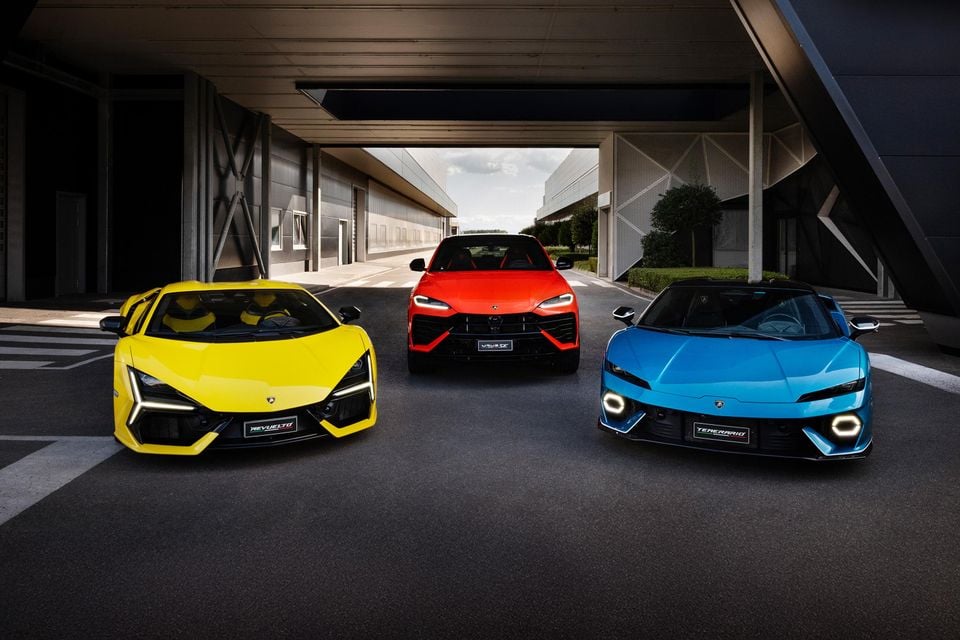
For six decades, Lamborghini built its mythology on a single, uncompromising promise: the unfiltered combustion of exotic engines screaming toward redline. The Countach's scandalous wedge. The Diablo's 200-mph audacity. The Murciélago's V12 howl. The Aventador's apocalyptic violence. Each was a monument to excess, measured in cylinders and decibels. So when Sant'Agata Bolognese announced that its future lineup would be built entirely around plug-in hybrid powertrains, it wasn't merely a product strategy. It was a confession that the house that built the supercar as an act of defiance was now rewriting its own scripture.
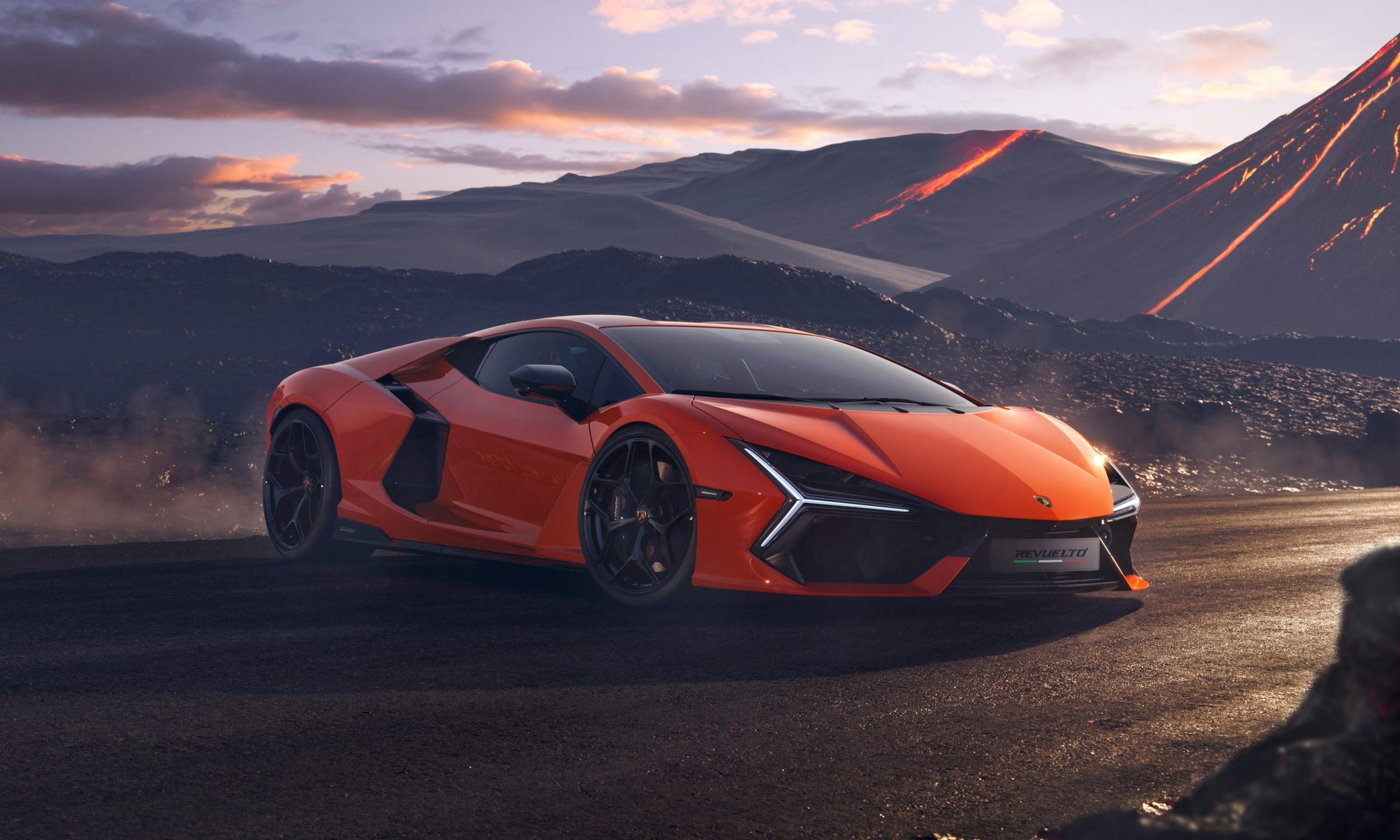
The Revuelto was the opening argument. Its V12 remains, but now it's flanked by three electric motors and a lithium-ion battery pack, producing over 1,000 horsepower in a package that can creep silently through a city centre before detonating into full fury. Purists grumbled about the absence of a pure-combustion flagship. But the Revuelto's reception proved something subtler: Lamborghini's customers weren't mourning the loss of purity — they were celebrating the acquisition of new capabilities. Torque fill. Instant response. All-wheel drive systems that vector power with a precision no mechanical differential could match. The hybrid wasn't diluting the Lamborghini experience. It was amplifying it.
The HPEV Era Begins in Earnest
Then came the Temerario, the second model in what Lamborghini calls its High Performance Electrified Vehicle (HPEV) range. Here the shift grows more consequential. The Temerario replaces the Huracán — the brand's most successful model, the entry point that brought new buyers into the fold — with a twin-turbo V8 augmented by hybrid assistance. No V10. No naturally aspirated crescendo. This is the moment the pivot stops being about halo cars and starts being about volume. The Huracán's successor defines what Lamborghini means for the next generation of owners, and it does so with a plug.
The strategic logic is difficult to dispute. McLaren, Lamborghini's most direct rival in the supercar segment, is now pursuing an SUV to compete against the Urus — a model that already demonstrated how dramatically Lamborghini's portfolio could stretch without breaking. Genesis, meanwhile, is developing V8-powered supercars aimed squarely at Ferrari and Lamborghini on their own turf, a reminder that the old guard's exclusivity is being challenged from unexpected directions. In this environment, electrification isn't capitulation — it's a competitive weapon. Hybrid torque delivery, emissions compliance in tightening European and Asian markets, and the ability to operate silently in zero-emission zones all serve the brand's survival and expansion. The alternative — clinging to atmospheric V12s while regulators close in — is a slow death.
The Identity Question
Yet the pivot raises uncomfortable questions about identity. Lamborghini's cultural currency has always been tied to transgression: the car that's too loud, too fast, too much. The brand appears in tabloid headlines as often as it does in automotive press — a footballer crashing one at speed, a crypto thief stockpiling them, police seizing them under antisocial driving laws. That notoriety is part of the allure. A plug-in hybrid Lamborghini that can glide through Mayfair on electric power alone is a different kind of statement, one that trades rebellion for responsibility. Whether that resonates with the buyers who made the Urus a runaway success — customers who want the badge, the presence, the unmistakable silhouette — remains an open question.
Conviction, Not Capitulation
What's clear is that Lamborghini has chosen its path with conviction. The HPEV strategy isn't a tentative experiment or a compliance-driven afterthought; it's the architecture upon which the entire future lineup will be built. The company is betting that its customers care more about the experience of driving a Lamborghini than about the mechanical means of producing it. That bet may prove correct. But it also means the next chapter of Lamborghini's legend will be written not by the roar of a V12 alone, but by the quiet hum of electric motors waiting to be unleashed.