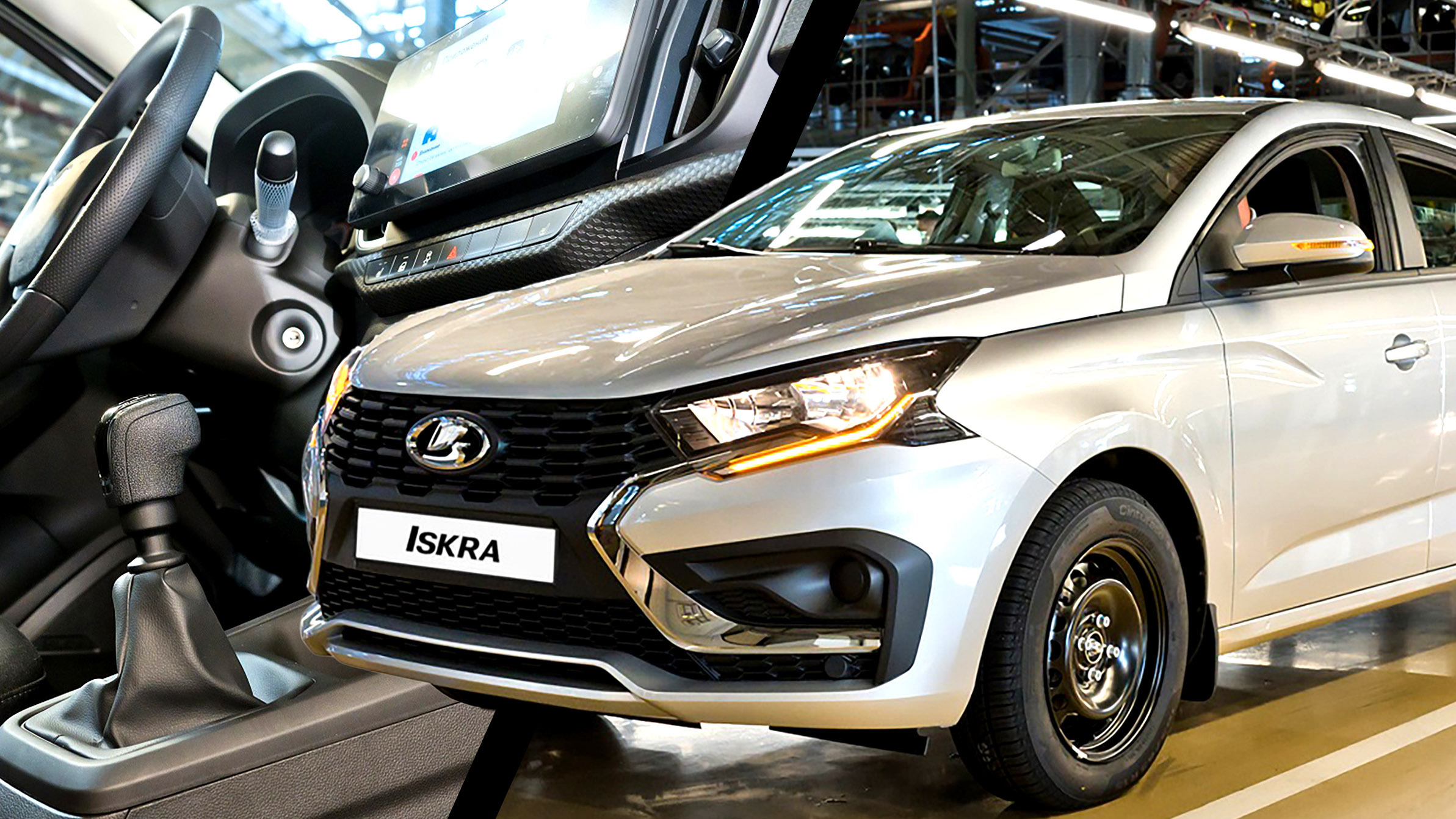
In an industry that has spent the better part of two decades declaring the affordable car an endangered species, the news out of Russia lands like a slap of cold water to the face. Lada has built a wagon with three pedals, black steel wheels, and a price tag of $19,800 — and the very existence of such a machine is a provocation worth taking seriously. This is not a curiosity for collectors of Soviet kitsch. It is a reminder that the manual transmission and the honest, unadorned station wagon remain viable propositions, if only someone has the nerve to build them.
The vehicle in question is the Lada Vesta SW in its most elemental form — a long-roof five-door powered by a naturally aspirated engine, shifted by hand through a five-speed gearbox, riding on stamped steel wheels finished in black. There is no gesture toward the crossover aesthetic here, no oversized touchscreen, no drive-mode selector cycling through profiles named after weather systems. What Lada is offering is the oldest and most durable formula in motoring: a box with wheels, a clutch, and enough room to carry the things a life requires. The $19,800 figure is the entire argument. In a market where the average new vehicle transaction price has climbed past the point of reason, a sub-$20,000 wagon with a manual gearbox reads less like nostalgia and more like a quiet act of defiance.
What We've Lost Along the Way
Consider what has been lost. The manual transmission, once the default in every economy car, has been methodically erased from the American and Western European markets — not because buyers stopped wanting it, but because manufacturers found more profit in automatic-equipped, feature-laden machines. The wagon, meanwhile, was sacrificed on the altar of the SUV, a vehicle that does everything a wagon does but worse, heavier, and at a higher price. Lada, bless its stubborn heart, has refused both funerals. The Vesta SW with three pedals and black steelies is a direct challenge to the consensus that entry-level motoring must be a penalty box of subscription features and mandatory financing terms stretching past the warranty's end.
The Honesty of Black Steel Wheels
There is a particular honesty to black steel wheels. They are the visual signature of the fleet vehicle, the rental car, the machine that makes no apology for its purpose. Paired with a manual gearbox, they signal that the Lada wagon is not pretending to be anything other than what it is: transportation, unadorned and affordable. The market has spent years insisting that buyers want more — more screens, more horsepower, more debt — but the persistence of the cheap manual in markets that still allow it suggests otherwise. Buyers want less, provided less still works. And it does. A five-speed manual in a lightweight wagon with a naturally aspirated engine is not a hardship; it is a lesson in mechanical sympathy and direct control that no paddle-shifted dual-clutch will ever teach.
A Choice, Not an Inevitability
The broader lesson is not that American buyers will rush to import a Lada. They will not, and the brand's reputation for rust and crude assembly is not entirely undeserved. The lesson is that the formula remains sound, and that its abandonment by the major manufacturers was a choice rather than an inevitability. When a company builds a $19,800 wagon with a manual and black steelies, it demonstrates that the price floor is a matter of will. The engineering is not exotic. The materials are not precious. The car exists because someone decided it should, and that decision is the whole story.
In an industry that increasingly treats affordability as a marketing problem rather than an engineering one, Lada has quietly proved the point that the cheap manual wagon was never obsolete — it was simply abandoned, and it remains there for the taking by anyone with the nerve to build it.