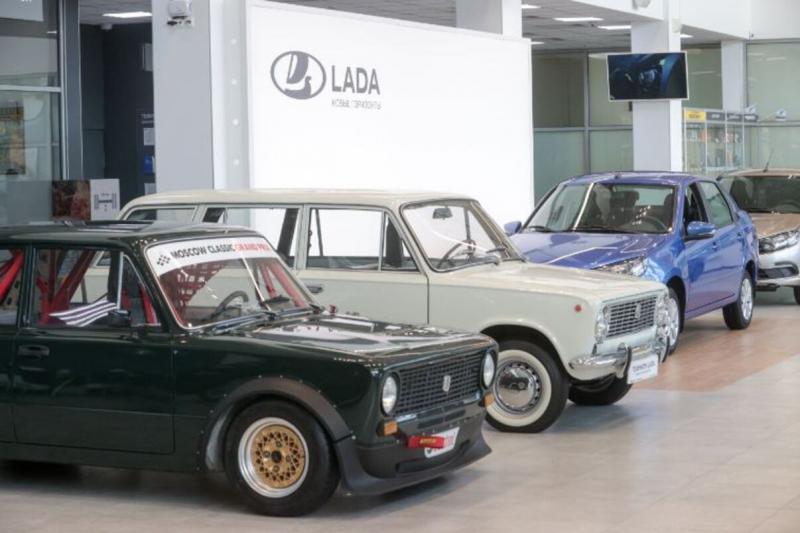
Every few years, some outlet assembles a roster of the worst cars to crawl out from behind the Iron Curtain, and every few years Lada takes its ritual beating. Jalopnik's latest entry into the genre is no exception. To Western eyes, the Soviet-era sedan remains shorthand for automotive misery: crude, rattling, underpowered, and seemingly designed by committees who had never actually driven a car.
But there's a paradox buried in that reputation. The same machines critics gleefully mock are the ones that refused to die — surviving collapsed economies, brutal winters, and decades of neglect that would have sent more sophisticated rivals to the scrapyard. Calling a Lada one of the worst cars of the Eastern Bloc is easy. Explaining why it outlasted nearly everything else is the more interesting exercise.
Not the Joke You Think It Is
The most famous offender is the VAZ-2101, known to the world as the Lada Zhiguli and, in export markets, simply as the Lada. When it launched in 1970, it was not the primitive punchline the modern internet imagines. It was a licensed derivative of the Fiat 124, re-engineered by Soviet engineers with thicker steel, reinforced suspension, and tolerances designed for roads that barely qualified as roads.
Fiat's original was a delicate thing, tuned for Italian asphalt and temperate weather. The Soviet version was a blunt instrument built to survive Siberia. That distinction is precisely why the car earned its infamy in the West: it was never trying to be elegant. It was trying to be indestructible, and in that narrow ambition, it largely succeeded.
What the Critics Always Miss
Jalopnik-style criticism tends to focus on what these sedans lacked — refinement, horsepower, safety, style. All fair. The VAZ-2105 and VAZ-2107 that soldiered into the 1990s offered roughly the same cabin, the same antiquated live-axle rear suspension, and the same unapologetically agricultural engine note as their 1970s forebears.
Buyers in Moscow, Havana, and Cairo did not care. For them, the Lada was not a lifestyle statement but a tool — and a tool that could be repaired with a hammer and a length of wire was worth more than a gleaming Western sedan that required a dealer network nobody had. The car's very crudeness became its resilience.
Designed Against Obsolescence
That resilience is the story the worst-car lists consistently miss. While Western manufacturers chased planned obsolescence, the Lada sedan was effectively designed against it. Parts were standardized across decades. The engine could be coaxed back to life by anyone with basic mechanical intuition.
In Cuba, Ladas from the 1980s still ferry passengers today, kept running through improvisation and stubbornness because nothing else survived the embargo and the decades. In Russia's provinces, the VAZ-2107 remained in production until 2012 — a forty-year run that no Western sedan of comparable vintage could touch. You do not build a car for four decades, in a country that experienced the collapse of its entire political system, unless you have gotten something fundamentally right.
Slow, Loud, and Utterly Unkillable
None of this makes a Lada good in the way a journalist means the word. It is slow. It is loud. It corners like a shopping trolley with a grudge. There is no steering feel worth savouring, no powertrain worth celebrating, no design language beyond the drafting table of necessity.
But the Jalopnik framing — worst cars of the Iron Curtain — flattens a more complicated truth. These sedans were not failures of engineering. They were successes of a different engineering brief entirely: build something that ordinary people in unforgiving conditions can actually own, fix, and keep. By that measure, the Lada is not a cautionary tale. It is a survivor.
When the Berlin Wall came down and the Western hatchbacks poured in, the Lada did not vanish. It simply kept rattling along, outliving the empire that made it, the ideology that justified it, and most of the critics who dismissed it. That is a strange kind of victory — but it is a victory nonetheless.