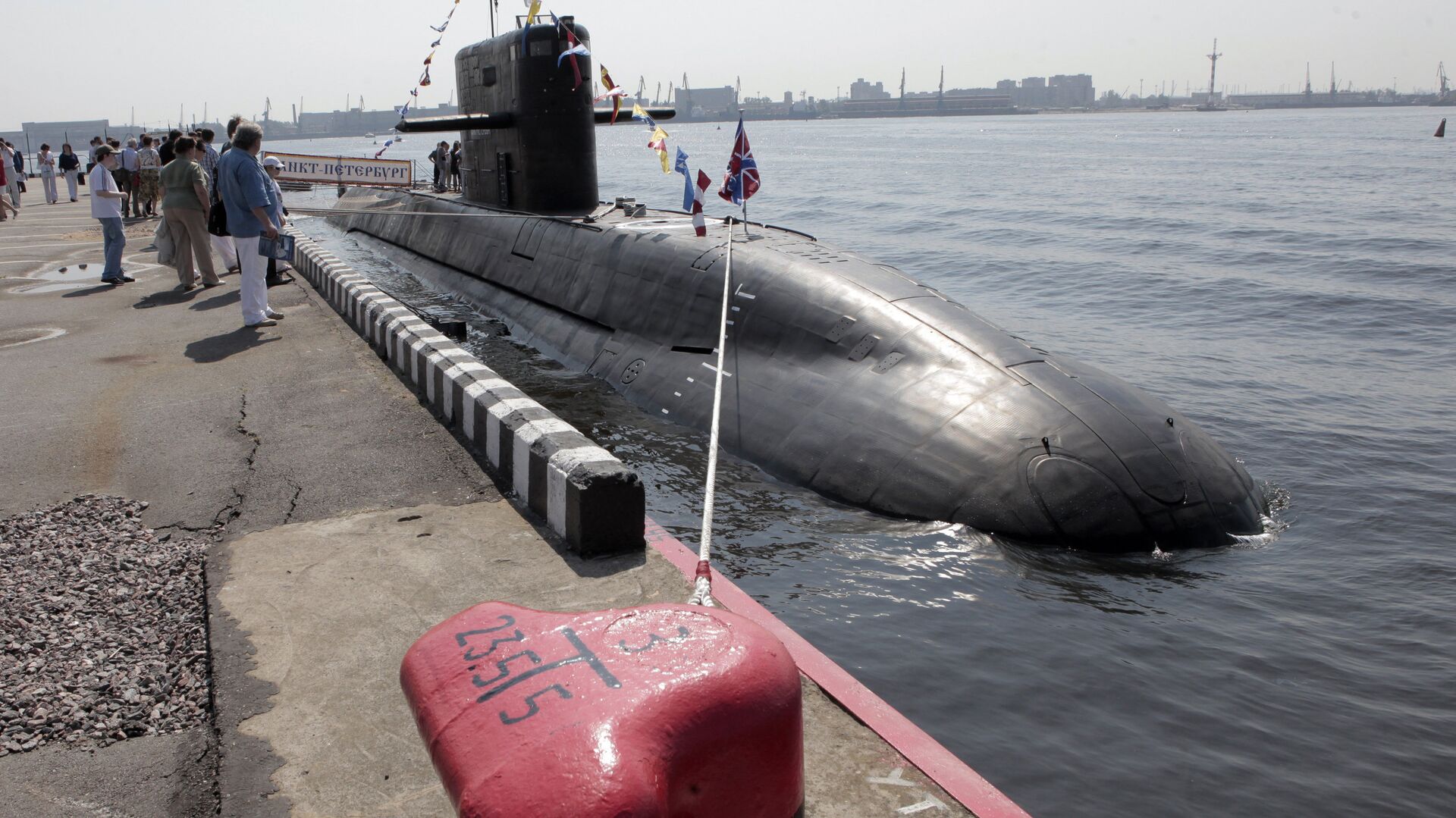
The most revealing thing about Lada in 2025 isn't happening on the road. It's happening beneath the Baltic Sea, where the Russian Navy is putting its new Lada-class diesel-electric submarine through its paces. That vessel, and the thirty-year development saga behind it, offers an uncomfortably precise mirror for the automaker that shares its name. Both enterprises emerged from the same Soviet industrial complex. Both carry the same burden of legacy. And both are attempting the same difficult trick — modernising a product lineage without the capital, supply chains, or geopolitical goodwill their competitors take for granted.
Begin with the timing. The Lada-class submarine programme has been in development since the 1990s, endured a decade of fits and starts, was briefly cancelled, and has now been revived with the St. Petersburg and Kronstadt boats entering service. That is a thirty-year product cycle, punctuated by restarts, delays, and design revisions. Now consider the Lada Vesta, the sedan AvtoVAZ has positioned as its flagship for over a decade. It too has been delayed, re-engineered, subjected to sanctions-driven parts shortages, and re-launched. The Vesta and the Kronstadt are siblings in everything but domain.
The Discipline of the Narrow Spec
The submarine programme's apparent success rests on a specific strategic choice: greater reliance on domestic suppliers, a narrower specification envelope, and a willingness to accept that the product will not match Western benchmarks on every axis. The Lada-class boats are quieter than their predecessors, better automated, and cheaper to operate — but nobody pretends they are Virginia-class attack submarines. They are optimised for a mission, not for a spec sheet.
This is precisely the discipline Lada's sedan lineup needs. For years, AvtoVAZ has chased a phantom buyer — the European compact customer who was never going to walk into a Lada showroom regardless of how much the Vesta improved. The result has been a car that tries to be a Volkswagen Polo at three-quarters the price and achieves neither the refinement nor the value proposition. Meanwhile, the actual Lada customer — the domestic buyer, the fleet operator, the driver who needs a car that survives a Russian winter and a Russian road — gets a product compromised by aspirations it cannot fulfill.
Fitness for Purpose
The submarine engineers understood something the car engineers have been slow to accept. When you cannot beat the competition on absolute capability, you beat it on fitness for purpose. A diesel-electric submarine doesn't need to outrun a nuclear boat; it needs to be quiet, affordable, and repairable in a domestic yard. A Lada sedan doesn't need to match a Toyota Corolla on NVH; it needs to start at minus thirty, cost little to maintain, and use parts that can be sourced inside the country.
There is a further lesson in the submarine programme's procurement philosophy. The Lada-class boats incorporate foreign technology where it is available and substitute domestic equivalents where it is not — an approach that has kept the programme alive through sanctions regimes that would have killed a less pragmatic project. AvtoVAZ has begun doing the same, but hesitantly, often treating domestic substitution as a temporary embarrassment rather than a permanent strategic posture. It should not. A car built from Russian components for Russian conditions is not a compromise; it is a thesis.
The Asymmetry Problem
The danger, of course, is that the submarine analogy flatters Lada too much. Submarines are sold to a single customer with a strategic imperative to buy them. Sedans are sold to millions of customers with alternatives. The state can guarantee the former; it cannot guarantee the latter. But that asymmetry is precisely why Lada must learn the submarine programme's discipline more urgently than the Navy ever did. Without a captive market, the only defensible position is a product that does one job exceptionally well for a price no one else can match.
Lada's sedan future, if it has one, lies in accepting what the Lada-class submarine programme already accepted: that survival comes from specialisation, not imitation. The company should stop building cars that apologise for being Ladas and start building cars that are unapologetically, specifically, and ruthlessly Lada. The submarines figured this out. The sedans have not.