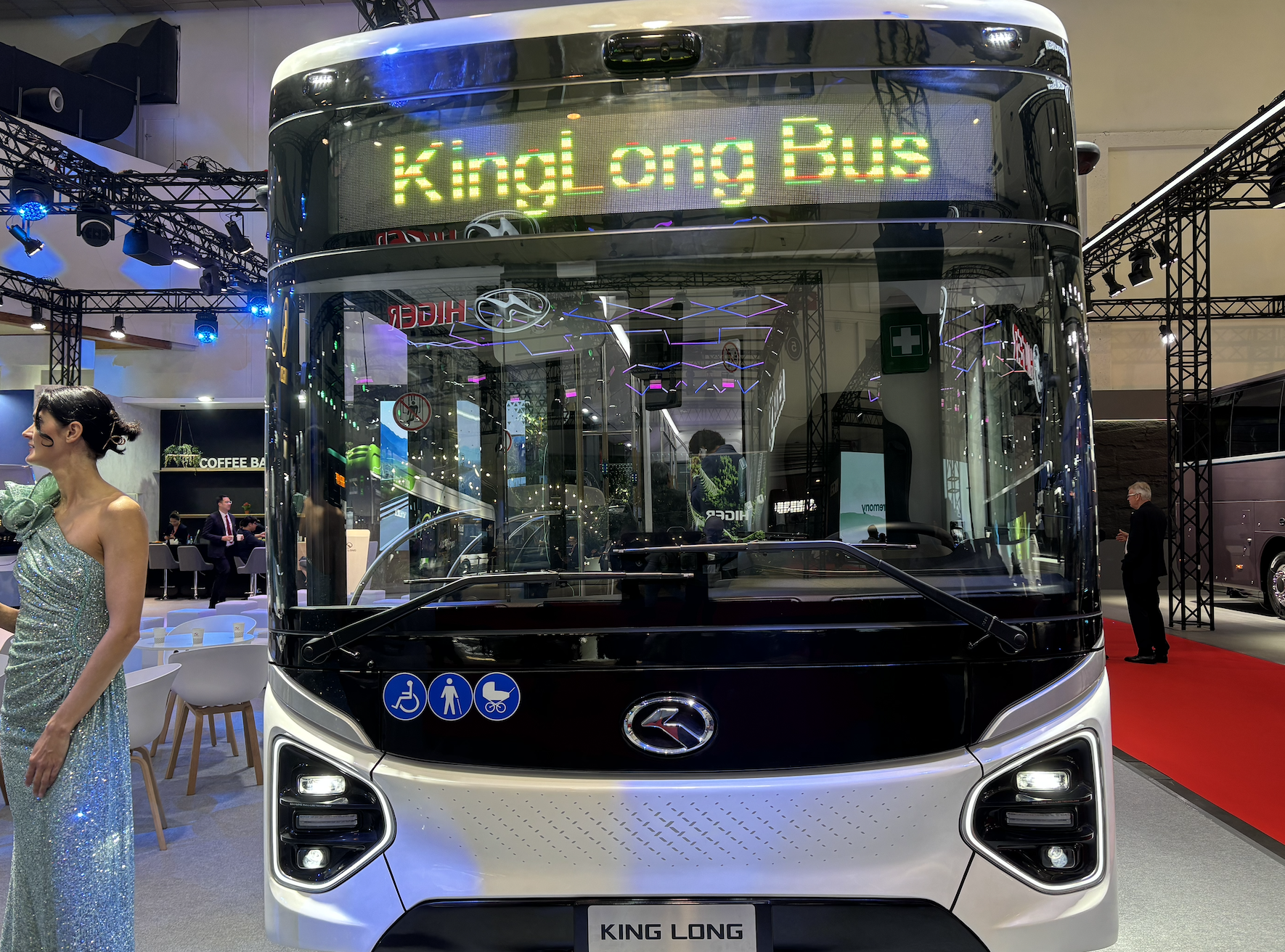
The name King Long almost never surfaces in Western automotive conversation. When it does, it usually arrives attached to a coach bus idling outside a tour-group hotel, or a city bus plying some far-flung capital's route. The Xiamen-based manufacturer — formally Xiamen King Long Motor Group Co. Ltd. — has spent four decades building commercial vehicles: coaches, buses, and light vans that quietly underpin public transport across Asia, Africa, and Latin America. Yet this week the name turned up where no automotive historian would have thought to look — a product safety recall from the Consumer Product Safety Commission, concerning chrome shelving sold exclusively at Costco.
The recall itself is mundane. King Long Metal — a distinct entity from the vehicle manufacturer, though the shared name is an irresistible coincidence — issued a recall of chrome shelving units sold at the warehouse retailer, citing an injury hazard. It is the kind of notice that crosses the CPSC's desk weekly and rarely merits a second glance. But for those who remember when King Long still entertained ambitions of building passenger cars, the headline carried a faint, unexpected echo.
The Coach Builder's Foundation
King Long's automotive story began in 1988, when the company was founded as a joint venture with Xiamen Automotive. For much of its history, the firm's identity was bound to the coach market, where its XMQ series buses became ubiquitous enough to earn the company a reputation as one of China's "three dragons" of bus manufacturing, alongside Yutong and Golden Dragon. The coach business was unglamorous but formidable, and King Long grew into an exporter of real scale, shipping vehicles to more than a hundred countries.
The Sedan Detour
The sedan chapter, by contrast, was brief and largely forgotten. In the mid-2000s, flush with export success and riding a wave of domestic consolidation, King Long explored passenger vehicles through a series of partnerships and prototype programs. The ambition was to leverage the brand's commercial-vehicle credibility into the crowded, brutal world of Chinese passenger cars. It did not take. The sedans that emerged — few in number, mostly badge-engineered and aimed at regional fleets — never approached the volume or recognition of the company's buses, and the passenger-car program was quietly wound down as the company refocused on its commercial core.
The Right Call, in Retrospect
That retreat was, in retrospect, the right call. King Long's subsequent decades have been defined by steady commercial-vehicle output and a public listing on the Shanghai Stock Exchange under the ticker 600686, where the company now trades as a mid-cap industrial with a loyal domestic following. Analysts covering the stock track its bus order books and export margins, not its long-abandoned sedan dreams. The brand's modern identity is thoroughly utilitarian: school buses, intercity coaches, electric city transit.
A Name Out of Place
Which is what makes the Costco shelving recall such an odd footnote. Somewhere in the vast tangle of Chinese manufacturing, a metal fabricator adopted a name that, in automotive circles, once signified a serious commercial-vehicle enterprise with passenger-car pretensions. The two King Longs are almost certainly unrelated — one builds buses, the other builds the shelving that holds bulk paper towels — but the collision is a reminder of how thoroughly the global supply chain has scattered familiar names.
For the automotive faithful, the recall notice is not really about shelving at all. It is a small, accidental monument to a road not taken. King Long's sedans never earned a place in driveways or on enthusiast calendars; they slipped out of production without ceremony and were forgotten by nearly everyone. Yet the name persists — on buses, on stock tickers, and now, improbably, on a CPSC recall page about chrome shelving sold at Costco. It is a strange kind of legacy, but a legacy nonetheless: proof that in the manufacturing world, a name can outlive the products that built it, and sometimes turn up in the most unexpected aisle of the warehouse.