Type 600686.SS into a terminal and you get the full apparatus of modern equity culture: price targets, recommendation summaries, institutional sentiment, the quiet hum of a stock being watched. Type "King Long" into a search bar and you get the same thing. What you will not get, at least not easily, is a single paragraph about how one of its sedans actually drives — which is a strange fate for a company that builds cars.
Xiamen King Long Motor Group is, on paper, an automaker. In practice, it trades as an instrument first and manufactures second. That inversion is not a quirk of coverage. It is a verdict on brand perception, and it tells you more about the contemporary car business than any launch campaign could.
A Bus Builder Walks Into a Showroom
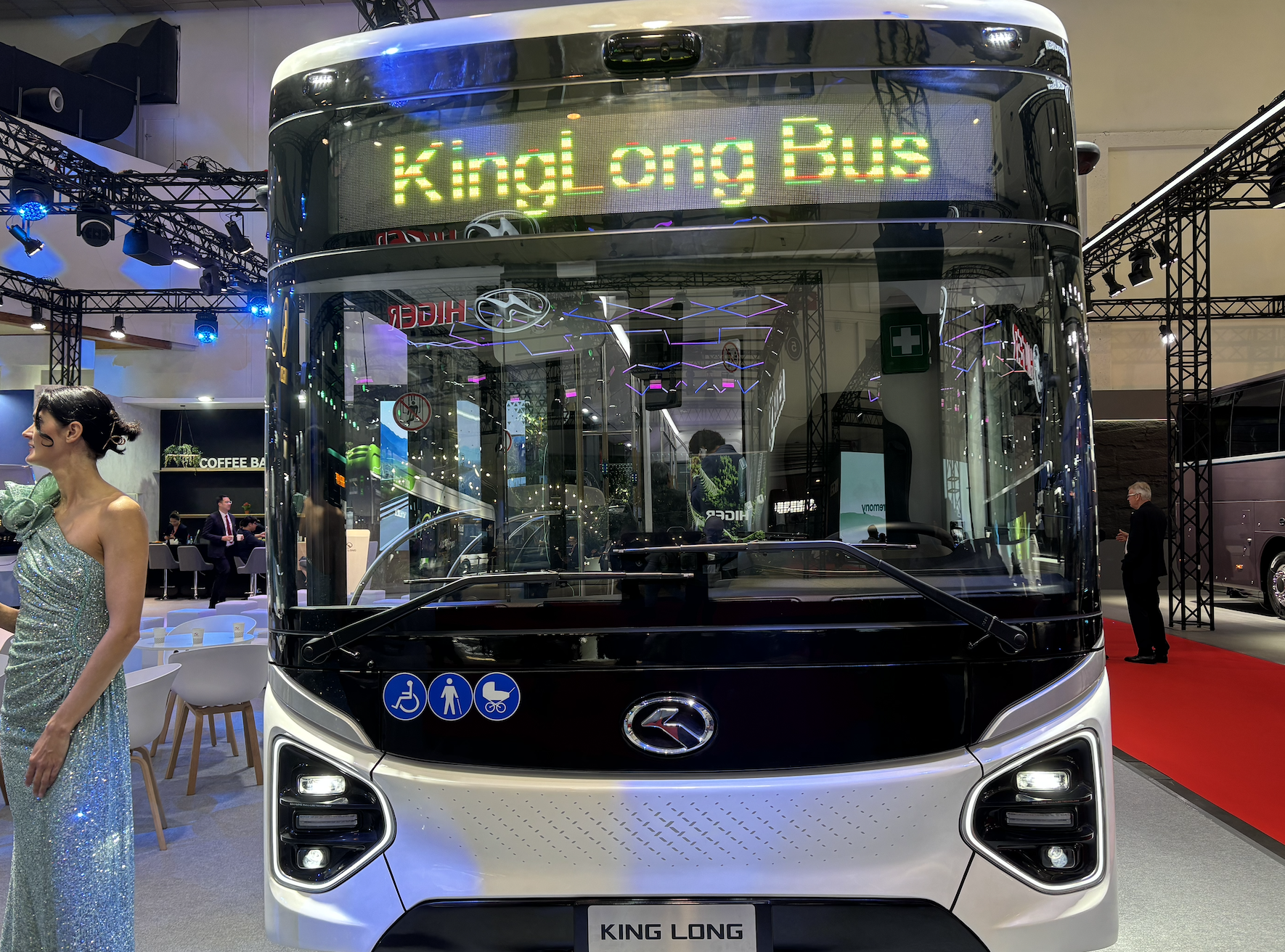
King Long's commercial vehicle heritage is genuine and substantial. For decades the name has been stamped on buses and coaches threading through Chinese cities and export markets — a workhorse marque built on volume, procurement contracts, and municipal tenders rather than showroom romance. That is not a criticism. Fleet manufacturing is brutally difficult, and surviving it earns a company real industrial credibility.
But credibility of that kind does not transfer automatically to the passenger car. King Long's sedan ambitions arrived late, into a market where the emotional contract between buyer and badge had already been rewritten by Tesla, BYD, and a wave of domestic challengers who understood something fundamental: a sedan is now a software platform with seats. King Long entered the conversation carrying a balance sheet, not a mythology.
Why the Brand Reads Like a Utility
When a manufacturer's identity is anchored in fleet economics, the market learns to evaluate it the way it evaluates a utility — on margins, order books, and policy exposure. Analysts covering Xiamen King Long Motor Group do not ask whether the interior materials feel premium or whether the steering communicates anything through your fingertips. They ask about subsidy regimes, export quotas, and whether the electric transition will compress or expand operating leverage.
The sedan, in this framing, is not a product to be desired. It is a line item to be modeled. And there is a real cost to that. Brands treated as tickers tend to be bought by people who will never sit in them. Retail investors accumulate shares on a thesis; consumers accumulate cars on a feeling. King Long has spent years cultivating the former while the latter remains stubbornly out of reach. The gap shows up in resale values, in forum silence, in the absence of the obsessive owner communities that sustain brands like Volvo or Mazda through weak product cycles. Nobody writes a love letter to a quarterly earnings beat.
The Dividend Car Problem
The comparison to dividend-oriented equities is not incidental. King Long occupies a strange category in the automotive imagination — closer to a holding than a vehicle, evaluated for yield and durability rather than design or dynamics. That is a defensible position for a company with real industrial capacity and government-adjacent demand. It is a precarious one for a brand that also wants to sell sedans to individuals, because individual buyers do not purchase durability. They purchase meaning.
This is the trap. A fleet buyer wants a vehicle that disappears into a cost model. A private buyer wants a vehicle that announces something — about taste, about values, about the driver behind the wheel. Those two briefs pull in opposite directions, and a brand that has spent decades perfecting the first has to unlearn a great deal to attempt the second. Design language, driving feel, the tactile ritual of ownership: none of it shows up on a procurement spreadsheet, and none of it can be reverse-engineered from one.
What Toyota and Hyundai Already Proved
What makes the situation worth watching is that the two identities are not necessarily incompatible. Toyota spent decades as the ultimate spreadsheet car and then quietly built a cult around the Corolla and the Land Cruiser by letting reliability become a story rather than a specification. Hyundai did the reverse, dragging a value proposition upmarket through design and motorsport until the badge itself carried equity.
King Long has the raw material — scale, export reach, and a name that at least sounds substantial. What it has not yet decided is whether it wants to be owned or driven. That is not a product decision. It is a philosophical one, and it comes before the sheet metal.
Until it answers, the brand will keep appearing in the wrong search results, filtered through finance terminals and analyst notes, its sedans visible only to people who will never touch the steering wheel. That is not a marketing failure so much as a category failure. King Long has been filed under equities, and the market, as it always does, has priced it accordingly. The tragedy is that somewhere in the range there may be a car worth driving — and almost no one is looking for it in the right place.