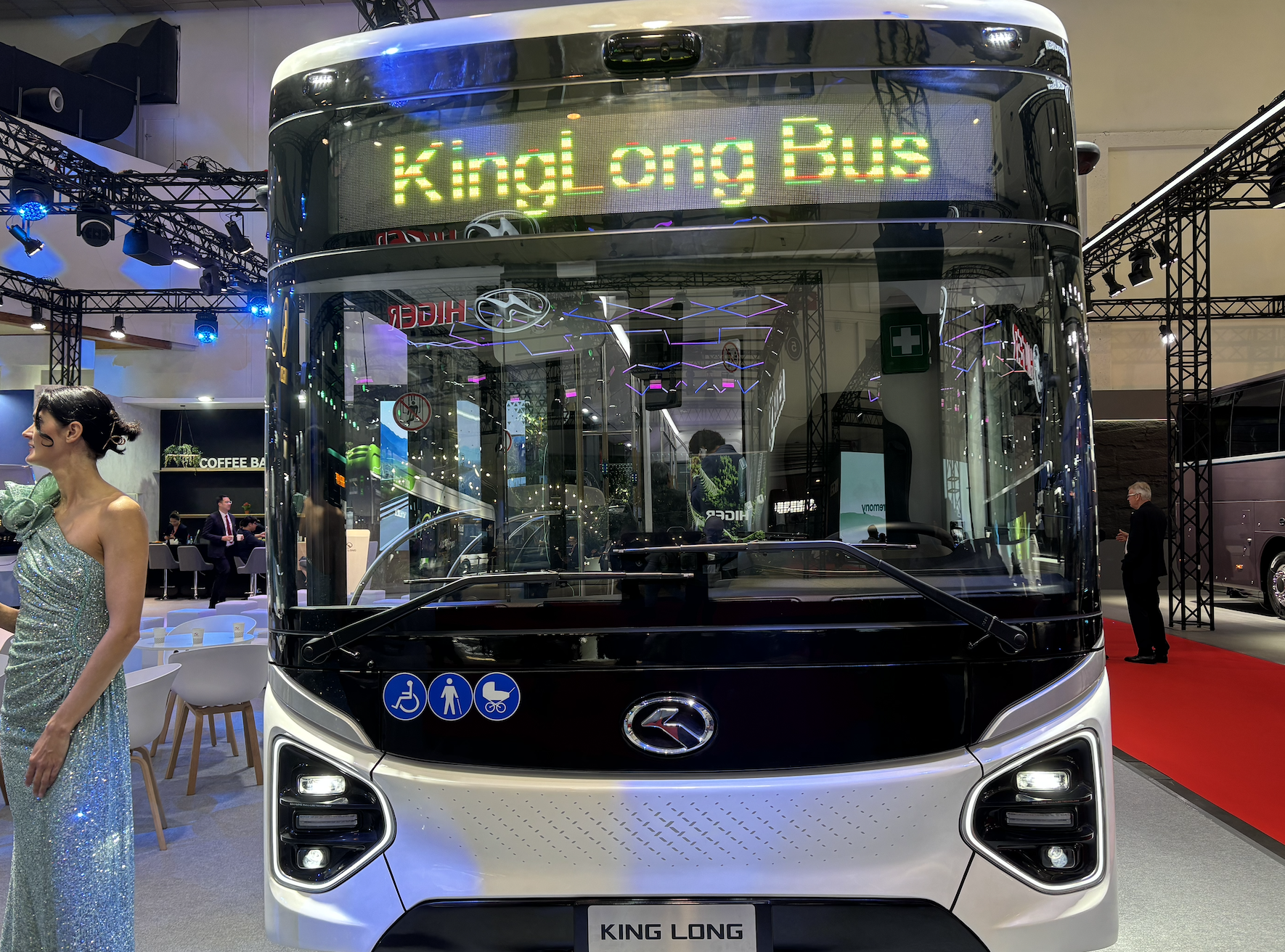
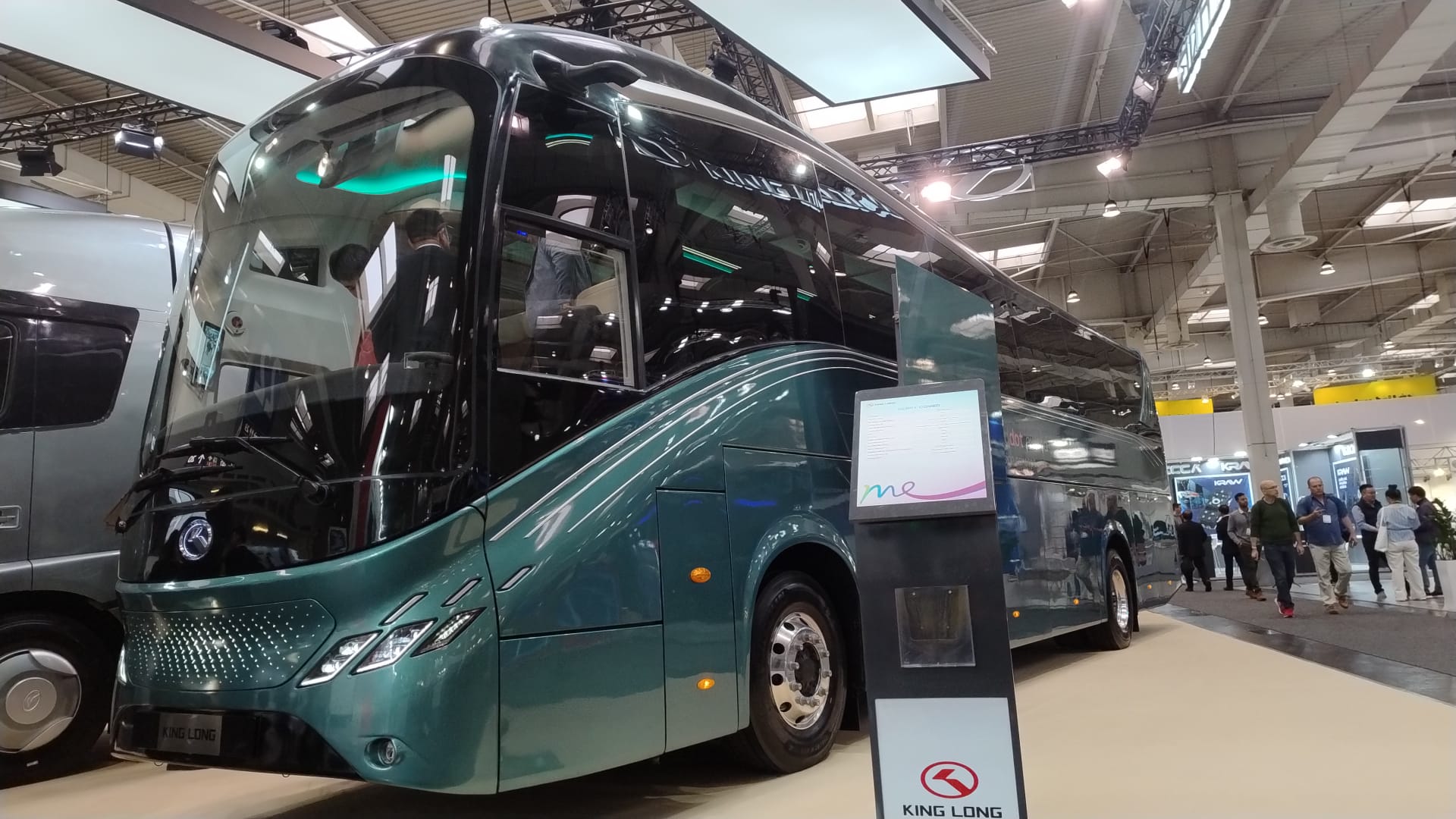
King Long is not a name that makes enthusiasts' pulses quicken. It is a name you see on coach buses, on municipal transit fleets, on the utilitarian people-movers that shuttle passengers through Chinese cities and, increasingly, along European highways. It is a badge built on commercial transport, not on the kind of sleek family sedans that fill consumer showrooms. Which is precisely what makes the company's latest production and sales figures so fascinating — and so troubling.
Output has climbed by 16 percent. Sales have slipped by 6 percent. In any manufacturing business, that divergence is a warning sign. In the automotive industry, where inventory carrying costs are punishing and dealer lots have finite space, it is closer to an alarm bell. Somewhere in the gap between those two numbers sits a vehicle — or a category of vehicles — that King Long is building diligently and selling poorly. The sedan, in the Chinese manufacturer's case, is the most likely culprit.
The Numbers Behind the Paradox
The headline figures come courtesy of market data reporting on King Long Motor, and they paint a picture of a company pressing the accelerator while the road ahead narrows. A production increase of that magnitude suggests either confidence in a forthcoming demand surge or a commitment to volume targets that no longer align with what the market is actually absorbing. The 6 percent sales decline suggests the latter.
What makes the production bump so puzzling is that it runs counter to basic inventory logic. When sales fall, prudent manufacturers dial back output to avoid a glut of unsold vehicles sitting on dealer lots or in holding yards. A 16 percent production increase in the face of declining demand suggests King Long may be building toward export markets, stocking inventory in anticipation of fleet contracts, or simply maintaining production lines for reasons that have more to do with operational continuity than with consumer appetite. None of those explanations is inherently disastrous, but together they suggest a company navigating competing priorities without a clear resolution.
A Brutal Market for Sedans
This is not an isolated phenomenon. The Chinese passenger car market has been brutal for sedans in recent years, as consumer preferences pivot decisively toward SUVs and crossovers, and as the electric vehicle wave reshapes what buyers expect from even entry-level offerings. Legacy sedans with internal combustion powertrains occupy an increasingly awkward middle ground: too conventional to excite, too expensive to produce at a margin that undercuts the newest battery-electric competitors.
For a company like King Long, whose institutional DNA was built on commercial vehicles and buses rather than consumer passenger cars, competing in that sedan space is a strategic gamble that the sales data now calls into question. The sedan, in this reading, is less a product than a symptom — it represents King Long's attempt to diversify beyond its commercial vehicle heritage into the consumer passenger market, an ambition that many Chinese manufacturers have pursued with varying degrees of success. Some, like BYD and Geely, have managed the transition through aggressive electrification and distinct sub-brand strategies. King Long, by contrast, appears to be building sedans that the market is politely declining to purchase, even as its factories hum along at elevated output.
Brand Identity and the Harder Sell
There is also the matter of brand identity. King Long has spent decades building credibility as a bus maker, and that reputation travels well. The recent news that Bulgaria has invited King Long to explore investment opportunities underscores where the company's genuine strengths lie: in commercial transport, in fleet electrification, in the kind of large-format vehicles where Chinese manufacturers have established genuine global competitiveness.
A sedan, by contrast, asks consumers to make an emotional and aspirational purchase from a brand they may never have considered for personal transportation. That is a far harder sell, and the 6 percent sales decline reflects precisely how hard. The consumer passenger car market rewards emotional connection, design language, and driving feel — qualities that are difficult to conjure from a standing start, particularly when your existing customers know you for building twelve-metre coaches.
For observers of the Chinese auto industry, the King Long case is instructive precisely because it is unglamorous. It is not a story about a breakthrough electric model or a stunning design revolution. It is a story about the grinding reality of manufacturing a product that consumers no longer want, while the machinery of production continues to move because stopping it carries its own costs.
The sedan nobody is buying is not merely a failed model; it is a reminder that in the automotive business, building something well is not the same as building something wanted. King Long, for now, appears to be doing the former while the market quietly delivers its verdict on the latter. The company's future almost certainly lies where its reputation was forged — in the commercial vehicles and fleet electrification that remain its genuine engineering strength. The sedan, for better or worse, was never really the point.