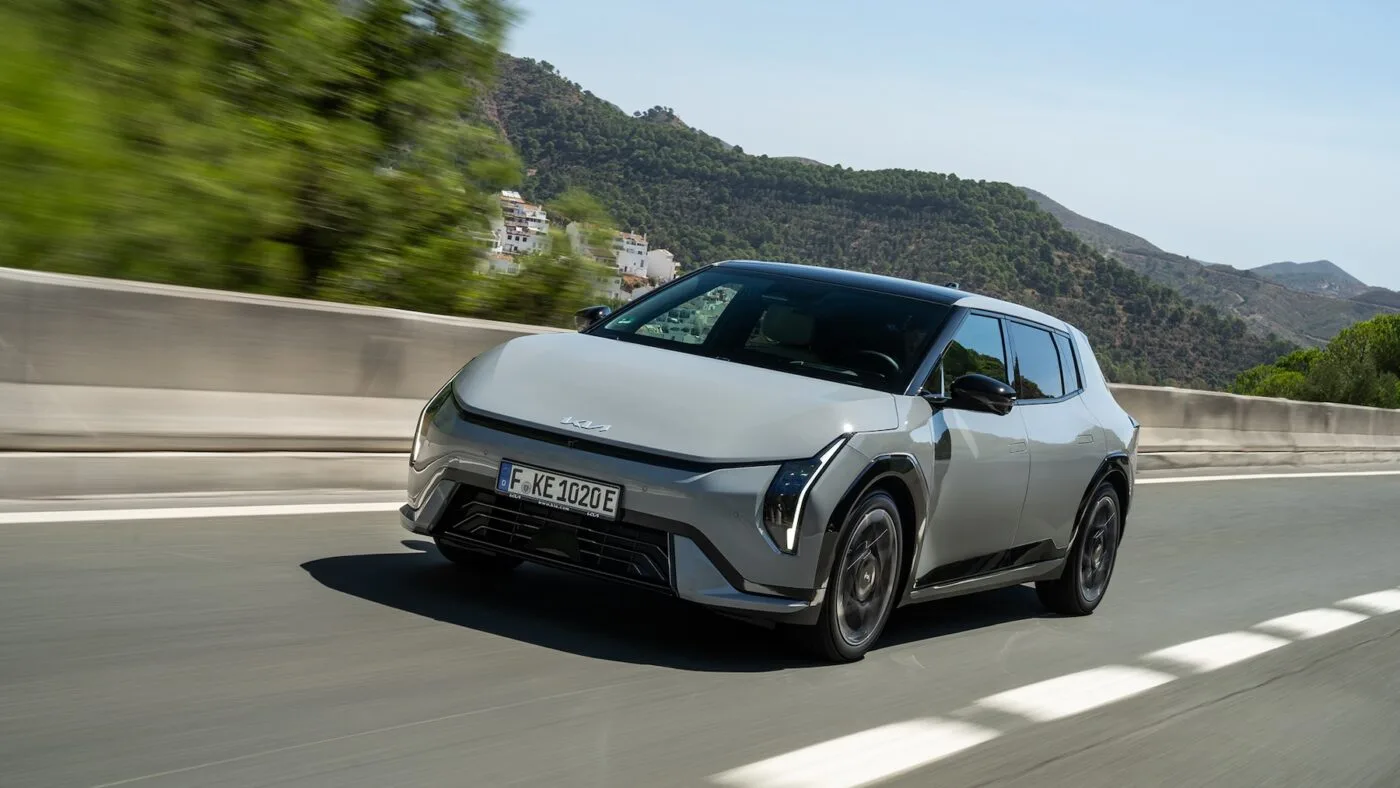
For the better part of a decade, the affordable sedan has been treated as an endangered species — a sensible casualty of the market's headlong migration toward crossovers and the unforgiving economics of electrification. Kia, it turns out, has read the room rather differently. As Chinese manufacturers sharpen their pencils and prepare to flood global markets with low-cost EVs, Kia Canada has quietly floated a proposition that feels almost contrarian in its pragmatism: a $40,000 electric sedan, positioned as a direct answer to the coming invasion.
It is a strategy that deserves more attention than it has received — not merely because of the price point, but because of what it reveals about how one of the industry's most improved brands intends to fight the next war. This is not a halo project or a marketing exercise. It is a bid to hold the line exactly where volume actually lives.
The Threat, and the Logic of the Answer
The reasoning behind the move is difficult to fault. Chinese EV makers have demonstrated a chilling capacity to deliver competent, well-equipped electric vehicles at prices that undercut legacy automakers by margins that look less like competition and more like predation. For Kia — a brand that has spent years building credibility through design, quality, and the acclaimed EV6 and EV9 — the threat is existential in the segments where ordinary buyers actually shop.
A $40,000 sedan, likely an evolution of the EV4 concept, would sit in the sweet spot between aspiration and accessibility: a genuinely desirable electric car that doesn't demand buyers stretch into luxury-adjacent territory. And the engineering credibility is no longer in question. That the EV6 GT recently bested both the Tesla Model Y and the BYD Sealion 7 in a German comparison test tells you where Kia's chassis and powertrain work now stands. The question was never whether Kia could build a competitive EV. It was whether it could build one that ordinary buyers could afford.
Why a Sedan Makes Strategic Sense
There is a broader elegance to the sedan form factor as well. China's most aggressive export plays have leaned heavily on SUVs and crossovers — segments where packaging efficiency and battery cost advantages are easiest to exploit. By choosing a sedan, a body style the Chinese have been slower to prioritize in export markets, Kia creates a measure of differentiation. It also taps a resilient vein of consumer demand that other manufacturers have been too quick to abandon.
The K4 hatchback has already drawn praise — if not quite adoration — for demonstrating that Kia still understands how to make accessible vehicles feel considered rather than compromised. Extending that philosophy to an electric sedan at the $40,000 threshold is a natural progression, and one that could establish Kia as the default choice for buyers who want electrification without ostentation.
The Cost Pressures Are Real
None of this is to suggest the path is clear. The 2027 Sorento PHEV's price increase of $5,600 illustrates the cost pressures rippling through every corner of the industry, and a $40,000 target will require a discipline few manufacturers have managed to sustain. Tariff regimes, battery supply chains, and currency fluctuations all conspire against affordable EVs, and Kia's Canadian framing may reflect the particular dynamics of that market rather than a global blueprint.
Yet the ambition itself is telling. While rivals chase margin at the top end and cede the entry-level EV space to Chinese entrants by default, Kia appears determined to contest it directly — with a product that leverages the brand's genuine strengths in design, driving dynamics, and value.
A Brand Comfortable With Ambition
What makes this moment particularly compelling is how thoroughly Kia has repositioned itself over the past several years. The company that once competed on warranty length now competes on desirability, and reports that it is open to building its own Nissan GT-R rival suggest a brand increasingly at ease with ambition.
That same confidence, applied to the unglamorous but consequential task of defending the affordable sedan, may prove more strategically significant than any halo car. The $40,000 answer to China's EV challenge is not simply a pricing decision; it is a statement that Kia intends to remain relevant in the segment where most buyers actually shop. In an industry prone to chasing the spectacular, that kind of discipline is its own form of audacity — and it may be the most Kia thing of all.