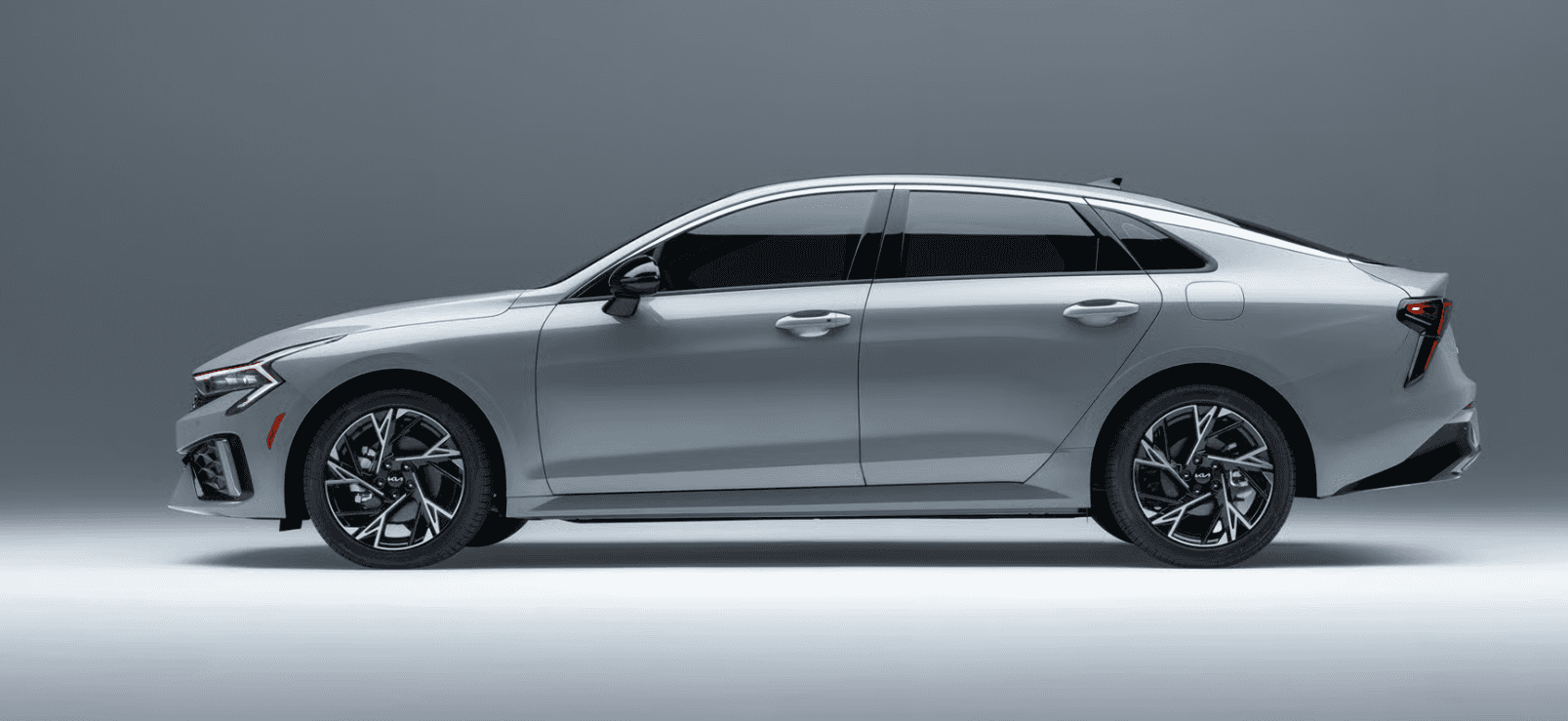
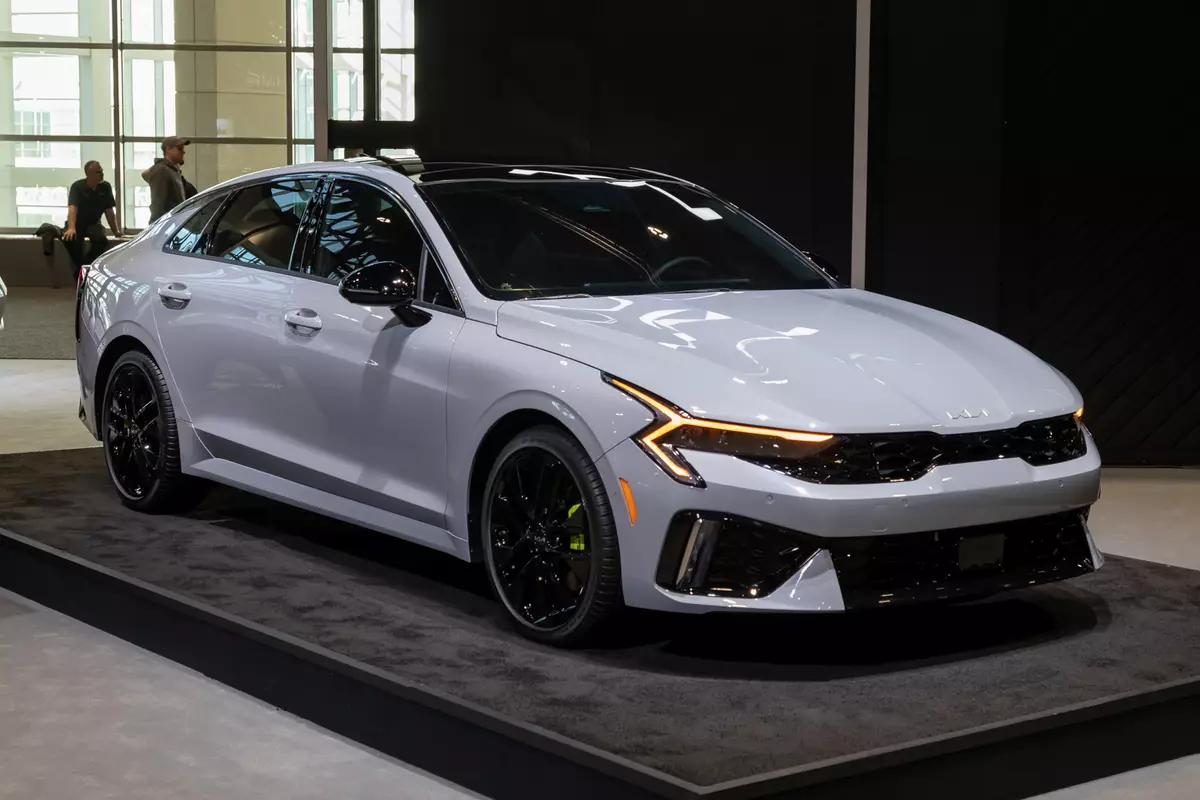
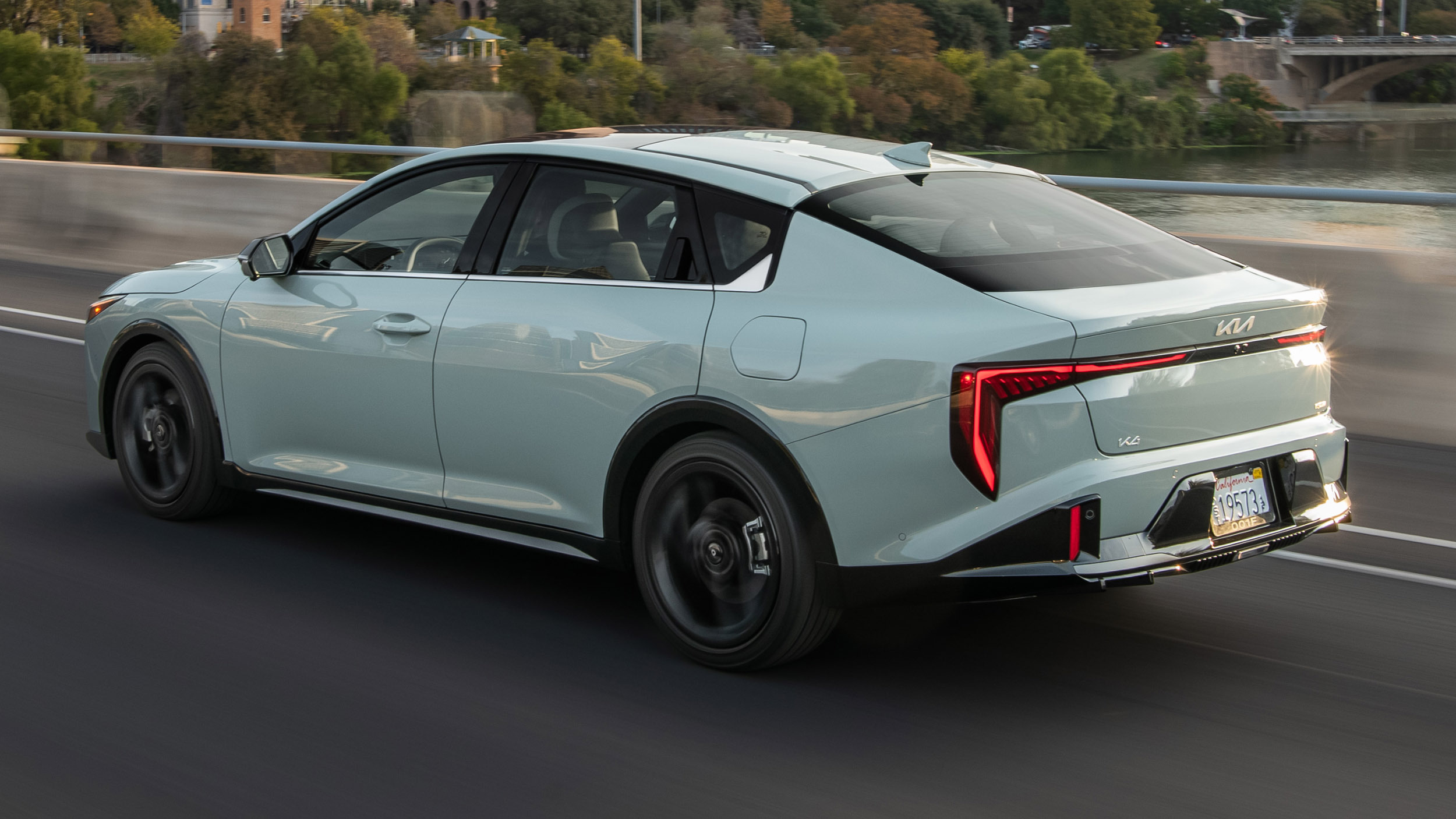
Walk into a Kia dealer today and something feels off. The Optima that used to anchor the front line? Gone from the spotlight. The Rio that once greeted first-time buyers at the entry point? Effectively a ghost. In their place: a phalanx of high-riding crossovers, three-row family haulers, and electrified SUVs, all angled toward the door like they're daring you to ask about a trunk.
The sedan—for decades the default shape of the American driveway—has become a niche product in Kia's portfolio. And the brand's own product decisions suggest that slide is intentional rather than accidental.
The News Cycle Tells the Story
Look at where Kia's energy is actually going. This year's headlines read like a crossover catalog: pricing and trim details for the 2027 Sorento Hybrid, a Telluride Hybrid squaring off against the Volkswagen Atlas, the Sorento PHEV taking on Mazda's CX-90 PHEV, and the boxy EV5 positioned as a cheaper, more practical alternative to the EV6.
Every major launch, every press release, every comparison test that generates clicks involves a vehicle with a lifted ride height and a hatch. The sedans, by contrast, generate almost no news at all. And in the automotive business, silence in the press fleet is the first symptom of a model quietly being left to wither.
Follow the Money, Lose the Sedan
The math explains the retreat. American buyers have spent the better part of a decade migrating toward crossovers, and Kia—a brand that built its modern reputation on undercutting rivals on value—has simply followed the money.
The K5, its predecessor the Optima, and the Rio have seen shrinking incentives, thinning trim options, and dwindling dealer stock as allocation shifts toward the Sportage, Seltos, and Telluride. When a manufacturer stops advertising a car, stops refreshing its styling, and stops shipping it in volume, the message to dealers is clear: this model is on life support.
Electrification Doesn't Want a Low Roof
There's also a strategic logic rooted in electrification. Kia's ambitious EV roadmap is built almost entirely around crossover and SUV body styles—the EV6, the EV9, the forthcoming EV3 and EV5. Battery packs add height and weight, and packaging a compelling electric sedan at a mass-market price remains one of the industry's hardest engineering and financial puzzles.
Rather than solve it, Kia has chosen to let its sedans fade while it pours capital into the electrified crossovers that buyers actually want. It's a rational allocation of resources—even if it leaves traditionalists mourning the loss of a genuinely sharp-handling Stinger successor that never came.
The Dealer Lot Is a Feedback Loop
Dealers, meanwhile, are caught in the middle. Floor traffic skews toward families who want three rows and all-wheel drive, and salespeople are trained to steer them there. A shopper who walks in asking about a K5 may find only a handful on the lot, often in limited colors and trims, while the Sorento and Telluride sit in plentiful supply with attractive financing attached.
That imbalance is self-reinforcing: fewer sedans sold leads to fewer sedans ordered, which leads to fewer sedans available, which pushes still more buyers into crossovers. The disappearance becomes a feedback loop rather than a single decision.
None of this means Kia is abandoning cars entirely, and the brand's global portfolio still includes sedan-shaped offerings in other markets. But in the United States, the trajectory is unmistakable. The K5 soldiers on with minimal fanfare, the Rio has effectively exited the conversation, and the Stinger—the halo car that proved Kia could build something genuinely desirable—has already been retired. What remains is a lineup increasingly defined by altitude: Telluride, Sorento, Sportage, Seltos, EV9, EV6, EV5, EV3. The sedan, once the entry point to the brand, is now the exception.
For buyers who still prefer a low center of gravity and a trunk, the window is closing. Kia has made its bet, and it is a bet on height, hybrid powertrains, and electric crossovers. The sedans are not being killed with a press release or a farewell edition; they are being allowed to drift quietly out of the showroom, one shrinking allocation at a time. In the automotive industry, that is often how a model line truly dies—not with a bang, but with an empty space on the lot.