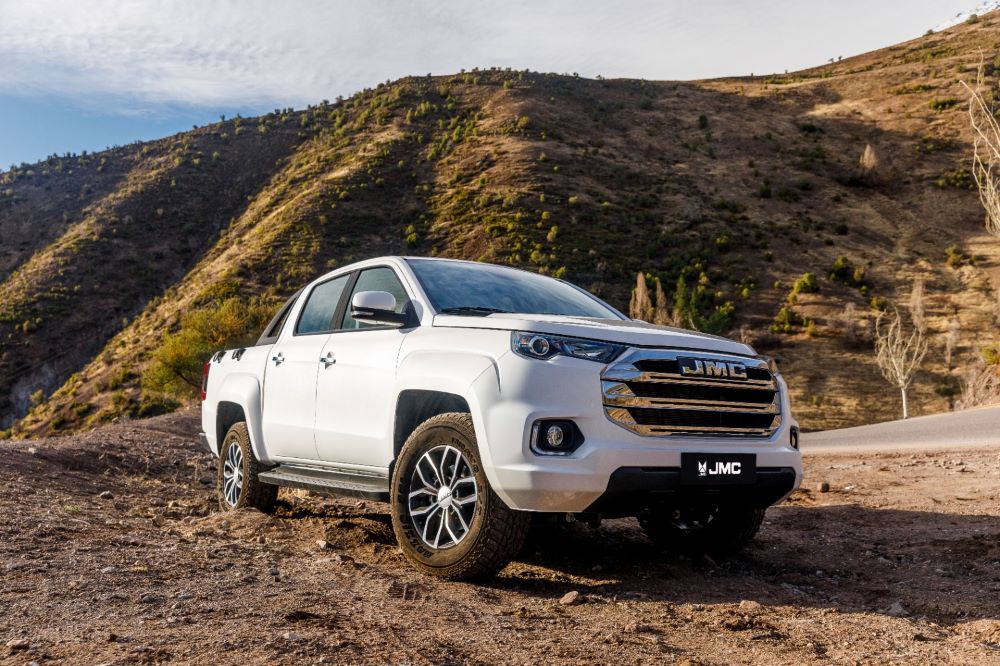
The headline number is undeniably robust: JMC reported a 7% rise in first-half revenue to RMB 19.36 billion, proof that one of China’s most established commercial vehicle builders is in rude financial health. But to read that balance sheet as merely a story of Transit vans and utilitarian pickups rolling off dealer forecourts would be to miss the far more intriguing plot developing in the shadows of the earnings report. Beneath the steady numbers, Jiangling Motors is executing a deliberate, understated global motorsport strategy—one that’s quietly rewriting the brand’s perception far beyond the bustling streets of Nanchang. The revenue is the proof of operational health; the racing program is the signal of intent.
For decades, JMC has been synonymous with dependability—the kind of workhorses that keep logistics fleets moving across Asia and the Middle East. Its off-road pedigree, while respected among those who know the brand through its Ford collaboration, has rarely commanded the international spotlight. That’s changing with a precision that suggests long-term vision rather than marketing whimsy. The recent announcement that Brunner would join JMC Motorsport / Fairway Ford for the remainder of the American Flat Track (AFT) season is a case in point. This isn’t just a driver signing; it’s a strategic placement of the brand within one of the most visceral, demanding disciplines in two-wheeled motorsport. Flat track racing—with its high-speed slides, elbows-out proximity, and unforgiving dirt—is a brutal testing ground. And an equally brutal showcase for engineering credibility.
Why Flat Track Fits JMC’s DNA
This quiet push into AFT is cleverly calibrated. While rivals pour billions into Formula 1 or World Rally Championship campaigns, JMC is choosing arenas where the cost-to-impact ratio is far more favorable—and where the audience is intrinsically tied to the automotive lifestyle. The American flat track scene is a crucible of grassroots fandom, populated by riders and spectators who value mechanical authenticity over digital theatrics. By associating its name with teams like Fairway Ford, JMC is borrowing the rugged, blue-collar ethos that defines that paddock.
It’s a form of brand alchemy: the dust and thunder of the oval impart a toughness no television commercial could convincingly fabricate. The off-road DNA that has always existed in JMC’s product lineup—from robust 4x4 platforms to heavy-duty chassis engineering—is finally getting a public, competitive voice. This isn’t a company spending recklessly on vanity projects; it’s a manufacturer investing in a halo program designed to elevate the entire range.
The Pipeline from Paddock to Production
The strategic timing is equally deliberate. As analysts digested the H1 figures, the motorsport program continued its methodical expansion. The knowledge gleaned from punishing race weekends—suspension tuning, thermal management, durability under stress—has a direct pipeline back to the engineering teams developing next-generation pickups and SUVs. In an era where electrification and software dominate industry headlines, JMC is betting that a tangible, physical connection to motorsport will differentiate its combustion-engine offerings in markets where they remain dominant.
The revenue surge provides the funding; the racing provides the narrative. And there’s a deeper layer here: flat track’s unique demands—constant throttle modulation, chassis balance at the limit, tire management on slippery surfaces—translate directly to real-world off-road competence. The lessons learned at 100 mph on a dirt oval are the same ones that make a 4x4 feel confidence-inspiring on a muddy trail or a loose gravel climb. This is engineering by immersion, not just by simulation.
A Global Statement on American Soil
Moreover, the choice of AFT is a statement about the brand’s global ambitions. The United States remains the world’s most influential automotive market for brand perception. A strong showing on American soil—even in a niche discipline—generates credibility that resonates in emerging markets where JMC already has a substantial footprint. It tells the story of a manufacturer not content to be a regional powerhouse, but willing to compete, literally, on the world stage.
The partnership with Fairway Ford also cleverly leverages JMC’s existing corporate relationship with the Blue Oval, creating a synergy that feels organic rather than forced. This is brand building through association and action, not through press releases alone. The American flat track paddock is notoriously skeptical of outsiders; earning respect there requires genuine commitment. JMC appears willing to put in the laps.
The Long Game
The long-term implications are significant. If JMC can translate its motorsport efforts into tangible product improvements and sustained global visibility, that RMB 19.36 billion figure will be seen not as a peak, but as a launching pad. The company is weaving a more complex narrative—one where financial stability funds the racing program, and the racing program, in turn, redefines the brand’s essence.
The boardroom numbers are impressive, but the real story is happening on the dirt tracks, where a Chinese commercial vehicle maker is quietly, methodically earning its spurs. The revenue surge buys the ticket; the motorsport push is what makes the journey worthwhile. Watch this space, because the quietest campaigns often produce the loudest results. In a world of shouty supercar launches and digital grandstanding, JMC is proving that sometimes the most compelling message is written in tire tracks, not press releases.