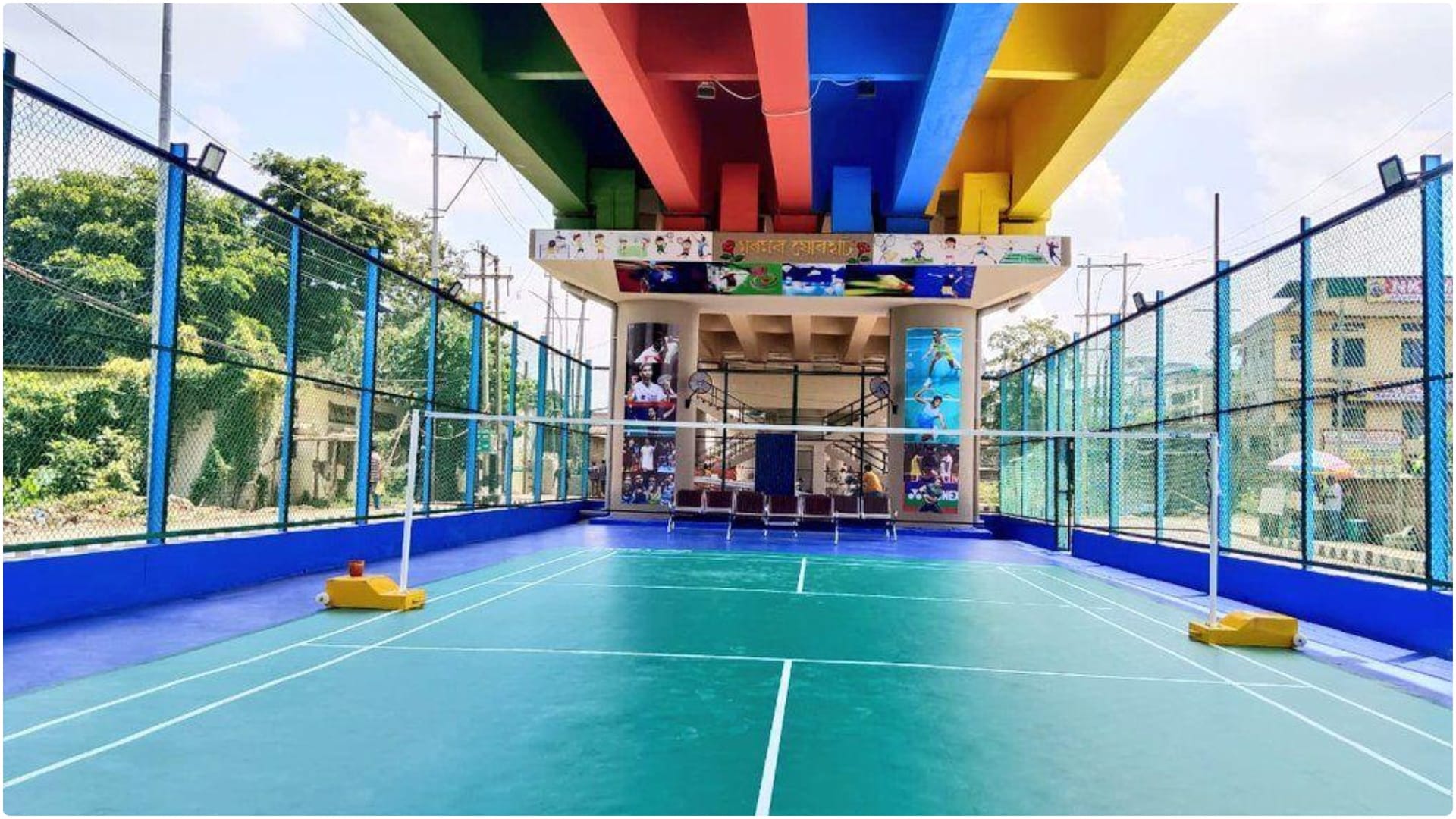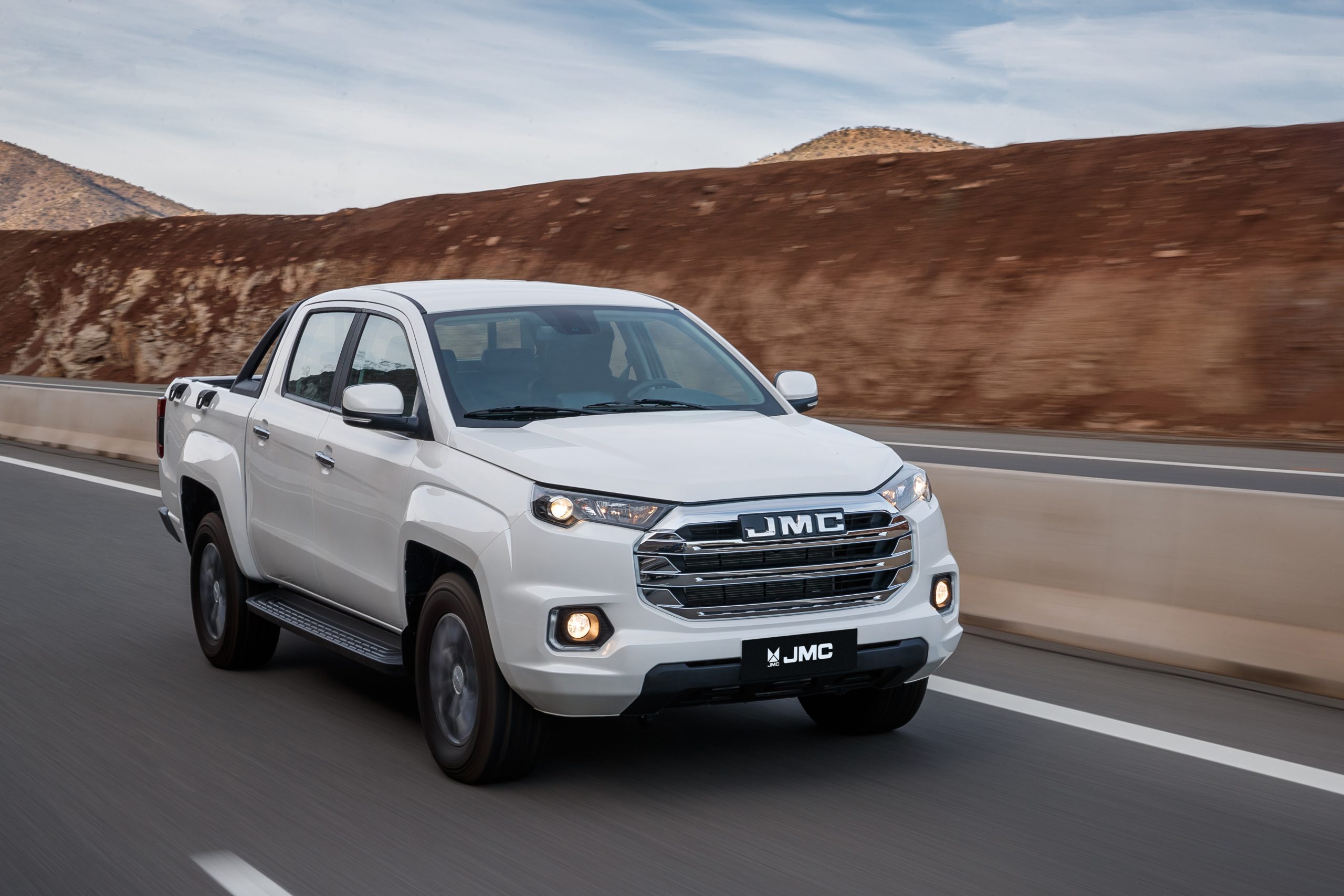
The most revealing thing about JMC's newest project isn't the badminton. It's the real estate. The brand best known for pickups and rugged off-road utility vehicles has opened its first under-flyover badminton court — a facility carved out of the dead space beneath urban highway infrastructure, that shadowed, dusty margin where cities usually store nothing but noise and neglect. For an off-road marque, the venue is the message. JMC isn't building trails here. It's building the places where the people who drive to trails actually live.
That distinction deserves more attention than it's gotten in automotive circles still fixated on spec sheets and horsepower figures. Off-road brands have spent two decades chasing authenticity through ever more extreme terrain — rock crawls, desert runs, mountain passes. The logic is intuitive: sell the adventure, sell the vehicle. But adventure is a weekend proposition. Community is a daily one.
Presence Over Posturing
By placing a recreational facility in the overlooked interstitial space beneath a flyover, JMC signals it understands something its competitors largely don't: brand loyalty in the utility segment is built on presence, not posturing. A pickup is a working tool, and the people who buy working tools tend to value institutions that show up in their neighborhoods in tangible, non-commercial ways.
It's a quietly clever piece of urban problem-solving, too. Cities across Asia have wrestled with how to reclaim the vast acreage trapped beneath elevated roadways — land too noisy, too shaded, and too oddly shaped for conventional development. Converting a slice of it into a badminton facility costs comparatively little, requires minimal land acquisition, and delivers an immediate public amenity in dense districts where recreational space is scarce.
Why Badminton, and Why It Works
Badminton, notably, is a deeply democratic sport in this context — cheap to play, accessible across age groups, and popular enough that a well-placed court will be used from dawn until lights-out. JMC didn't choose badminton by accident. It chose the sport that would generate the most foot traffic, the most daily contact, and the most goodwill per square meter.
This is community space as brand infrastructure, and it fits coherently with the broader trajectory the company has been charting. JMC's H1 revenue rose 7% to RMB 19.36 billion — a figure that reflects a company with the resources and the confidence to invest beyond the factory floor. Meanwhile, its presence in American motorsport continues to expand, with JMC Motorsport / Fairway Ford adding rider Brunner for the remainder of the AFT season — a reminder that the brand's performance identity is alive and well.
The under-flyover court and the flat-track racing program are not contradictions. They are two ends of the same strategy: earn credibility in competition, earn affection in the community.
The Restraint Is the Point
What makes the initiative genuinely interesting, though, is what it declines to do. There is no product display, no test-drive kiosk, no branded pickup parked conspicuously at the entrance — at least not in the conception as reported. The court is simply a court. That restraint is the point. Audiences have grown fluent in the grammar of corporate giving, and they can detect a sales pitch wrapped in philanthropy from a considerable distance. A facility that serves its neighborhood without demanding anything in return generates a different kind of equity — the kind that surfaces years later, when a family finally needs a vehicle and remembers, vaguely but warmly, that some company built the place where their kids learned to play.
Whether the under-flyover model scales remains an open question. Flyover geometry varies wildly, municipal permitting is rarely simple, and maintenance of public recreational facilities is an ongoing obligation rather than a one-time gesture. But as a template, it is unusually portable. Every city with elevated highways has unused ground beneath them. Every off-road brand claims to stand for freedom, capability, and the outdoors. JMC has found a way to make that claim literal — not by promising customers a distant mountain, but by giving them a reason to walk down the street.
In a category that often mistakes loudness for strength, that is a quietly radical act. The trail can wait. The neighborhood comes first.