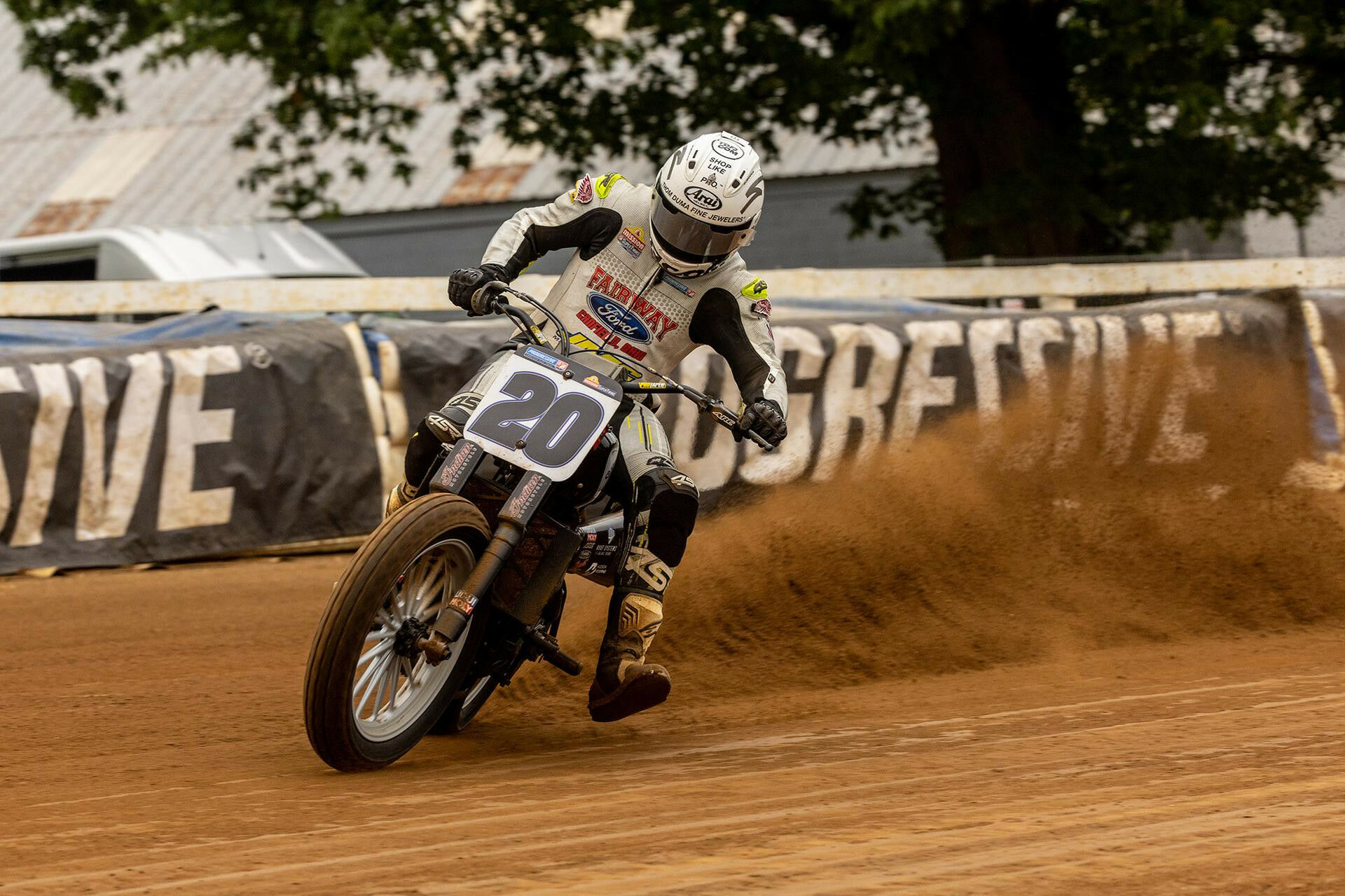
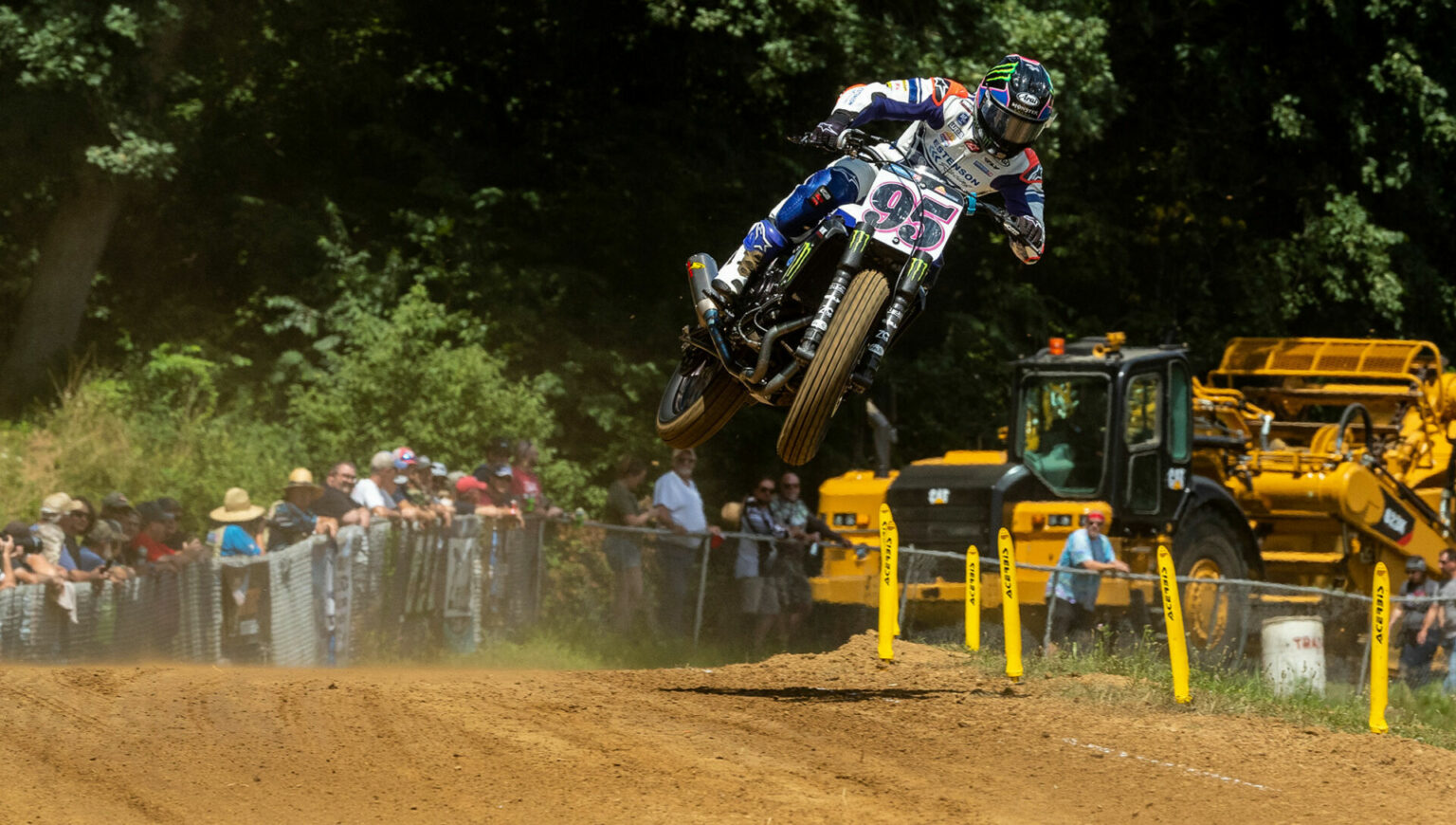
American motorcycle marketing has a volume problem, and the loudest channel is always dirt. Adventure bikes perch on mountain passes, dual-sports blast through creek beds, and every manufacturer worth its salt swears its newest off-roader will unlock the wilderness. JMC, the Chinese-American brand steadily building a presence in the United States, has played that game too, and its off-road offerings are perfectly competent machines. But the company's most consequential investment isn't happening on a trail in the high desert. It's happening sideways, at ninety miles an hour, on the graded dirt ovals of American Flat Track.
The recent news that rider Brunner has joined JMC Motorsport / Fairway Ford for the remainder of the AFT season reads, on its surface, like a modest mid-season roster move. In reality, it's the clearest signal yet that JMC understands something its rivals frequently forget: in motorcycling, credibility isn't manufactured in a brochure. It's earned at the racetrack, in public, against the clock, with nowhere to hide.
Flat Track Is the Harshest Proving Ground There Is
The discipline is uniquely brutal. Flat track demands a motorcycle that produces usable torque the instant the throttle cracks open, holds together through sustained abuse, and stays predictable while the rear tire is doing things that would terrify a casual rider. There is no electronic safety net that can disguise a weak chassis or a lazy engine. When a JMC-mounted rider slides into a corner at a national-level AFT event, every component is being interrogated in front of an audience of the most knowledgeable enthusiasts in the sport.
That is precisely why the program matters.
Closer to the Showroom Than You Think
Consider the contrast with off-road marketing. Adventure and dual-sport sales are driven largely by aspiration — the buyer who purchases a bike for the trips they imagine taking rather than the ones they actually take. Off-road racing, meanwhile, tends to reward specialized machines that bear only a passing resemblance to what sits on a showroom floor.
Flat track sits closer to the production lineage. The twin-cylinder motorcycles that contest the premier classes are recognizably descended from street-going platforms, and the lessons learned about heat management, clutch durability, fuel delivery, and frame stiffness transfer directly back to the product line. When JMC fields a competitive effort in AFT, it is effectively running the most rigorous, most public durability test available to an American motorcycle brand.
Talent Is the Loudest Endorsement
There is also the matter of talent. Signing a rider of Brunner's caliber mid-season signals seriousness. Racers of that level do not attach their names to programs they believe cannot contend; their careers are too short and their reputations too hard-won. A rider of that sort joining JMC Motorsport tells the paddock, the press, and the buying public that the machinery is worth the risk. That endorsement carries more weight than any number of spec-sheet comparisons, because it comes from someone who has ridden the competition and chosen otherwise.
Buying Position in an Ascending Series
And flat track, crucially, is growing. The series has rebuilt its audience over the past decade, drawing packed grandstands and a young, engaged fan base that treats race day as a social event as much as a sporting one. Brands that commit now are buying position in a discipline that is ascending rather than plateauing. JMC's continued presence in this paddock, rather than a fleeting sponsorship gesture, positions the marque as a genuine participant in American motorcycle culture — not merely an importer of equipment.
None of this diminishes the off-road lineup. Those machines will continue to sell, and they should. But the off-road segment is where JMC competes on price and specification, fighting for attention in a category where every competitor makes similar promises. The AFT program is where JMC competes on character. It is where the brand proves, lap after lap, that its motorcycles are built for more than the driveway. In a market that increasingly rewards authenticity over advertising, that distinction is not a footnote. It is the whole story.