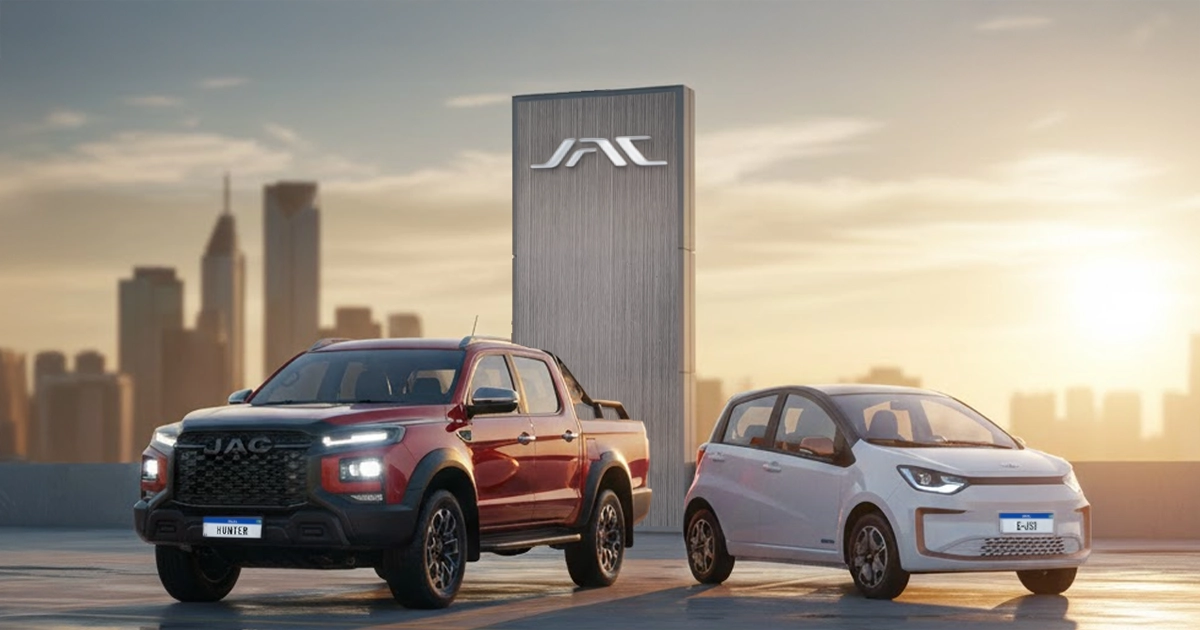
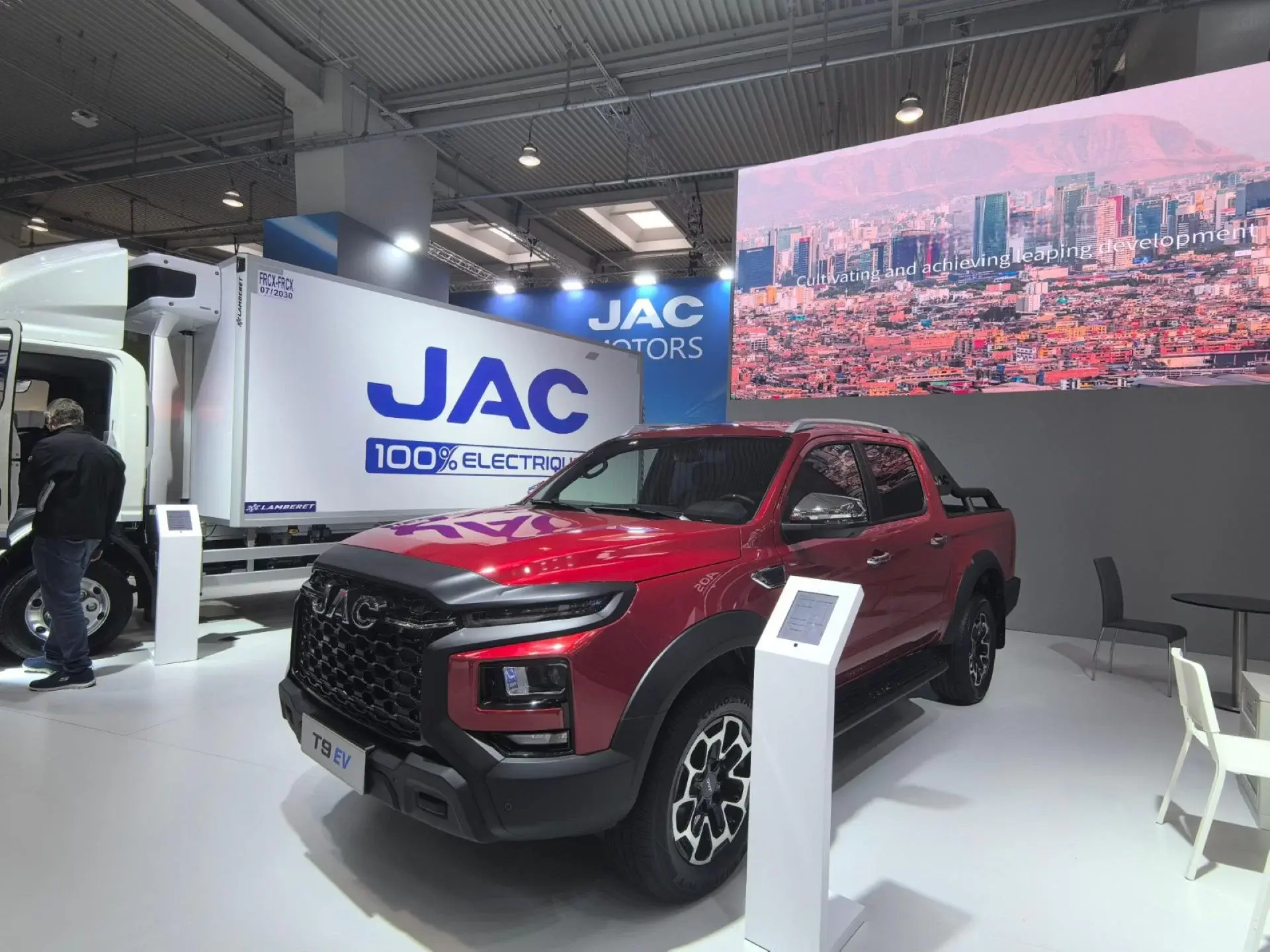
For eighteen months, JAC Motors has been courting Europe with the discipline of a manufacturer that knows it is late to the party and intends to make up ground through sheer persistence. At IAA Transportation 2026 in Hanover, the Chinese brand signed three fleet agreements, unveiled four electrified models, and issued the kind of press releases that speak of "defining products around European needs." It was a slow-burn courtship of the continent's logistics operators — expensive, methodical, and years away from converting into meaningful volume.
Which is exactly why the news out of Bishkek deserved a closer look than it got. While JAC was polishing its European credentials in Hanover, it was quietly closing a rather different kind of deal: supplying vehicles directly to government agencies in Kyrgyzstan.
Two Markets, One Logic
On the surface, the two stories could not be further apart. Europe is a mature, heavily regulated, margin-sensitive market where fleet buyers demand WLTP-certified emissions, five-year warranties, and dealer networks measured in the hundreds. Kyrgyzstan is a landlocked republic of roughly seven million people, where the state is the single largest vehicle purchaser and procurement decisions are made in ministries rather than boardrooms.
Yet for JAC, these are not competing priorities. They are two ends of the same commercial logic — and the Kyrgyz contract reveals something the Hanover press releases never will.
The Sedan's Awkward Position
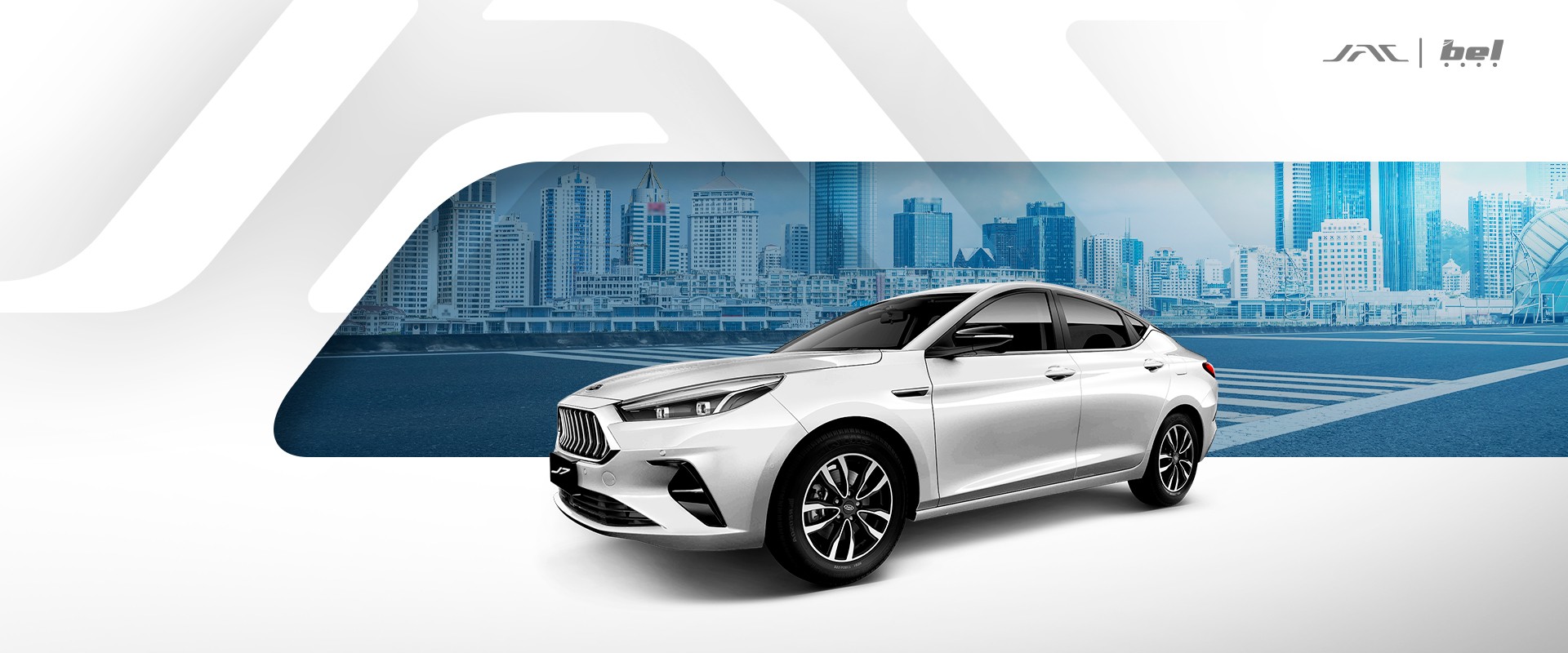
The sedan has always been JAC's awkward child. The J7 and its predecessors were engineered to a price point rather than a philosophy, and European fleet operators have been slow to embrace them. Leasing companies want residual value; JAC's sedans have historically struggled to demonstrate it.
So the brand did what any rational manufacturer would do: it repositioned. In Europe, JAC now leads with pickups and electrified commercial vehicles — the T9 bakkie, the T9 Black Edition launched in South Africa, the four electrified models shown in Hanover. The sedan is no longer the spearhead. It is the supporting act.
In Kyrgyzstan, the calculus inverts entirely. Government agencies need dependable, affordable four-door transport for ministries, regional administrations, and state enterprises. They are not shopping for residual value on a three-year lease; they are buying assets outright and keeping them for a decade. JAC's sedans — cheap to acquire, simple to service, and increasingly assembled from a parts ecosystem stretching across Malaysia, Mexico, and now Central Asia — fit that brief almost perfectly. The Kyrgyz procurement is not a consolation prize. It is a proof of concept for a segment Europe has largely written off.
A Bifurcated Strategy
This is where the strategy becomes genuinely interesting. JAC is not abandoning Europe; it is decoupling its product lines by geography. The T9 pickup and the electrified commercial range carry the European ambition, supported by the fleet deals signed in Hanover and the local assembly plans taking shape in Malaysia. The sedan, meanwhile, becomes a sovereign-segment weapon — deployed in markets where the state is the customer, price sensitivity is acute, and the brand's Chinese provenance is a neutral fact rather than a reputational hurdle.
It is a bifurcated approach that most global manufacturers would find untidy. But JAC has never pretended to be Toyota.
The Geopolitical Undercurrent
There is also a quiet geopolitical dimension. Kyrgyzstan sits within Russia's traditional sphere, yet Chinese commercial vehicles have been steadily displacing Russian and European incumbents across Central Asia. Every government-issue JAC sedan in Bishkek is a small data point in a much larger realignment. And with the company's share price hitting three limit-up sessions in four days on the back of the Zunjie SUV timeline — a Huawei-linked joint project — JAC's investor narrative is increasingly built on the idea that it can operate credibly in markets where Western brands no longer bother to compete.
The European fleet deals will generate headlines, and they should. But the Kyrgyz government contract is the more revealing document. It shows a manufacturer that has stopped trying to force its sedans into a market that does not want them, and has instead found a buyer that does.
That is not a retreat from Europe. It is a recognition that a global sedan strategy, in 2026, no longer runs exclusively through Frankfurt.