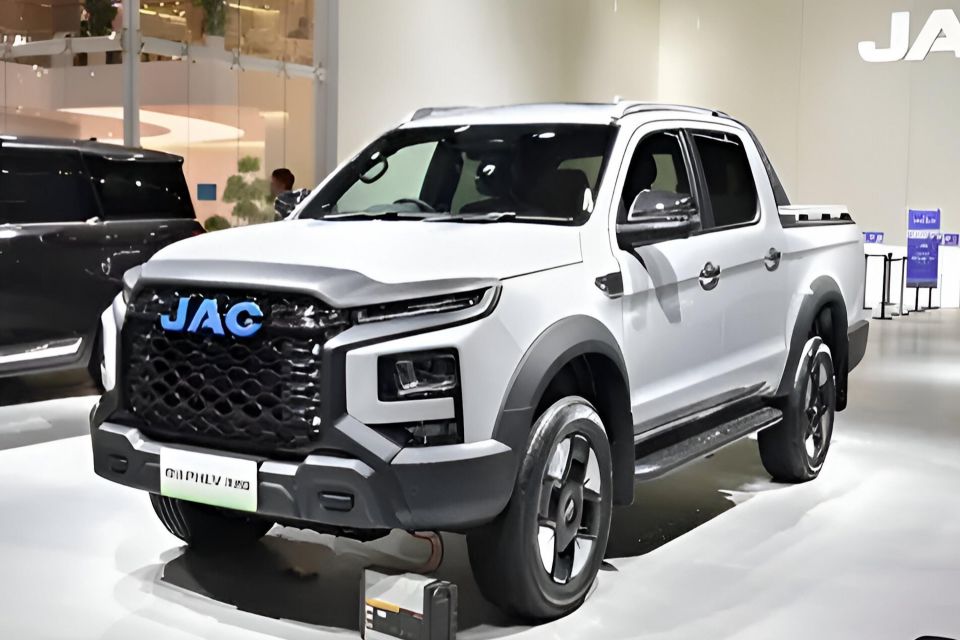
At IAA Transportation 2026 in Hanover, JAC Motors did something quietly revealing. It arrived with four electrified models and a slogan — "For Greener Cities, NOW" — and then signed three agreements with European customers in a single stroke. Nowhere in that announcement was there a retail price list, a consumer financing offer, or a dealership ribbon-cutting.
That omission is the story. JAC's European push into sedans and light commercial vehicles is not aimed at you, the private buyer. It's aimed squarely at the procurement managers, municipal authorities, and logistics operators who decide what moves through European cities — and who sign on the dotted line for entire fleets at once.
A Trade Fair, Not a Showroom
Start with the venue. IAA Transportation is not a consumer auto show in the mould of Geneva or Munich's open days. It's a working trade fair, where fleet operators, last-mile delivery firms, and city transport planners walk the halls with spreadsheets, not dreams. By returning to this stage with a four-model line-up and converting that presence into three signed agreements, JAC signalled that its European ambitions are transactional and B2B in nature. The "For Greener Cities" framing is no marketing decoration — it's a direct pitch to the zero-emission zone mandates reshaping urban logistics across the continent.
Why Fleets Make More Sense Than Forecourts
This is a rational strategy, and a shrewd one. European retail is a graveyard for unfamiliar Chinese badges: brand loyalty is entrenched, aftersales networks are costly to build, and consumers demand a level of trust that takes years to earn. Fleets play by different rules.
A procurement officer cares about total cost of ownership, uptime, service-level agreements, and whether a vehicle meets a tender specification. If JAC can deliver electrified vans and light trucks that hit the right price and range figures, the badge on the grille matters far less. Fleet sales also arrive in volume, come through a single negotiation, and generate the predictable revenue that funds a slower retail expansion later. It's the industrial equivalent of steady torque — unglamorous, but it moves the load.
Building Credibility Before the Contracts
The broader context sharpens the fleet-first logic further. Reports linking Stellantis' Maserati to a potential tie-up with Huawei and JAC Motors suggest the Chinese manufacturer is positioning itself as a capable industrial and technology partner, not merely a badge-slap exporter. Meanwhile, JAC's planned investment in Yinwang Intelligent Technology points to a deepening stake in the intelligent, software-defined vehicle stack — precisely the capability fleet operators will scrutinise when they assess uptime, telematics, and over-the-air maintenance. In emerging markets like South Africa and Mexico, JAC is already building the volume base and manufacturing footprint that give it credibility with institutional buyers.
Retail Isn't Dead — It's Just Not the Point
None of this means JAC has abandoned retail. The T9 Black Edition bakkie and special-edition pickups in South Africa show the brand can play to private customers where the price-value equation is compelling. But those are regional plays in markets with different dynamics. In Europe, the calculation is colder.
The continent's regulatory architecture — CO2 fleet targets, urban access restrictions, corporate sustainability reporting — has effectively turned municipalities and large operators into the primary buyers of electrified commercial vehicles. JAC is going where the mandated demand already exists, rather than fighting for showroom footfall against established rivals.
That is why the three IAA agreements matter more than any show-car headline. They represent the beginning of a distribution model built on contracts rather than showrooms, on tender wins rather than test drives. If JAC succeeds, European city dwellers may never consciously choose a JAC — but they will ride in one, receive parcels from one, and breathe marginally cleaner air because of one. The brand's European future, in other words, will be decided in procurement meetings, not in the retail showroom. On the evidence of Hanover, that is exactly the plan.