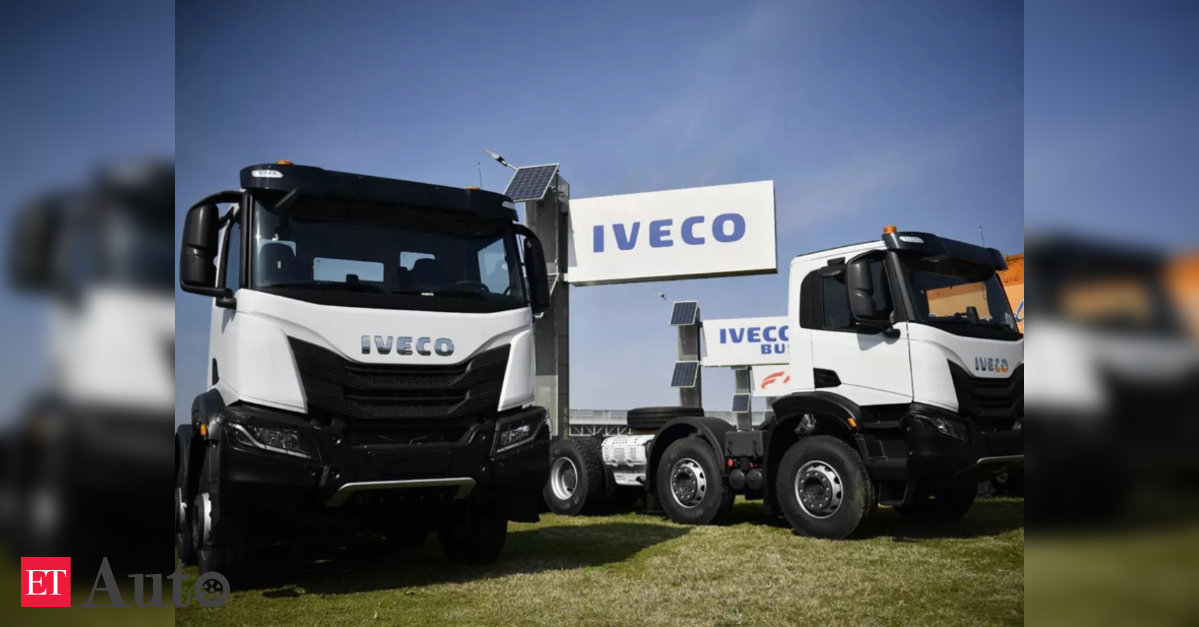
There is a peculiar irony in watching the corporate chessboard of global trucking shift beneath the wheels of a vehicle designed to ignore roads entirely. When Tata Motors launched its €3.82 billion all-cash tender offer for Iveco Group, the financial press dutifully noted the premium, the Italian billionaire John Elkann’s $1.2 billion stake sale, and the Consob-approved documentation. But for those who follow the dustier contours of the commercial vehicle world, the real story is not the balance sheet—it is the map of Africa. The proposed merger, as business analysts on the continent have been quick to point out, would fuse two of the most formidable truck distribution networks in Sub-Saharan Africa. And that fusion, more than any engine calibration or cab redesign, threatens to redefine Iveco’s long-held dominance in the brutal, unforgiving segment of off-road heavy transport.
To understand why this matters, one must first appreciate that Iveco’s reputation in the rough stuff has never been built on marketing flair. It is built on the Daily 4x4 and the Trakker—vehicles that have become the unofficial workhorses of mining sites in Zambia, oilfields in Angola, and infrastructure projects from the Sahel to the Cape. These are machines with a monastic purpose, engineered for one job: to keep moving when everything around them has given up.
The Engineering of Uncompromising Purpose
The Trakker, in particular, is a study in brutalist functionality. We’re talking a ladder-frame chassis, leaf springs that could survive a mortar blast, and a drivetrain that prioritizes torque over everything else. There’s no pretense here, no concession to pavement princesses. This is a truck that treats a washed-out riverbed as a minor inconvenience and a 40-degree grade as a warm-up. For decades, Iveco’s African sales network operated as a patchwork of independent importers and joint ventures, each with deep local knowledge but limited capital for expansion. That fragmented approach worked because the product was bulletproof enough to forgive the occasional supply gap.
Tata, by contrast, has spent the last fifteen years methodically building a pan-African parts and service infrastructure that is arguably the densest of any Asian truck maker on the continent. It’s a network built on volume and accessibility, with parts bins stocked in places Iveco’s independent dealers could only dream of reaching. The combination of Iveco’s engineering pedigree with Tata’s logistical reach is the kind of synergy that makes competitors in the MAN and Volvo camps nervous. On paper, it’s a perfect marriage: the thoroughbred’s bloodlines with the workhorse’s stamina.
The Certainty Problem
Yet the immediate effect of this €14.1-per-share tender offer is not a change in hardware; it is a change in certainty. Iveco’s off-road dominance was always predicated on the reliability of its support network—a truck is only as good as the nearest parts bin when you are 400 kilometers from the nearest town. Under the proposed ownership, Tata’s African network would effectively become Iveco’s African network. That sounds benign, even beneficial, but it raises a critical question: will the Indian conglomerate maintain the premium parts supply and specialized training that Iveco’s off-road customers demand, or will it seek to rationalize costs by pushing more common components across both brands?
The history of cross-border truck mergers suggests caution. When components are shared to save money, the bespoke nature of extreme-duty vehicles often suffers. A Trakker chassis is not a Tata LPT; they serve different masters, and the engineering tolerances are not interchangeable. The moment you start fitting a generic air filter housing to save 14 cents per unit, you’ve compromised the very DNA that made the original worth its premium price tag. Fleet managers in the copper belt and diamond fields know this calculus better than any analyst in Milan or Mumbai.
A Premium Badge in a Volume Market
Moreover, there is a strategic tension in the African market itself. Tata’s strength lies in volume—in reliable, cost-effective trucks that move goods along the growing network of paved highways connecting East African ports to landlocked nations. Iveco’s strength lies in the margins of the mining and energy sectors, where a truck must conquer terrain that has never seen a surveyor’s flag. Tata has been aggressively expanding its own off-road capable range, and one plausible reading of this acquisition is that it wants the Iveco badge to anchor a premium assault on that segment, using the Italian brand’s name to justify higher price points in markets where Tata’s own badge still carries a value-for-money connotation.
That strategy could work, but it carries a risk: diluting the very exclusivity that makes Iveco the default choice for operators who cannot afford downtime. The 133% run in Iveco’s stock over three years, which some analysts now call fully valued, suggests that the market has already priced in the success of this deal. But markets are poor judges of mud and rock. They cannot quantify the value of a dealer in Dar es Salaam who has stocked Trakker axle seals for twenty years, nor can they model the chaos that ensues when a new owner decides to rebrand service centers or shift warranty policies.
The Real Test Lies Off-Road
The real test will come not in boardrooms, but in the copper belt of Zambia and the diamond fields of Botswana, where fleet managers will watch the integration with a cynical eye. They know that the Iveco they trust today was built on a promise of European engineering and a network that, however fragmented, was dedicated to that brand alone. Under Tata’s umbrella, that dedication will inevitably be shared, rationalized, and optimized. For now, Iveco’s off-road machines remain the reference standard. The Astra heavy-duty quarry trucks, the military-spec versions of the Trakker, and the Daily 4x4s that shuttle engineers across the Sahara—all of these will continue to roll off production lines in Turin and Brescia.
But the landscape around them is shifting. If Tata succeeds in merging its African distribution muscle with Iveco’s off-road soul, we may well see a new era of dominance, one built on scale rather than heritage. Conversely, if the integration stumbles—if parts for the Trakker become harder to source because the logistics system is overwhelmed by Tata’s own volume—the void will not remain empty for long. The competitors are already circling, and they know that off-road loyalty is the hardest loyalty to earn and the easiest to lose.
The next few quarters will reveal whether this billion-euro bet is a masterstroke of network synergy or a slow erosion of a brand that conquered the harshest terrain by never compromising its focus. The road ahead is rough, and it is no longer just the dirt tracks that will test Iveco’s mettle. For a company that built its legend on ignoring the path, the greatest challenge may now be navigating the one laid out by corporate strategy. We’ll be watching from the driver’s seat.