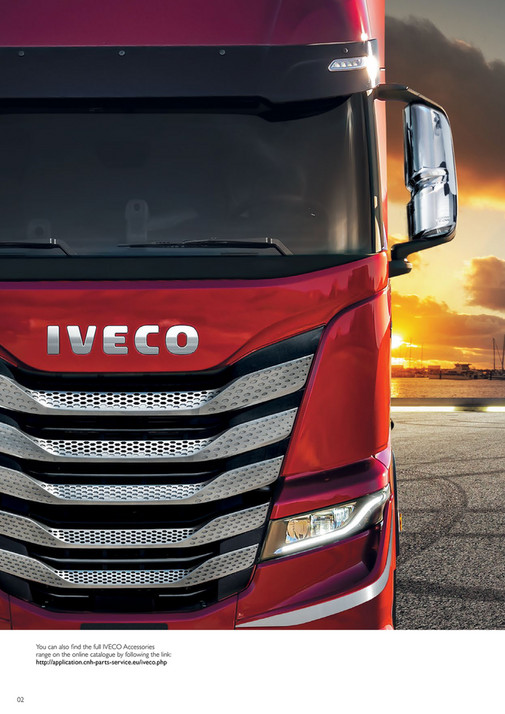
The courtship is over, and the marriage terms are now public record. Tata Motors has crossed the decisive threshold in its €3.9 billion pursuit of Iveco Group N.V., securing acceptance from shareholders representing 87.81% of share capital and lifting its post-tender holding to 89.42%. For anyone who earns a living keeping Iveco off-road and heavy-duty trucks working—from quarry-floor Astra tippers to Trakker-derived construction rigs and Daily 4x4s on rural service routes—this is no footnote in a financial daily. It is the moment the supply chain behind those machines acquires an owner with a very different centre of gravity.
The mechanics matter less than the magnitude. After raising its offer to €14.40 per share and clearing the 80% acceptance threshold that European takeover rules treat as effective control, Tata has moved from suitor to proprietor. A brief reopening of the acceptance period on November 2–6 mopped up remaining tenders, and the transaction has since been confirmed as complete, with Exor N.V. and other holders exiting. In practical terms, Iveco is no longer an independent Italian industrial champion answerable to Turin; it is the European commercial-vehicle limb of a conglomerate headquartered in Mumbai. Parts professionals should read that sentence twice, because it is the single fact that will shape availability, pricing and specification for years.
The Logic of the Deal
The strategic case is straightforward. Tata Motors already commands the Indian commercial-vehicle market through Tata Daewoo and its domestic truck range, and it has spent years eyeing global scale. Acquiring Iveco hands it established European manufacturing, a dealer and distributor footprint across the continent, and—crucially for our readers—the off-road, construction and defence-oriented product lines that Indian volume trucks do not cover. Commentators have framed the deal as creating a formidable counterweight to Chinese commercial-vehicle makers pushing into export markets. That framing is accurate, but it is a boardroom view. The workshop view is blunter: which parts survive, which get rationalised, and which migrate to a common global catalogue?
What Changes—and What Doesn’t
Here the early signals are cautiously reassuring. Takeovers of this size rarely trigger immediate disruption to aftermarket supply, because the acquirer is buying exactly the engineering and distribution capability it lacks. Iveco’s heavy off-road driveline components, its chassis architectures and its specialised axles are the crown jewels, not the redundancy. Expect continuity in the near term, with the real pressure arriving later—typically eighteen to thirty-six months post-close—when procurement teams begin consolidating suppliers and standardising part numbers across the combined group. Independent specialists holding genuine Iveco off-road stock may find themselves, paradoxically, in stronger positions during that transition, as dealers navigate catalogue churn and fleet operators seek certainty.
The Long Tail Is Where It Hurts
The genuine risk sits in the long tail. Low-volume, application-specific components for older Trakker and Astra variants, and niche defence-derived parts, are precisely the items that suffer when a new parent applies scale-efficiency logic. Tata’s incentive is to serve high-turnover lines first. Enthusiasts and fleet engineers running legacy off-road Iveco machinery should treat the coming period as a window—not for panic buying, but for sensible stock-building of hard-to-source consumables and for documenting alternative suppliers while institutional knowledge in Turin remains intact.
Currency, Logistics and the New Map
There is also a currency and logistics dimension that parts buyers too often ignore. Ownership does not change where castings are poured or where a Trakker hub assembly is machined, but it can change warehousing strategy, regional distribution priorities and pricing currency. A group centred on Indian cost structures may look to route more component production eastward over time, shortening some lead times while lengthening others. Fleet managers should be watching distributor stock depth in Europe rather than assuming continuity.
Above all, this is a story about concentration. A single shareholder at 89.42% means minority voices in Iveco’s decision-making are effectively silenced; there is no meaningful counterweight to Tata’s industrial plan. For the off-road parts ecosystem, that clarity is useful even where it is uncomfortable. The uncertainty of the bid period—the speculation, the raised offer, the reopened acceptance window—has been replaced by a definite owner with a definite agenda. The task now is not to debate the deal but to read its consequences correctly, and to secure the components that keep Iveco’s off-road fleet earning before the new catalogue is written.