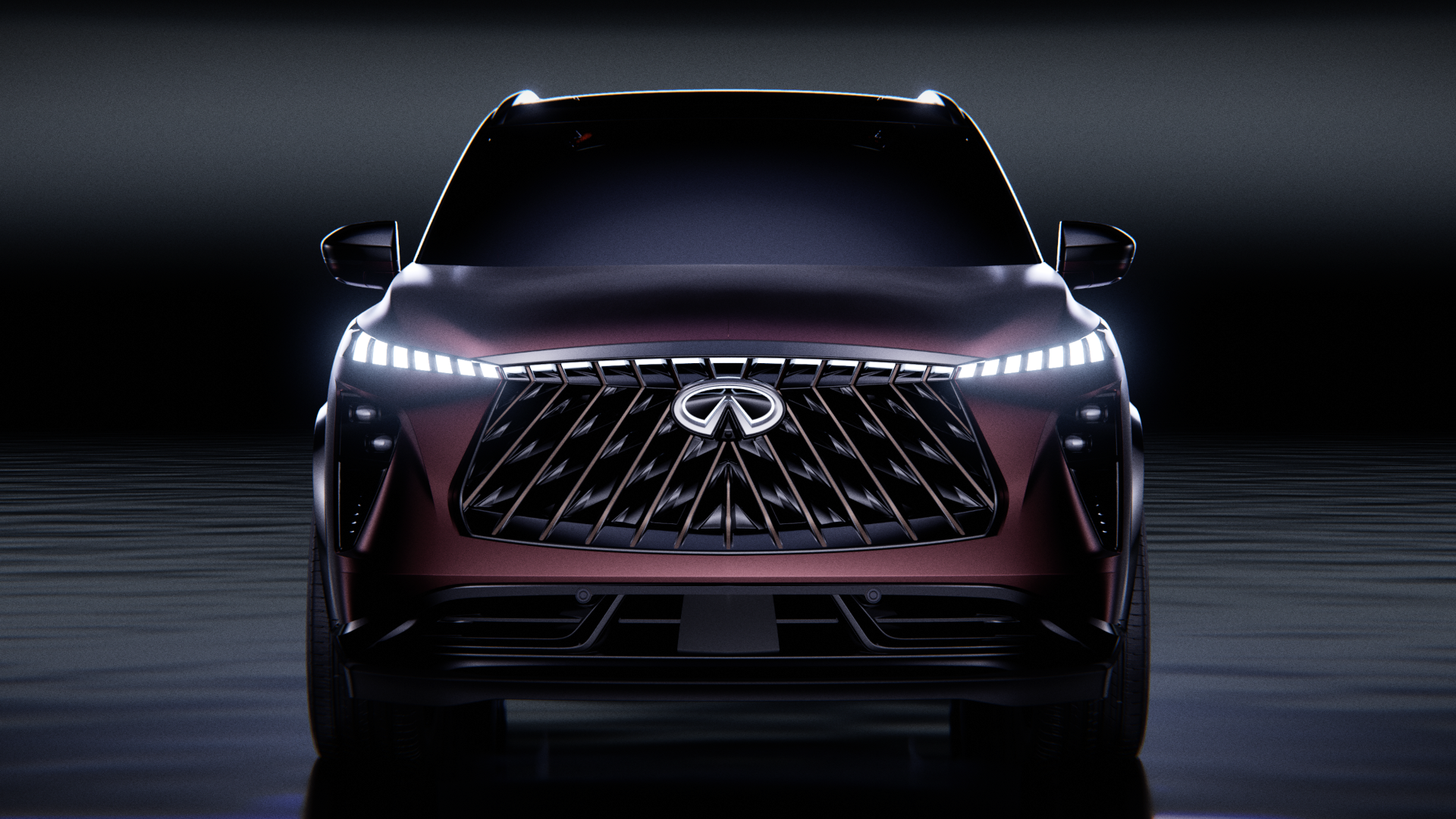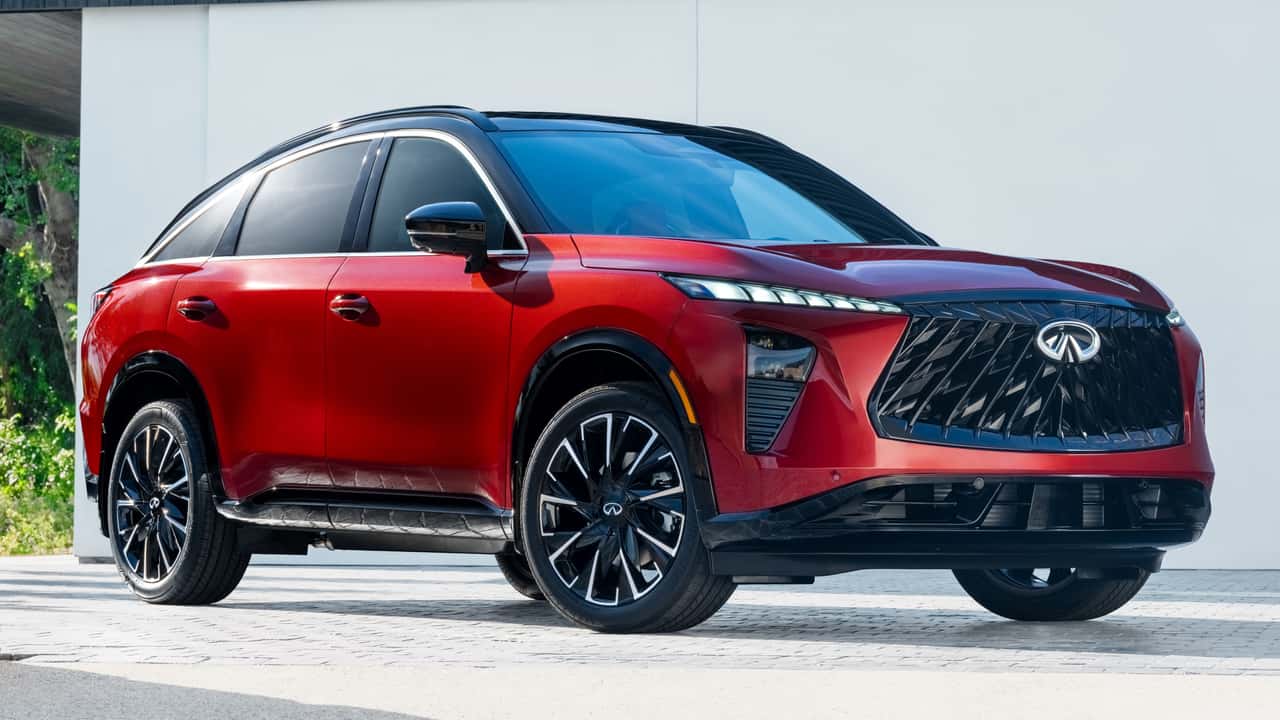
Infiniti has spent the better part of a decade hunting for a coherent identity, and the 2027 model year may be the clearest evidence yet that the search is still on. With the arrival of the QX65 alongside a refreshed QX60, the brand now fields two three-row-adjacent luxury SUVs that — on paper and in the metal — sit so close in size, price, and purpose that even seasoned reviewers struggle to articulate what separates them. This isn't a lineup strategy. It's a mirror held up to a brand that hasn't yet decided what it wants to be.
The mechanical overlap is the first tell. Both the QX60 and QX65 ride on the same platform, share the same 2.0-litre VC-Turbo four-cylinder and the same 9-speed automatic, and offer the same available all-wheel-drive system. The QX65 is nominally the sportier, more style-forward variant, with a sloping roofline and a coupe-like profile that trades a measure of rear headroom and cargo volume for visual drama. The QX60 stays the pragmatic choice — boxier, more upright, better at the school run and the airport shuttle. But the delta between them is measured in inches and degrees, not in character.
Same Skeleton, Same Showroom
When two products share a skeleton, a powertrain, and a showroom floor, the burden of differentiation falls entirely on styling and marketing — and neither has proven sufficient to justify the split. That's the heart of Infiniti's problem. A luxury brand earns its premium through distinctiveness, through a clear answer to the question of why a buyer should choose it over a Lexus TX, a Volvo XC90, or a Genesis GV80. Infiniti's answer, increasingly, seems to be: because we also exist.
The QX60 was already a competent, comfortable, quietly handsome family hauler. Adding a QX65 that does the same job with a different roofline doesn't broaden the brand's appeal; it cannibalises it. Dealers now face the unenviable task of explaining to a customer why they should pay a premium for the coupe version when the conventional one is more practical and, in most trims, less expensive. That's not a sales pitch. That's a confession.
The German Precedent Doesn't Hold
There is a counterargument, of course — that the German brands have done exactly this for years, pairing conventional SUVs with swoopy coupe variants. BMW sells the X5 and X6; Mercedes-Benz sells the GLE and GLE Coupe. The playbook exists. The problem is who's holding it.
Those brands possess the heritage, the badge equity, and the volume to sustain such a strategy. Infiniti, which has spent years watching its market share erode and its lineup dwindle, does not. Every dollar spent developing and marketing the QX65 is a dollar not spent on the electric flagship, the halo performance model, or the genuinely differentiated product that might restore the brand's lustre. The Germans can afford to hedge. Infiniti cannot.
Competence Without a Compass
The tragedy is that Infiniti still knows how to build a compelling car. The brand's engineers have consistently delivered chassis tuning and cabin refinement that punch above their weight. The VC-Turbo engine remains a genuine engineering curiosity, a variable-compression marvel that no rival has matched. On the road, these are quietly capable machines — refined, planted, and pleasant in a way that flatters long drives and empty back roads alike.
But curiosity and competence are not the same as identity. The QX60 and QX65 are not bad vehicles. They are simply indistinguishable ones, and in the luxury segment, indistinguishability is a slow death. Buyers cross-shopping a six-figure showroom don't want a riddle. They want a reason.
Until Infiniti decides whether it wants to be the Japanese BMW, the value Lexus, or something else entirely, its showrooms will keep filling with near-twins. The QX60 and QX65 are not two answers to two questions. They are one answer, repeated — and the market has already heard it.