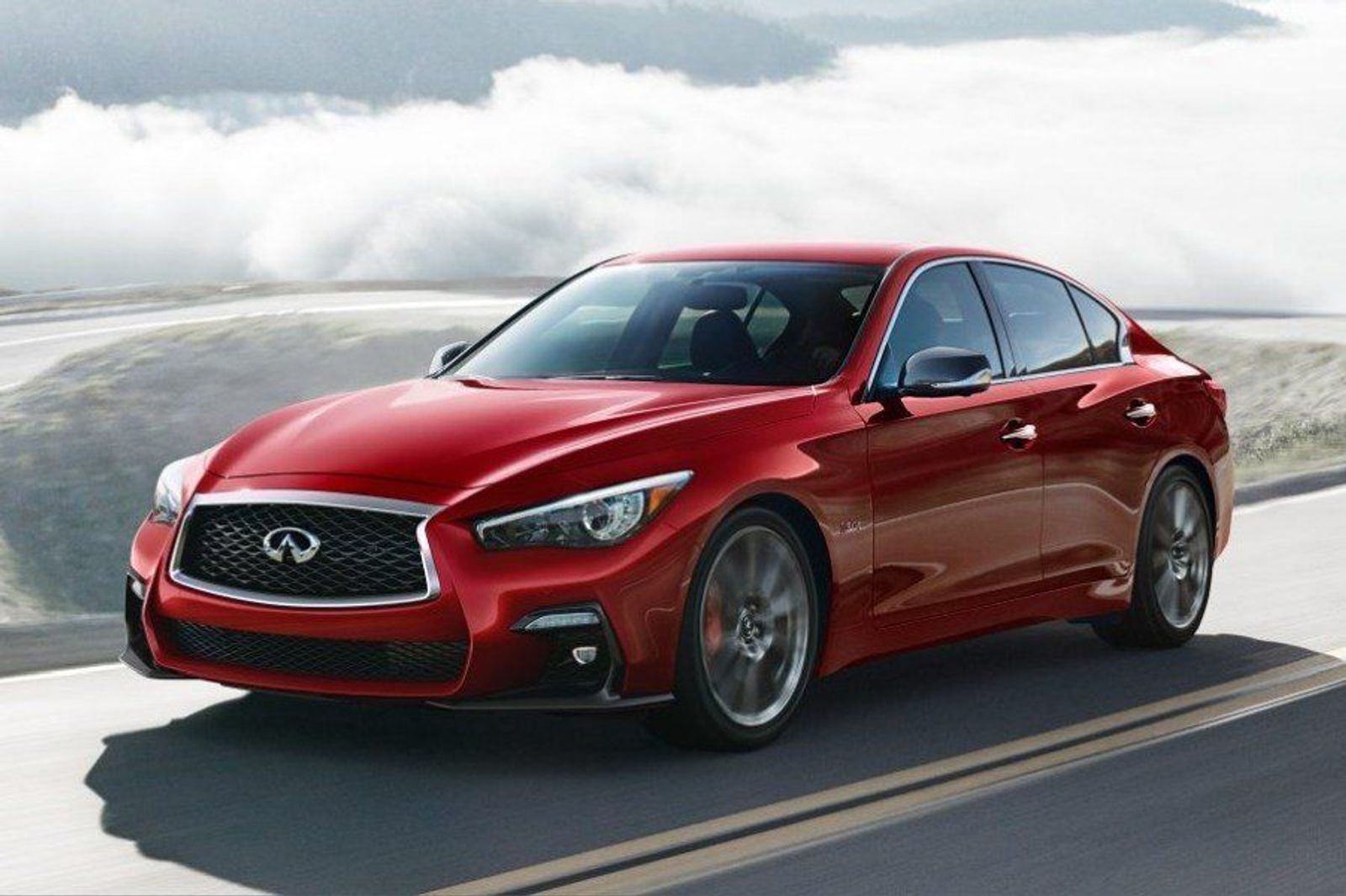
There's a special kind of hush that falls over a showroom when a manual transmission shows up on the spec sheet. It isn't disinterest—it's the quiet of a room full of enthusiasts leaning in. That's the atmosphere around the news that Infiniti is preparing to bring back a manual sedan, and not as some nostalgic afterthought, but as a 420-horsepower statement of intent. In an industry that has spent two decades methodically deleting the third pedal, this isn't a product decision. It's a provocation.
To understand why it matters, you have to understand what Infiniti has been for the better part of thirty years. This is the brand that gave us the G35, a car that democratised rear-wheel-drive performance and made the BMW 3 Series genuinely nervous. The brand that built the Q50 Red Sport 400, an underrated twin-turbo sports sedan with more power than its badge ever earned credit for. And the brand that, like so many others, watched the manual gearbox quietly die in the name of efficiency, take rates, and the relentless march of the dual-clutch. The enthusiast community mourned, shrugged, and moved on. Infiniti, apparently, did not.
Old-School Numbers, Deliberately So
The figures attached to this rumoured machine are almost defiantly retro. Four hundred and twenty horsepower places it squarely in Q50 Red Sport territory, which means we're likely talking about a tuned version of the brand's 3.0-litre twin-turbo V6, now paired with a six-speed manual and rear-wheel drive. That combination, in 2026, is nearly extinct. You can count the manual, rear-drive, four-door performance sedans on one hand, and most of them carry German badges and six-figure price tags. An Infiniti at a sensible price point with that configuration wouldn't just be a niche product—it would be a category of one.
Think about what that means from the driver's seat. A twin-turbo V6 with a manual isn't about lap times; it's about the conversation between your right foot and the rear tyres, mediated by a clutch pedal the industry has spent years trying to convince you is obsolete. That's the kind of mechanical connection that's been quietly erased from the modern performance sedan, replaced by paddles and programming. Infiniti, reportedly, wants to give it back.
Cutting Through the SUV Noise
The timing is telling. While the automotive press has spent the past week comparing the 2027 QX60 against the QX65—two nearly identical SUVs distinguished mostly by roofline and marketing—the manual sedan story cuts through that noise like a downshift at redline. It reminds us what Infiniti can be when it stops chasing volume and starts chasing character.
The brand's current identity crisis, one of luxury versus utility, of Nissan platform-sharing versus genuine premium ambition, has been well documented. A 420-hp manual sedan is a rebuttal to all of it. It says: we still know how to build something you drive, not something you operate.
The Halo Effect
There's a risk, of course. Manual take rates are microscopic, and the business case for such a car is built on halo effect rather than spreadsheet logic. But halo effect is exactly what Infiniti needs. The brand has spent years being the answer to a question nobody asked, and a flagship manual sedan changes the conversation entirely. It becomes the car enthusiasts mention when they defend the marque. It becomes the poster on the wall, the test-drive story, the reason someone walks into a showroom and leaves with a QX65 after falling in love with the idea of the brand.
That's the quiet genius of the play. You don't build a manual sedan to sell manual sedans. You build it to remind people what the badge stands for—and then let that feeling do the work across the rest of the range.
A Manifesto, Not Just a Car
Whether this car reaches production in the form we hope remains an open question, and the industry has a long history of crushing beautiful rumours under the weight of feasibility studies. But the very fact that Infiniti is reportedly willing to try is newsworthy in itself. In an era defined by homogeneity, by CVTs and one-pedal driving and the slow erasure of mechanical connection, a 420-hp manual sedan from a brand with something to prove isn't just a car. It's a manifesto. And for a company that has spent the last decade searching for its soul, that might be exactly what it needed to find.