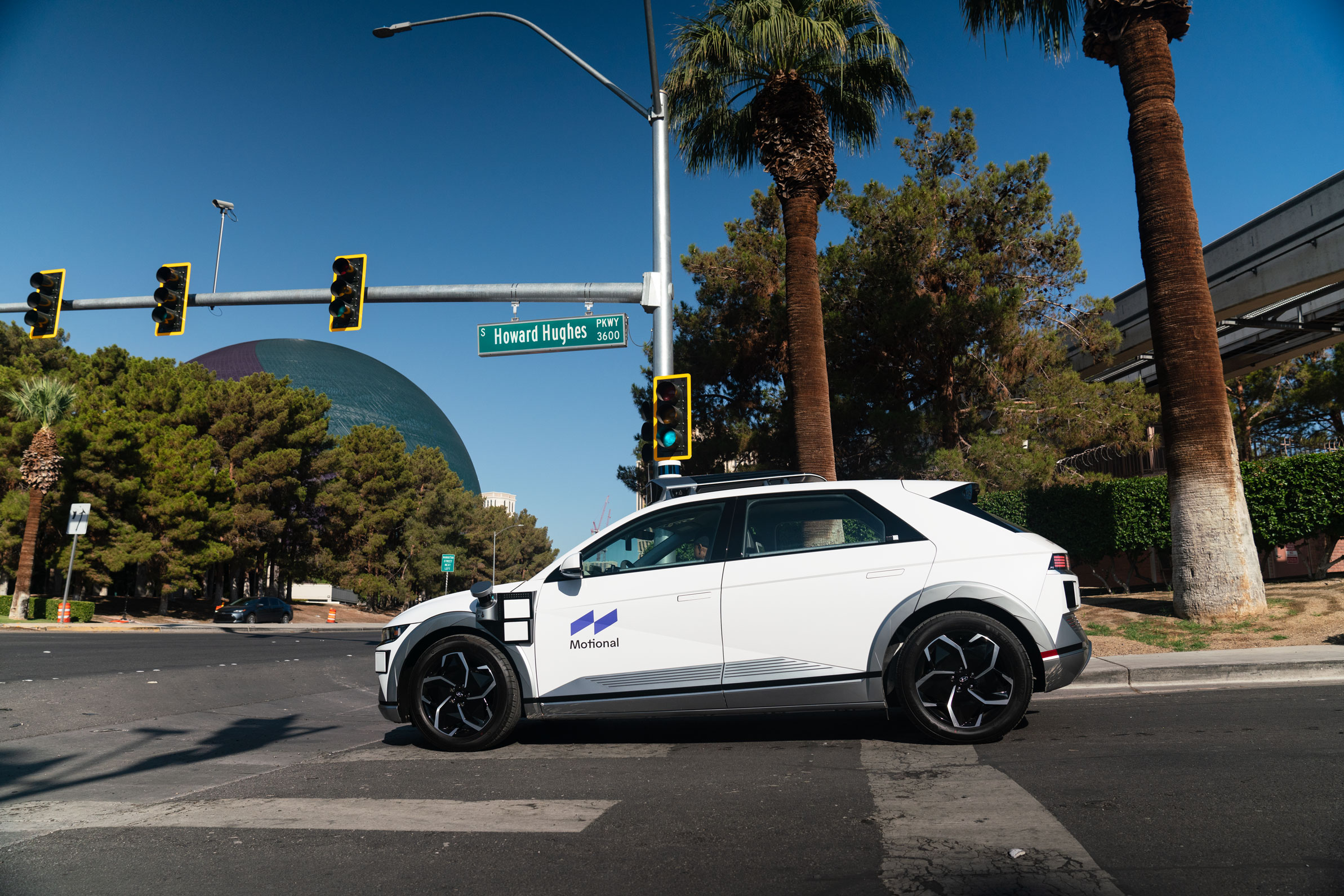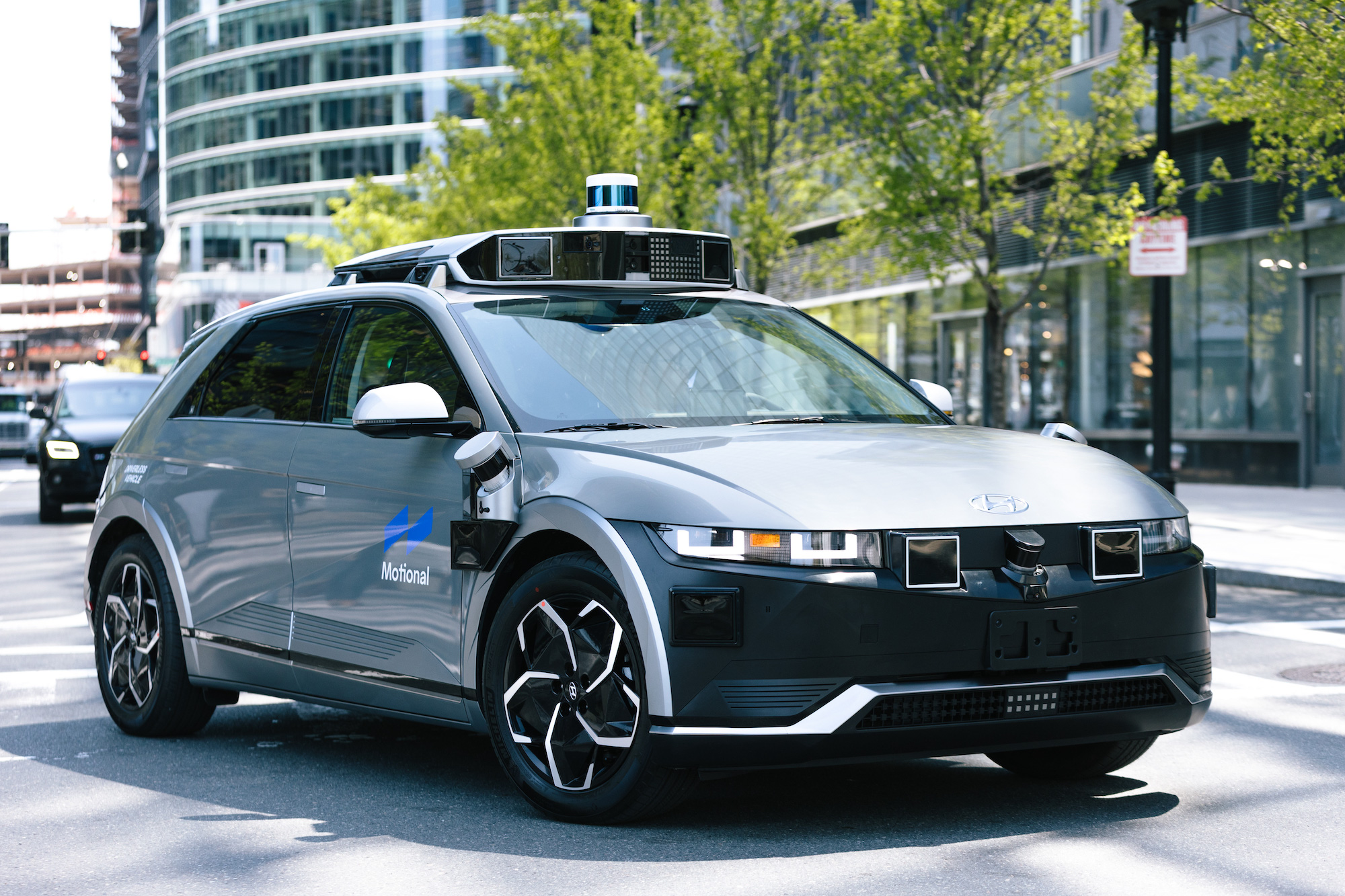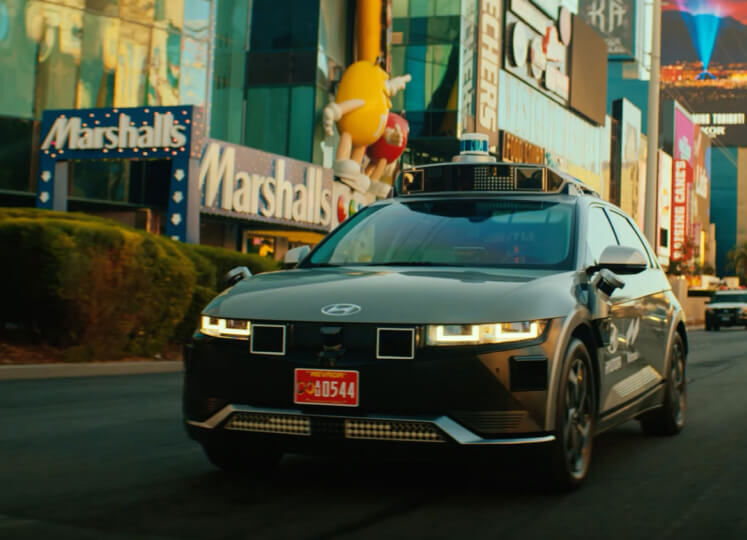
There's a quiet revolution happening in the driveway next door. While the automotive world fixates on flashy autonomy demos and bold promises from Silicon Valley, Hyundai has been playing a longer, smarter game. The Korean giant's strategy hinges on a concept called the AI-Powered Data Flywheel — a self-reinforcing loop where every Hyundai sold becomes a sensor platform, every sensor platform becomes a training set, and every training set makes the next generation of autonomous software smarter. The sedan in your neighbor's driveway isn't just a commuter car. It's a node in a learning machine.
For nearly a decade, Hyundai has been underestimated in autonomous driving. Tesla dominated headlines with brash claims, and Waymo quietly logged millions of driverless miles in Phoenix and San Francisco. Hyundai, meanwhile, appeared content to move slowly, methodically, almost stubbornly. That patience now looks less like caution and more like calculated strategy. The company has spent years building the infrastructure for a data advantage that could reshape the autonomous race.
The Mechanics of the Flywheel
The concept is deceptively simple. Hyundai equips its production vehicles with advanced driver-assistance hardware — cameras, radar, and increasingly sophisticated compute — then harvests the edge cases those vehicles encounter on real roads. That data flows back to centralized training infrastructure, where it refines the perception and planning models that will eventually power fully autonomous systems. Those improved models are then deployed back into the fleet, where they encounter new edge cases, and the loop tightens again.
It's the same logic that made Tesla's fleet a formidable data asset, but Hyundai is betting that its scale across Hyundai, Kia, and Genesis — plus its expanding commercial partnerships — gives it a broader and more diverse dataset than any single-brand competitor. More brands mean more vehicles. More vehicles mean more miles. More miles mean more edge cases. The flywheel spins faster with every car sold.
The Waymo Deal and Commercial Proof
The commercial proof point is already on the horizon. Hyundai is preparing to supply Waymo robotaxis this year, a deal that transforms the company from a mere automaker into a hardware supplier for the most scrutinized autonomous fleet on earth. That arrangement cuts both ways: Waymo gets access to Hyundai's manufacturing discipline and EV platforms, while Hyundai gets something arguably more valuable — a front-row seat to how a true Level 4 operator handles the messy reality of driverless commercial service.
The lessons learned from those vehicles will feed directly back into Hyundai's own stack. It's a masterclass in strategic symbiosis: supply the leader, learn from the leader, then compete with the leader. Hyundai isn't just building cars for Waymo; it's building a pipeline of real-world autonomous data that no simulation can replicate.
The Unhurried Timeline
Hyundai's timeline is deliberately unhurried. The company plans to roll out its in-house driver-assist system in 2029, a schedule that would make a Tesla executive wince. But Hyundai executives have been unusually candid about their reasoning: they expect to overtake Tesla in self-driving data within five years, not by shipping faster, but by accumulating more meaningful miles.
The distinction matters. Tesla's approach has relied heavily on vision-only perception and a customer fleet that is not always instrumented for clean data collection. Hyundai's approach leans on a mixed-sensor architecture and a fleet that spans ride-hailing, commercial, and consumer use — a broader funnel for the strange, the ambiguous, and the rare. In the self-driving game, the rare cases are the ones that matter most. A million miles of highway cruising teaches a system very little. A single encounter with a double-parked delivery truck in a rainstorm teaches it everything.
The Infrastructural Dimension
There's also an infrastructural dimension that rarely makes headlines. Hyundai's Pleos Connect infotainment platform, which the company has begun rolling out, is not just a cabin convenience play. It's a data pipeline. Every interaction, every map query, every moment of driver inattention or intervention is potentially a labeled example for the next model.
The flywheel doesn't spin on autonomous miles alone; it spins on the mundane ones too. Every commute, every school run, every trip to the grocery store becomes a data point. The sedan isn't just a teacher — it's a tireless one, logging millions of miles of real-world experience that no test fleet could ever match.
The Road Ahead
None of this guarantees victory. Reliability comparisons between Hyundai and Genesis have shown that brand prestige and engineering execution don't always move in lockstep, and the autonomous race has humbled companies with far deeper software pedigrees. But Hyundai's wager is that the self-driving endgame will be won not by the company that demos the most impressive robotaxi, but by the one that owns the most productive learning loop.
If the flywheel spins as intended, the sedan ceases to be a product and becomes a teacher — and Hyundai becomes the student with the largest classroom in the industry. It's a philosophy that values patience over spectacle, data over drama, and the long game over the quarterly earnings call. In a world obsessed with the next big autonomous breakthrough, Hyundai is quietly building the infrastructure to own the one after that.