For decades, the ritual of the long-distance electric journey has been defined by a curious contradiction: the machine moves faster than ever, yet the driver is condemned to wait. The premium charging stop—that twenty-to-forty-minute interlude of artisanal coffee and Wi-Fi—has been quietly rebranded as a lifestyle amenity rather than an inconvenience. Hongqi, the marque that once built parade limousines for state occasions, has now trained its sights on dismantling that ritual entirely. With its deepening commitment to battery-swap architecture, the Chinese luxury house is proposing something quietly radical: that the most opulent thing a premium EV can offer its owner is not a lounge, but the absence of a wait.
The strategy is not merely theoretical. Hongqi's parent, FAW Group, has been channelling resources into swap-capable platforms and partnering with the battery-swapping infrastructure specialist Aulton (formerly Botan Technology), whose modular swap stations are designed to exchange a depleted pack for a fresh one in under three minutes. For Hongqi, this is a natural extension of its "All in New Energy" pivot announced in 2023, a commitment that saw the brand pledge to go fully electrified across its lineup and to pour billions of yuan into battery technology, intelligent driving, and energy services. The Hongqi E-QM5, already a fixture in China's ride-hailing fleets, has served as a proving ground for swap-compatible battery packs—real-world kilometres logged at scale, not just laboratory promises.
Three Minutes Versus the Coffee Bar
Consider what this means for the luxury segment's most cherished new ritual. The charging-stop economy—built by NIO with its battery-swap network and NIO Houses, refined by Li Auto and XPeng with ever-faster DC architectures, and exported globally as the premium norm—rests on a simple premise: that drivers will accept a pause in exchange for comfort. NIO's own swap network, now exceeding two thousand stations across China, demonstrated that swapping could work at scale. But NIO paired the swap with an elaborate hospitality ecosystem, effectively saying: we will make the wait pleasant. Hongqi's proposition is sharper and, in luxury terms, more subversive—we will make the wait vanish, and we will not charge you for the privilege of sitting in a showroom to endure it.
Why the Fast-Charging Plaza Suddenly Looks Vulnerable
The implications ripple across the value chain. A three-minute swap renders the 350 kW charging plaza—the kind of installation that has become the centrepiece of premium brand positioning from Porsche to Lucid—largely irrelevant for Hongqi owners on long journeys. It undercuts the business model of third-party fast-charging operators who monetise dwell time through retail partnerships. And it reframes the luxury EV purchase itself: the battery becomes a subscribed, swappable commodity, decoupling the car's value from the degradation of its cells. For a brand like Hongqi, whose L-series and H-series sedans trade on the promise of effortless authority, the swap model is a philosophical fit—the chauffeur-era mentality of never touching a fuel pump, translated into the electric age.
State-Backed Scale, Global Ambition
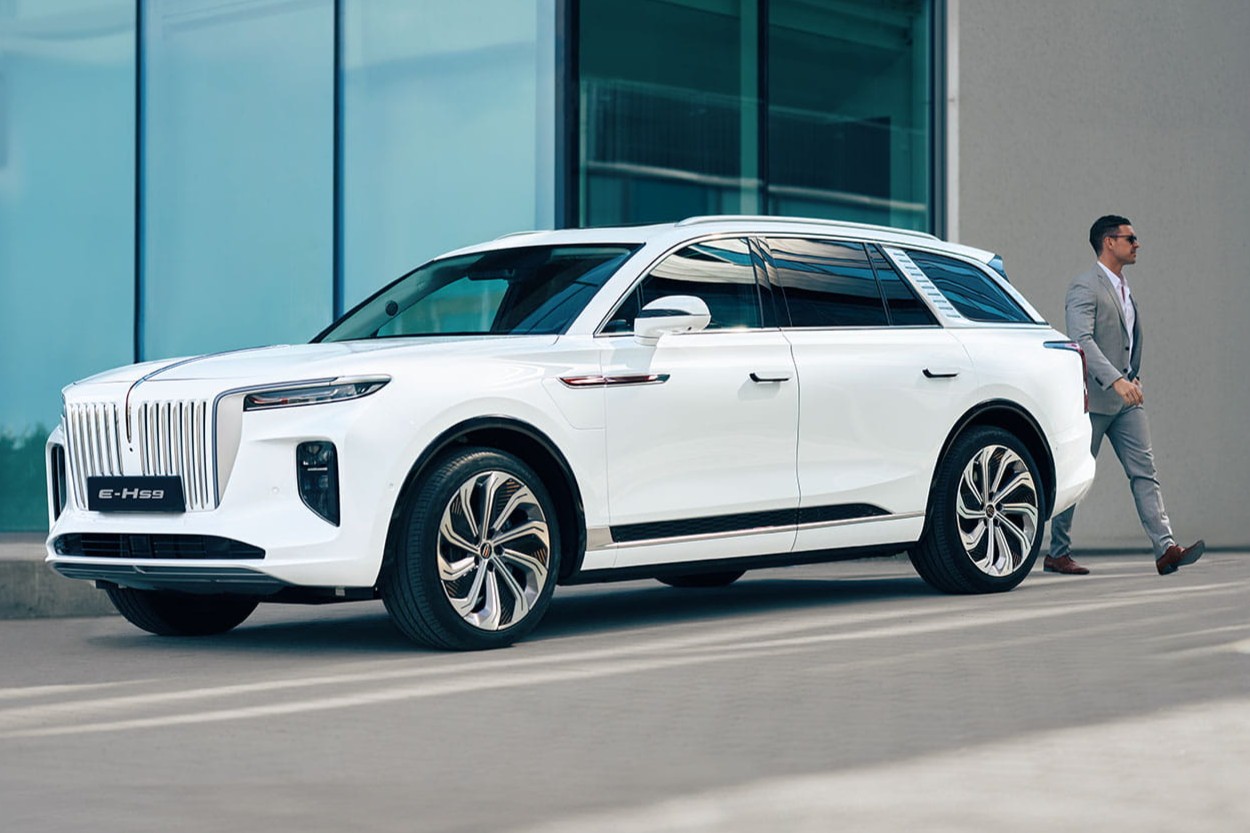
Sceptics will note the obstacles. Swap infrastructure demands standardisation, capital intensity, and land—advantages that state-backed FAW can muster more readily than most. Battery-swap standards remain fragmented, and the economics of pack ownership versus leasing are still being negotiated across the industry. Yet Hongqi's scale and its domestic political tailwind give it a credible path that smaller premium players cannot match. In Europe and the Middle East, where Hongqi has been cultivating a presence with models like the E-HS9 flagship SUV, the swap model could arrive as a genuine differentiator rather than a curiosity.
The luxury charging stop, then, may prove to be a transitional artefact—a brief historical moment when premium automakers competed on the quality of the wait rather than its elimination. Hongqi's wager is that the next decade of luxury will be defined not by the elegance of the lounge but by the speed of the exchange. It is a philosophy that returns the brand to its origins—effortless authority, the sense that the car simply handles the occasion—only now the authority is electrical, and the occasion is the open road. If the brand executes, the coffee bar at the premium charging plaza may find itself serving a clientele that never arrives.