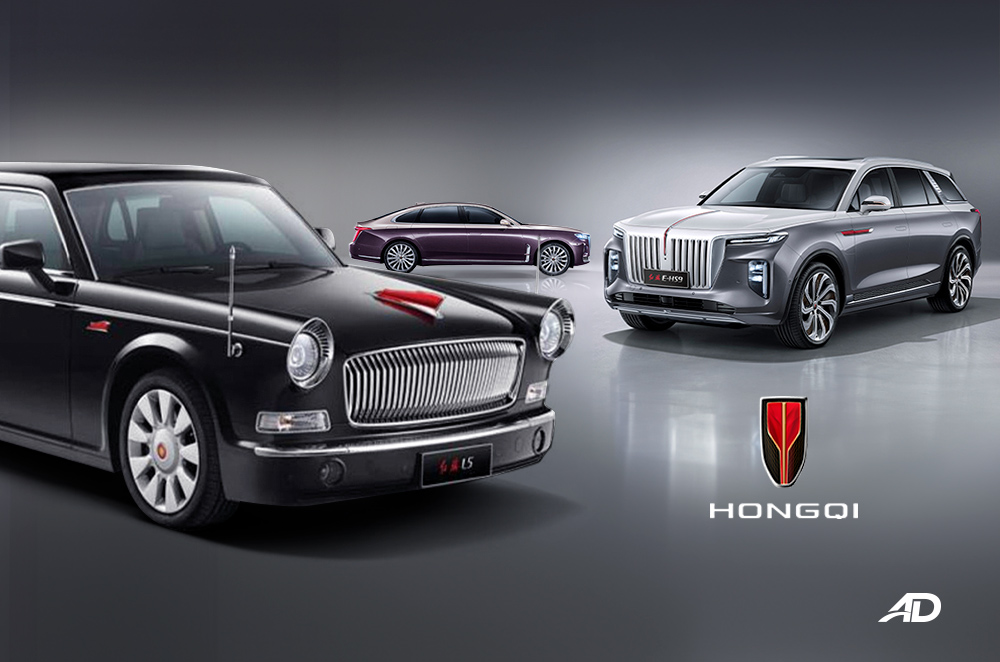
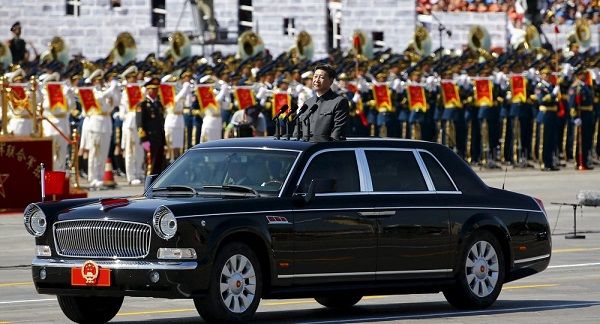
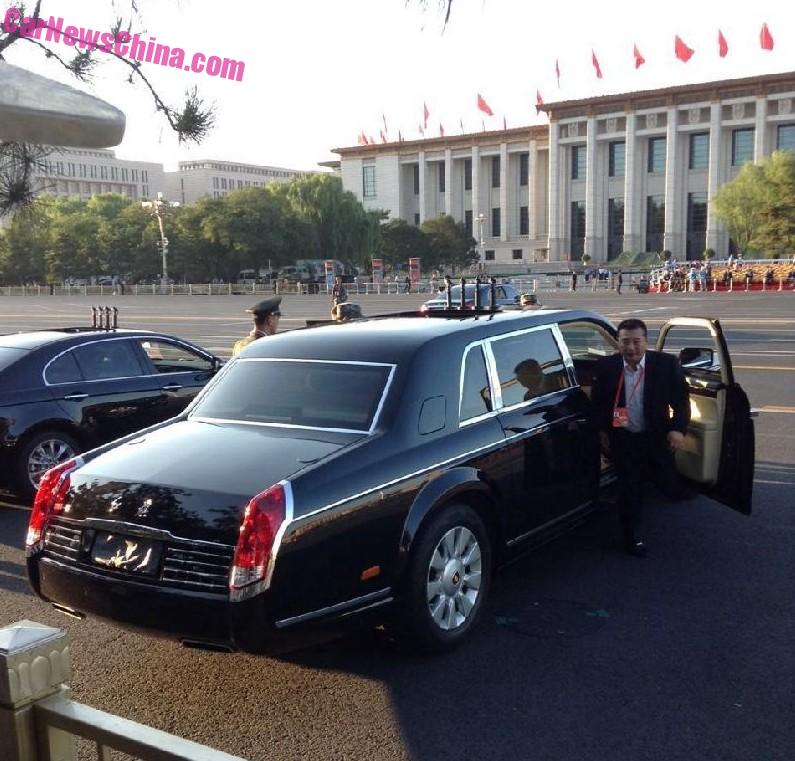
For most of its existence, Hongqi — “Red Flag” — was less a car brand than a piece of political furniture. Born in 1958 at the First Automobile Works in Changchun, it was the limousine that carried Mao Zedong through Tiananmen on National Day parades, a hand-built monument to socialist industry that ordinary citizens could not buy even if they could afford one. For decades the marque existed in a sealed ecosystem of state ceremonies, military parades, and Politburo motorcades.
The idea that a Hongqi would one day sit on a dealer forecourt in Baghdad, Sydney, or Madrid was not merely implausible; it was category-breaking. Yet that is precisely what is now happening.
From Guangxi to Iraq: The Export Signal
The clearest signal comes from FAW Middle East, which recently shipped 1,600 Hongqi vehicles to Iraq from a port in Guangxi — not a symbolic consignment of diplomatic limousines but a genuine fleet-scale export order. Iraq, a market where Chinese brands have gained ground quickly on price and availability, is an unlikely stage for China’s most ideologically loaded nameplate.
Yet the logic is consistent. Hongqi has spent the past several years converting ceremonial prestige into commercial credibility, and exports are the mechanism. The move to Iraq represents more than just a sales transaction; it signals a fundamental shift in how the brand views itself and its place in the global automotive landscape. What was once reserved for the political elite is now being positioned for fleet buyers and consumers in markets that would have been unimaginable just a decade ago.
Australia, Europe, and the Price Play
The pivot is deliberate and multi-directional. In Australia, Hongqi is openly positioning itself against Range Rover while promising to undercut German rivals on price — a strategy that trades on the brand’s aura of state-level luxury without demanding state-level money. The Guoli, a limousine reportedly carrying a $1.5 million price tag, is being dangled before Australian buyers as a halo object, the kind of car that exists partly to make everything below it feel attainable.
In Europe, Reuters reports that Hongqi is in talks to build cars at a Stellantis plant in Spain, a move that would sidestep tariffs and give the brand a manufacturing footprint inside the EU. The strategy is clear: leverage the brand’s unique heritage while competing on the practical terms that matter to modern buyers — price, availability, and increasingly, technology.
The Technology Behind the Symbol
None of this would matter if the product were merely nostalgic. Hongqi’s technical ambitions have become genuinely competitive. The company has unveiled a 12C ultra-fast charging battery that it claims can take a pack from 10% to 70% in 3 minutes 41 seconds — faster, by its own framing, than refuelling a petrol car.
Independent outlets have noted that the figure outpaces BYD’s most aggressive charging claims. Whether or not real-world conditions match the laboratory number, the message is unmistakable: Hongqi no longer wants to be admired for its history. It wants to be benchmarked against the best.
Nerve, Mythology, and the American Sighting
There is also the matter of sheer nerve. The N701, a super-limited flagship built in vanishingly small numbers, has been spotted on American streets — a rare sighting that generated its own minor internet commotion. And CarBuzz’s observation that China’s “knock-off Rolls-Royce” is outselling the real thing two to one in some contexts captures the awkward truth facing legacy luxury: Hongqi has discovered that state pageantry, properly packaged, sells.
The geopolitical subtext is hard to miss. The SCMP has framed Hongqi’s flagship as China’s answer to the US presidential “Beast,” a comparison that positions the marque as a national symbol in the most literal sense. But the export push tells a more interesting story than any summit photo. A car built to project the authority of one state is now being sold to the fleets, families, and status-seekers of many.
That transition — from Mao’s parade car to Iraq’s fleet — is the rare instance of a brand escaping its own mythology without abandoning it. Hongqi has not stopped being a symbol. It has simply decided that the symbol should be for sale.